
Life on the Line: The Gurkhas on the Western Front, 1914-1915
Life on the Line: The Gurkhas on the Western Front, 1914-1915
Introduction
Between September and October 1914, six Gurkha battalions arrived on the First World War’s Western Front to help reinforce the British Expeditionary Force (BEF).
Since early August, the BEF had fought in coordination with the French to blunt the German Army’s invasion of France and Belgium. The allies did so at the First Battle of the Marne, but only at the cost of massive casualties. With the BEF in desperate need of reinforcement, British High Command authorised the transferal of thousands of Indian Army soldiers to France, organised into the Indian Corps.
For the Gurkhas who arrived in France in 1914, they were not only about to experience conflict on a scale previously unimaginable, but also very different cultures to the ones they had known in India and Nepal. Whilst much has been written about the battles they fought, less has been said about what day-to-day life was like for Gurkha soldiers in and out of the front lines. In this article, we shall try and answer the question ‘what was life like for Gurkhas on the Western Front?’
Strangers In A Far Off Land
Before 1914, Gurkhas had never deployed to Europe in large numbers. For the previous century, Gurkha service had been largely confined to the Indian subcontinent and southeast Asia. Although a handful of Gurkhas had travelled to the UK for ceremonial duties or as companions of British Gurkha officers, the vast majority of Gurkhas had no experience of the west.
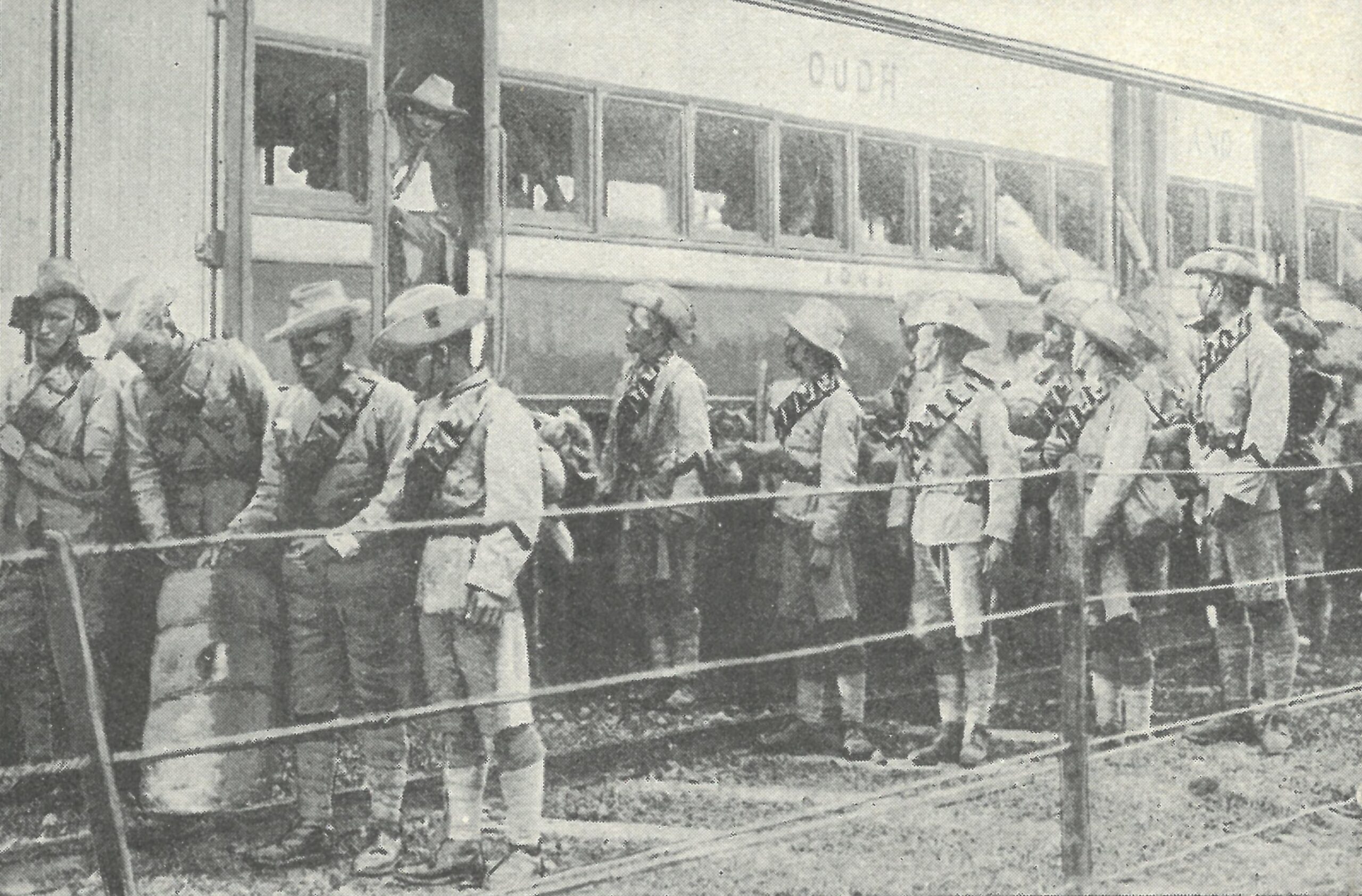
A sketch of Gurkha soldiers entraining from their depots in India, bound for Europe.
The Gurkhas who started landing in Marseille from 26 September 1914 were quickly immersed in a completely different culture and environment. The colder climate was an immediate concern, and much logistical effort was mustered into issuing Indian Army troops with warm underclothing.
The reception that the Gurkhas received from the French people was initially positive, with the men receiving considerable fanfare as they disembarked. The 9th Gurkha Rifles regimental history reported that some of the Gurkhas, much to their bemusement, were showered with kisses as they marched through Marseilles.
For the locals, the Gurkhas carried an air of mystery, with many unsure of where they originated from. The Gurkhas distinctive headgear, the ‘Hats, Felt, Gurkha, caused some confusion among the Marseillais, who initially mistook them as South African Boer hats.
After a period in camps at Marseilles and Orleans, the Gurkha battalions embarked on a long train journey up through France. Once they arrived at the front, the Gurkhas were settled into various villages and farms leading up to the battle zones.
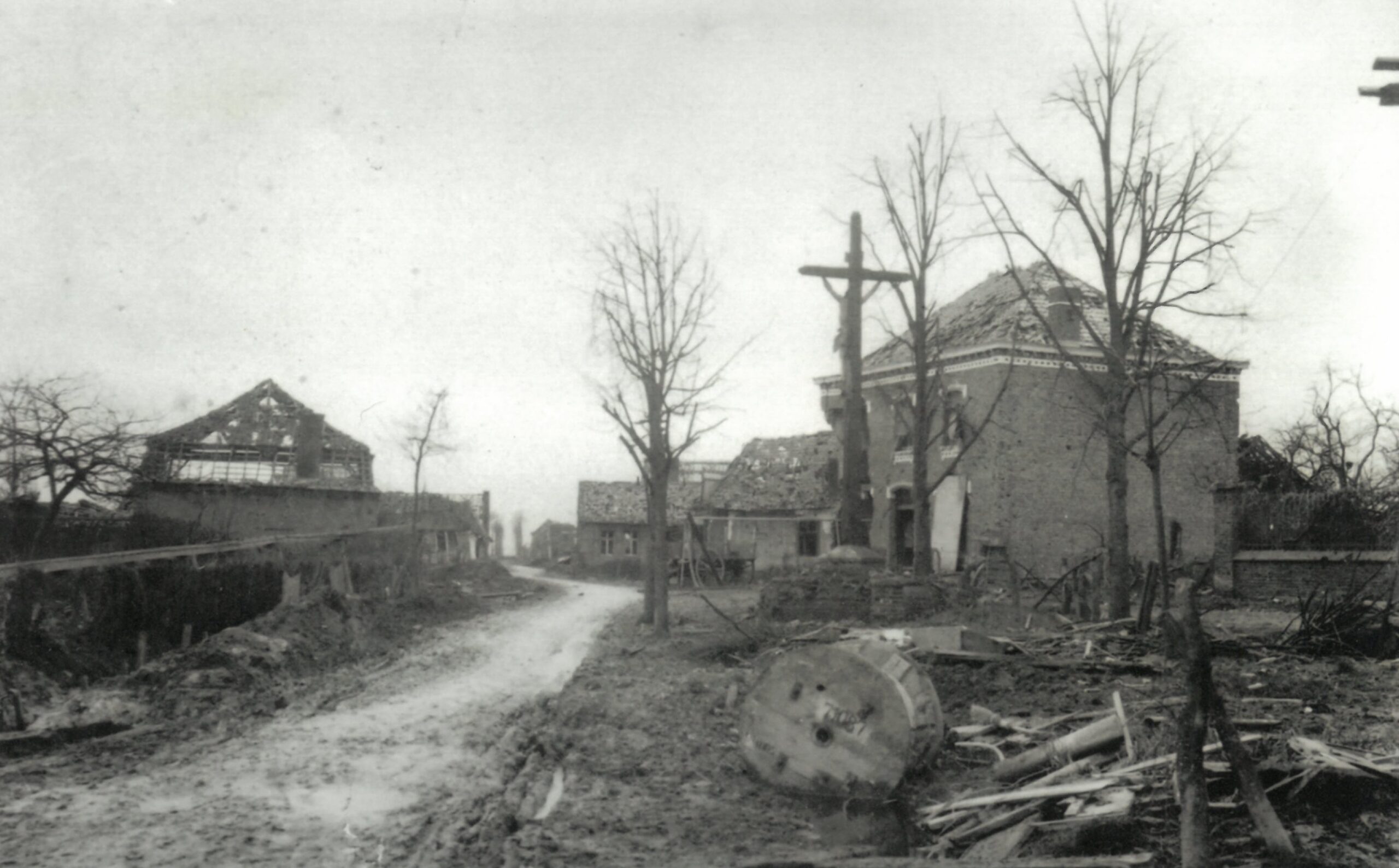
A shell-battered French village, c.1915.

Indian Army troops unloading stores in a French village, 1915
In contrast to the enthusiastic treatment they had received in Marseille, some French villagers and farmers showed prejudice toward the Indian and Gurkha troops, and were reluctant to have them billeted on their property. However, once these individuals began interacting with the Gurkhas their attitudes often changed.
One officer of the 1st Battalion, 1st Gurkha Rifles (1/1GR) recalled an elderly woman who stubbornly refused to allow Gurkhas to sleep in her barn. Exasperated, the officer told his Subedar to ignore her and rest in the barn anyway. The Subedar, favouring a diplomatic approach, asked the officer to leave him alone with the woman so he could sort the situation out. When the officer returned half an hour later, the woman was cheerfully handing the Gurkhas fresh hay to sleep on, and the Subedar was sat sipping coffee by her fireplace.
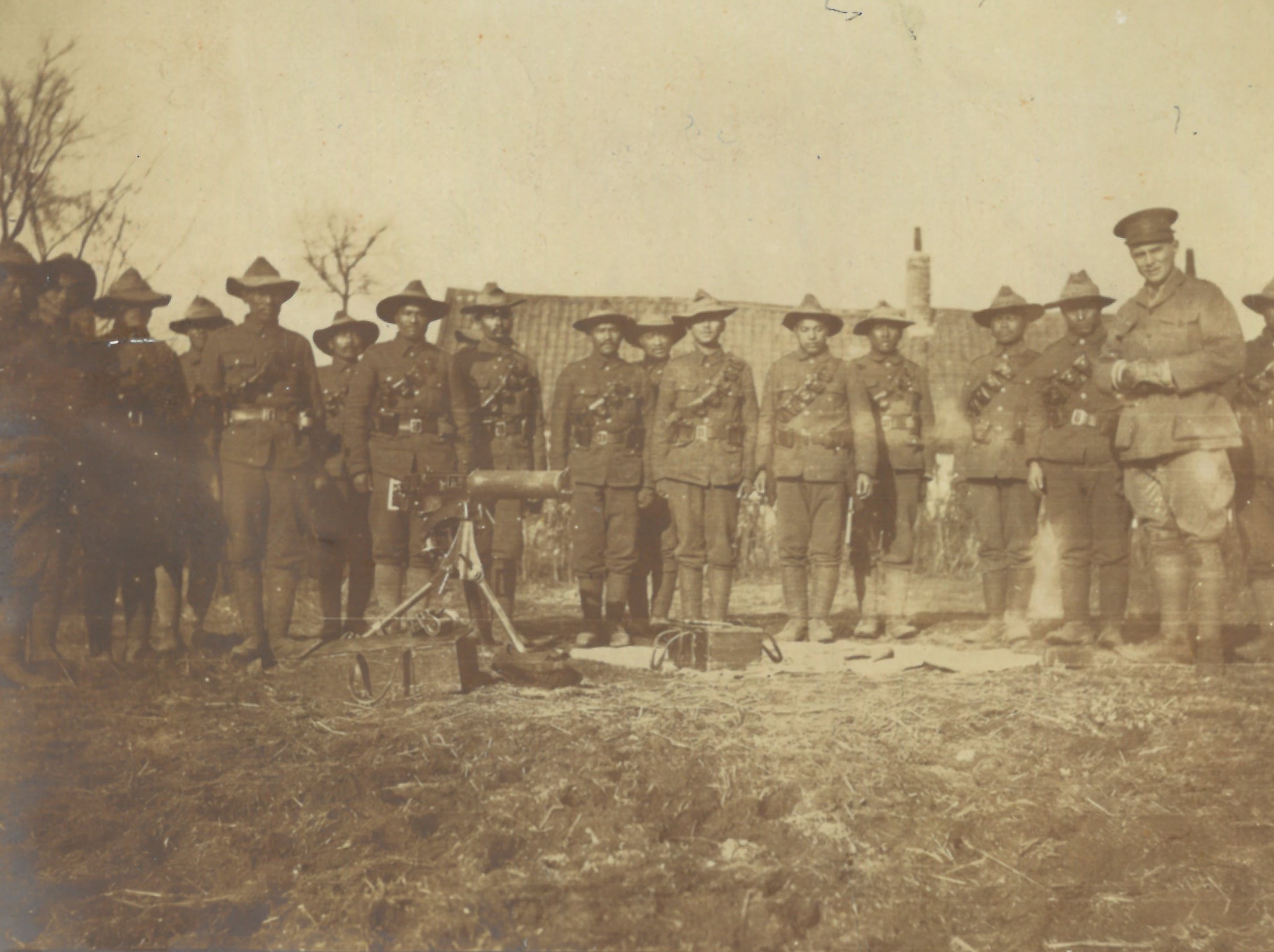
Men of 1/1GRs machine gun sections pose with a Vickers machine gun behind the lines, France, 1915.
In another instance, a farmer who did not want Gurkhas billeted on his farm changed his attitude when the Gurkhas brought him several eggs they had found in his barn. The farmer was pleasantly surprised, stating that French soldiers would have pocketed the eggs and cooked his chickens. Before long, the French populace became used to Indian Army soldiers and incidents such as these became rare.
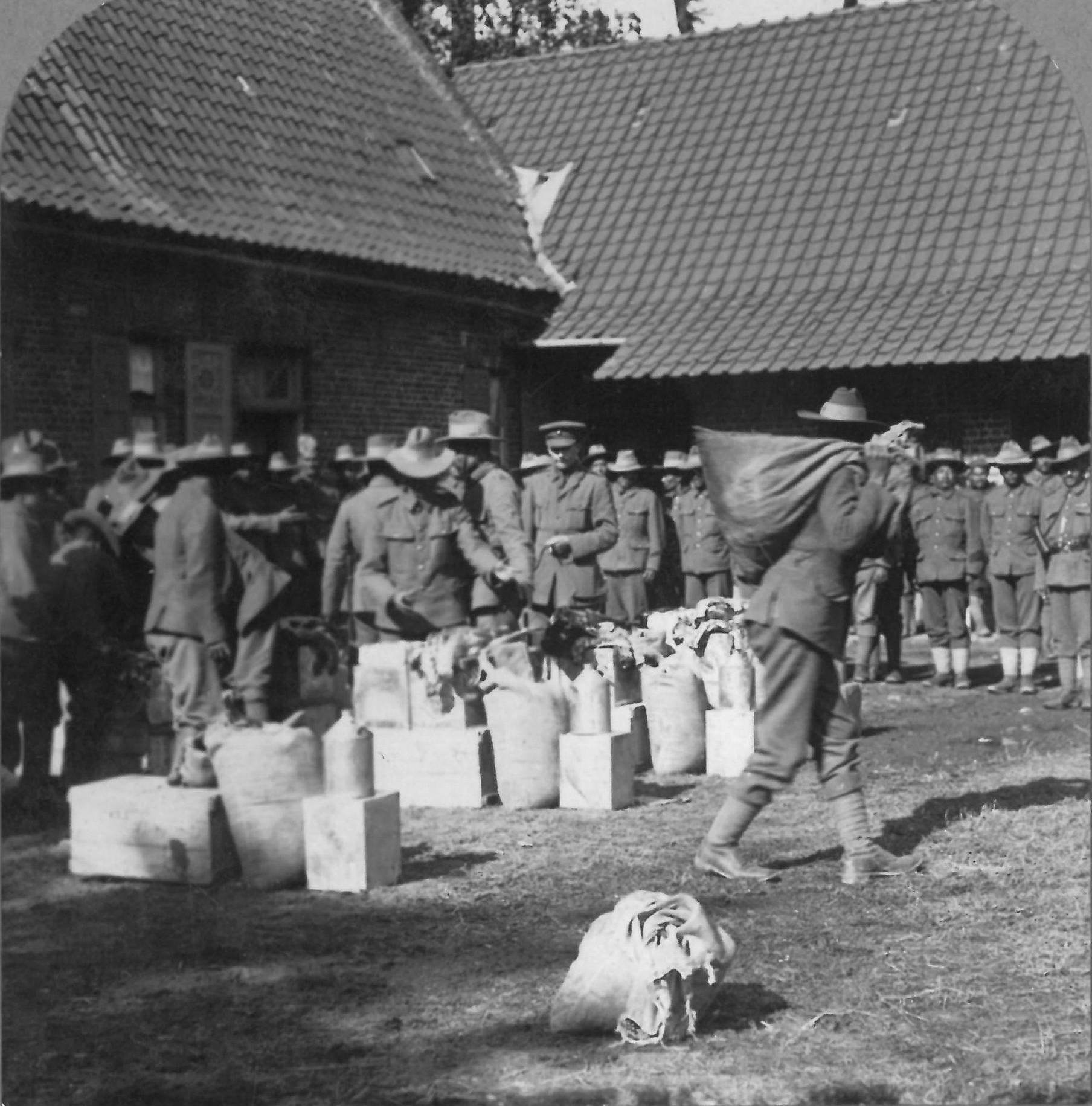
Gurkhas settling into their billet at a French farm, 1915.
Once they had settled into billets, Gurkha battalions began taking their turns in the trenches, facing relentless shellfire and freezing conditions. Later in the war, tours in the trenches were usually 4-6 days in the frontline and a further 4-6 days in reserve. But in the winter of 1914-1915, manpower shortages meant that a battalion could spend up to a fortnight in the forward trenches before they were relieved.
Because of this, rest periods behind the line were hugely important to the wellbeing of Gurkha battalions. However, ‘rest’ was a loose term, and much of the time the men spent behind the lines was dedicated to work fatigues, training, parades and inspections.
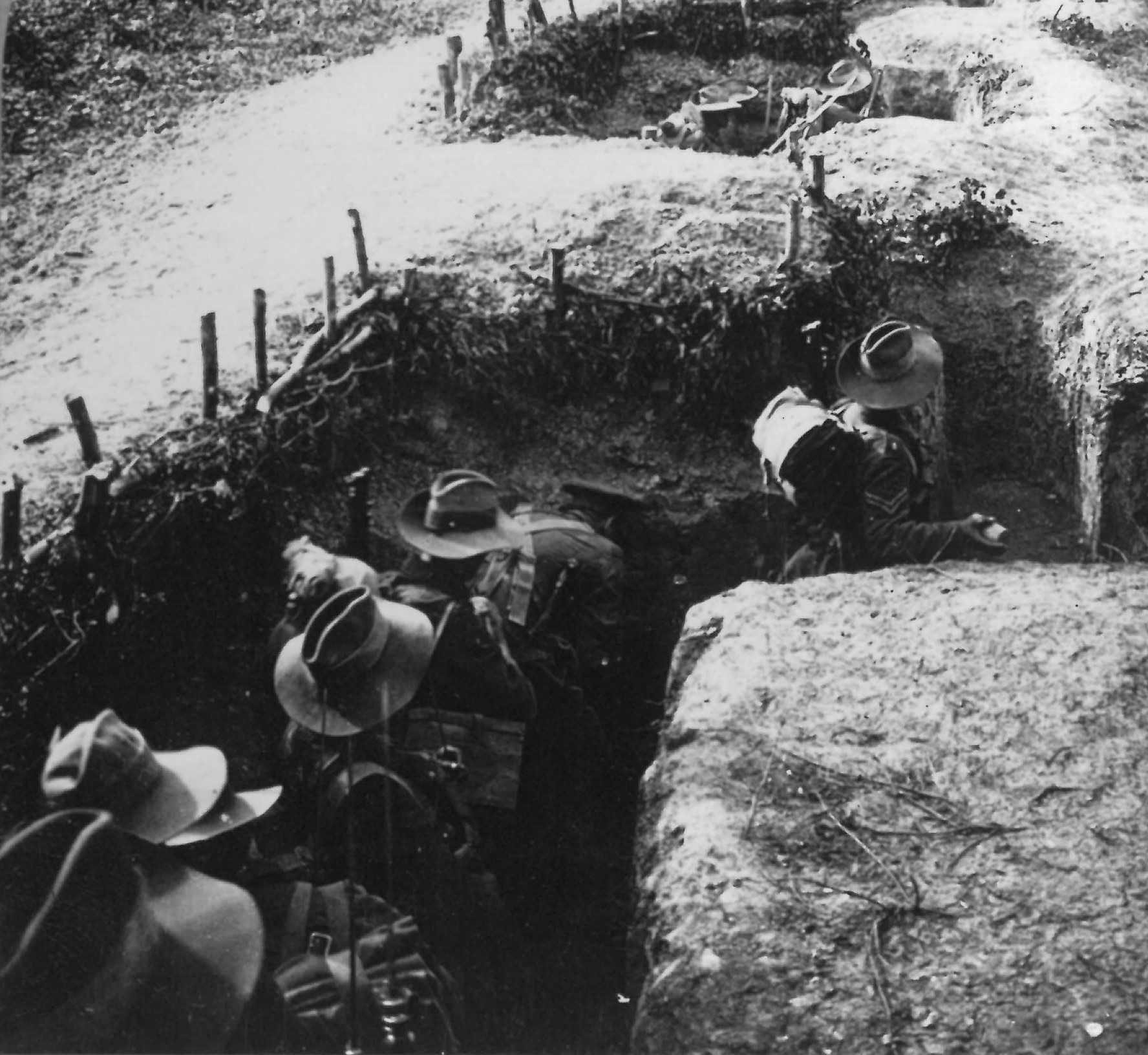
Gurkhas undergoing bombing training, 1915.
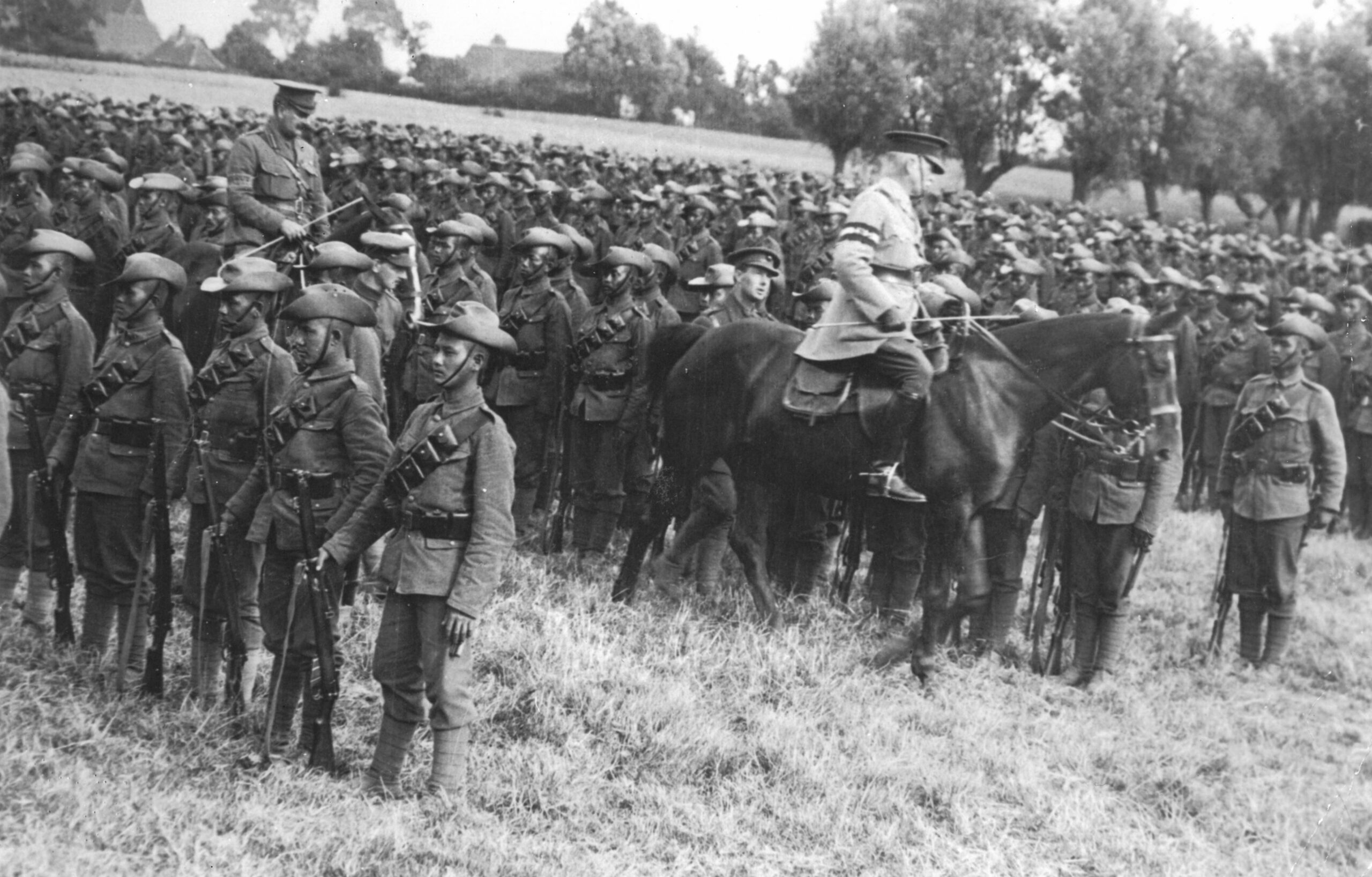
Gurkhas under inspection by General Sir James Willcocks, commander of the Indian Corps.
Despite their busy schedules, Gurkhas still found time for their daily routines and entertainment:
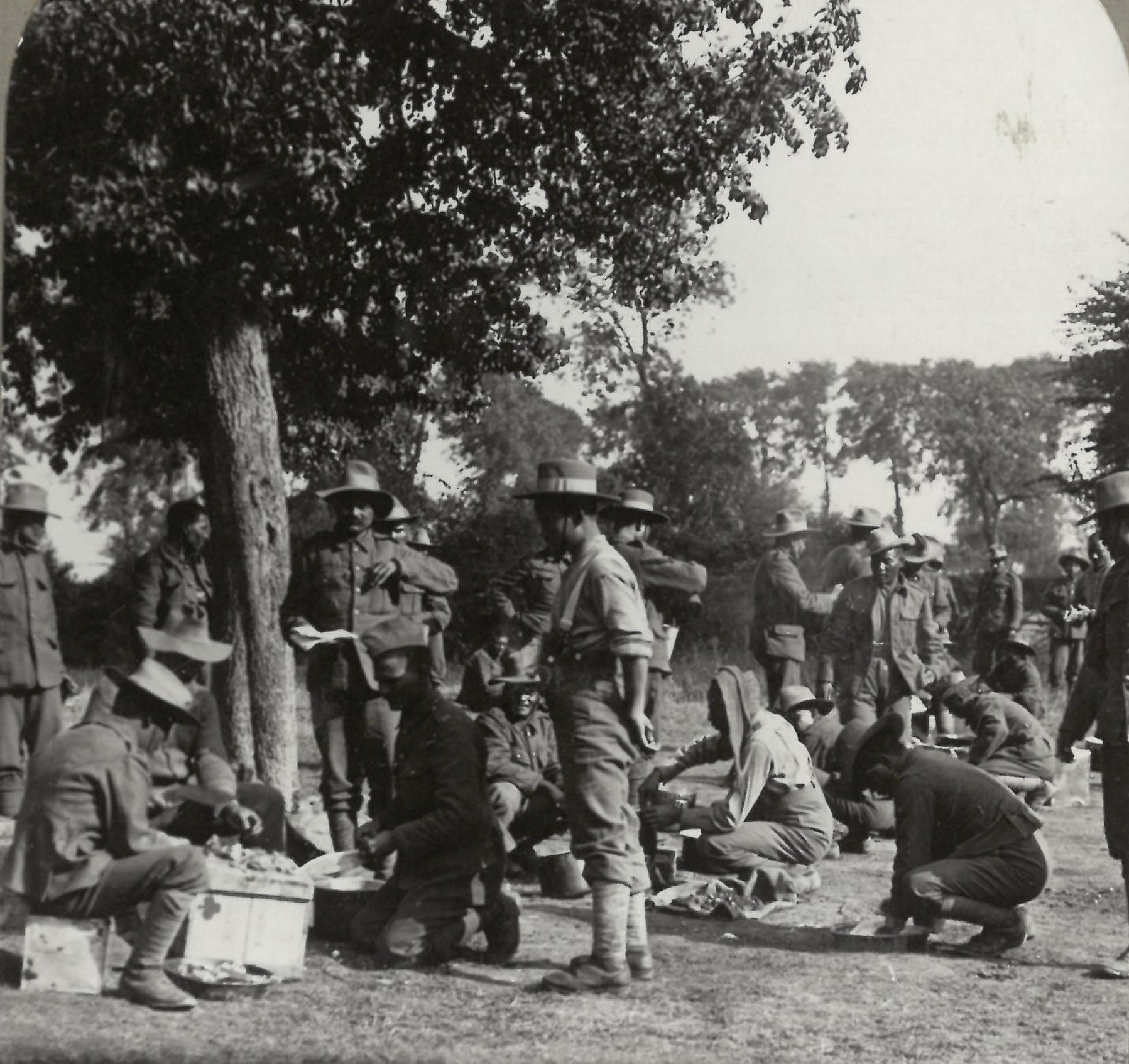
Gurkhas preparing their evening meal.

Khukuri sharpening.
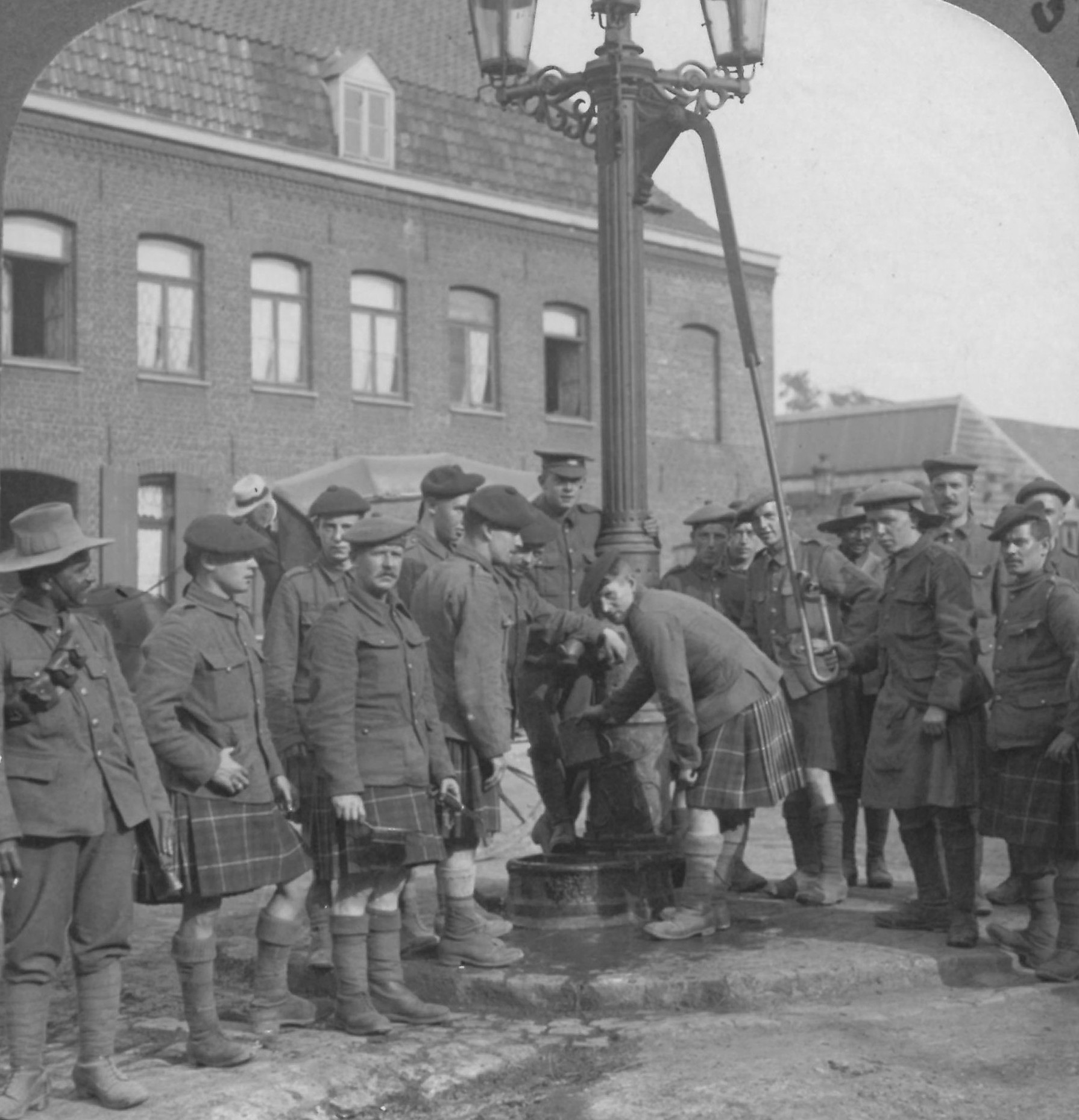
Gurkhas and Seaforth Highlanders collecting water from a town pump, Belgium, 1915.
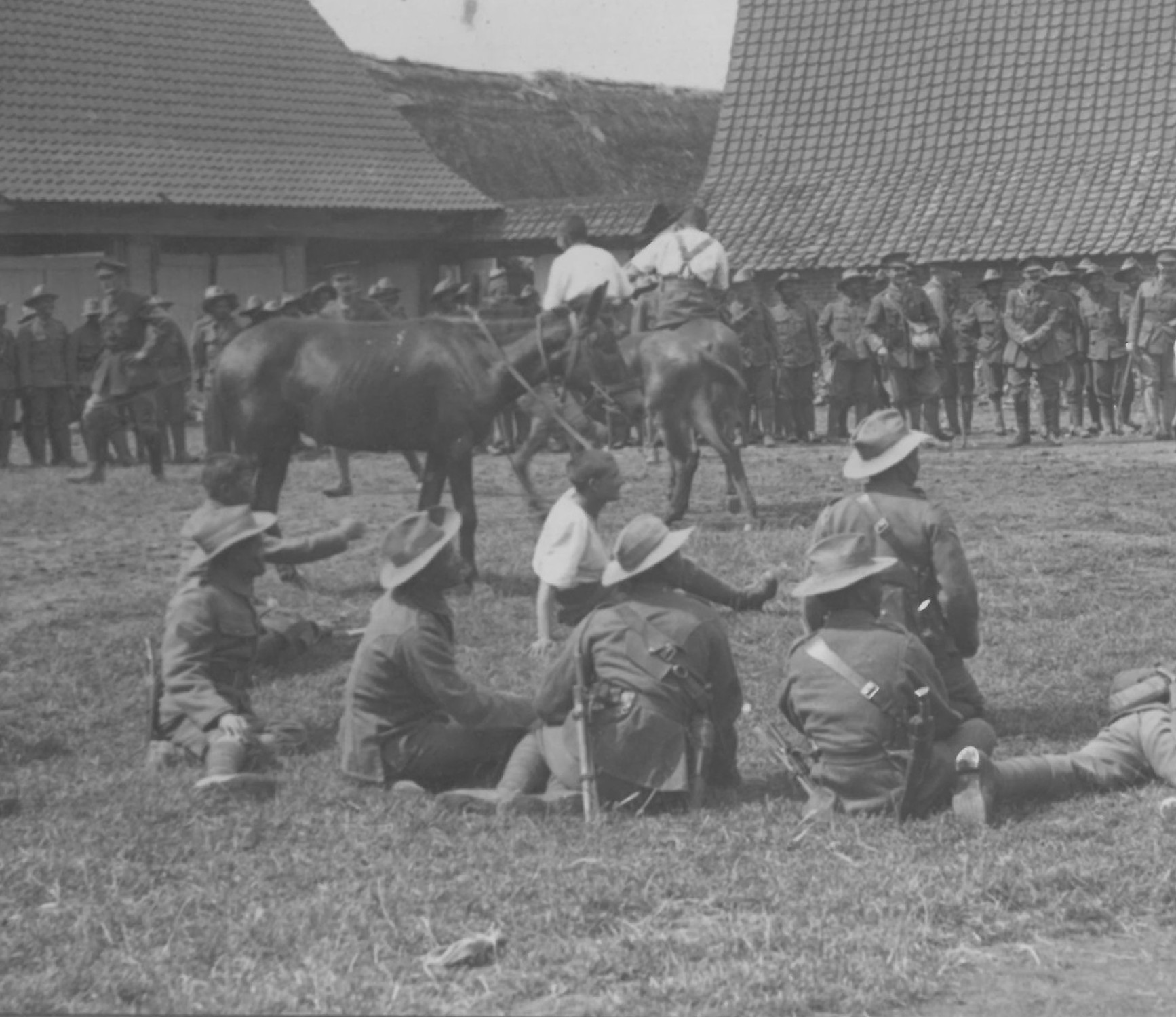
A more novel form of entertainment: mule back wrestling.
Besides sports, games and visits to local estaminets, where Gurkhas could buy a meal or enjoy a drink, the battalions were at times visited by travelling concerts and cinema shows.
Although their periods behind the lines could be restful, the Gurkhas were never completely free of danger. German planes and long range artillery were a constant threat, and it was not uncommon for casualties to occur even when a battalion was several miles behind the line. Whilst resting in La Couture in June 1915, the 2nd Battalion, 2nd Gurkha Rifles (2/2GR) took an almost direct hit to one of its billets, causing 5 casualties. Incidents like these were an unwelcome reminder of the war that was waiting for them just a few miles away.
Holding The Line
For a Gurkha battalion, a typical trench tour in 1915 would proceed as follows.
After a day spent making final preparations for the tour, the battalion would form up by companies in the evening. Reliefs usually took place at night, as any movement across open country during the day risked observation by enemy artillery.
The journey into the line could vary in difficulty, based on weather conditions, enemy activity and the layout of the trench system. When Gurkhas first arrived in France, the trenches were often primitive and poorly designed, and had suffered from the wet and wintery conditions. An officer of the 8th Gurkha Rifles recalled a trench near Le Plantin that, although only being 700 yards long, was so full of mud and water that it took a relief six hours to move along it.
By the onset of 1915, with it clear to British High Command that the war had entered a static phase, the Western Front transformed into a labyrinthine network of mutually supporting trenches that stretched from the beaches of Flanders to the border of Switzerland.

This map shows a trench network occupied by 2/2GR in the summer of 1915, with the British trenches marked in blue.
Because of their complicated nature, trench systems would have sign posts to help soldiers orient themselves. These often referenced a nearby landmark, with this map showing Dead Cow Post, Orchard Post and Fallen Tree Post. But just as often, trench names were random in nature. Some examples from this trench system include Old Rope Keep, Cadbury Street, Teetotal Corner and ‘Kinkroo’ (likely a phonetic spelling of a nearby road called Quinque Rue).
Once they had reached the frontline, the Gurkhas would set about the standard trench routine. This would include ‘stand to’ in the early morning, where the men would line up on the fire step in battle readiness, in case the Germans launched a morning attack. After standing down, they would attend to basic hygiene and breakfast. If enough water was available they might wash and shave their faces.
Because of enemy observation, little work could be done during daylight hours. This gave the Gurkhas the opportunity to snatch a few hours of sleep in whatever place they could lay down without getting trodden on. Most often, this would be along the firestep or in ‘funk holes’, small single-man dugouts scraped into the trench wall.
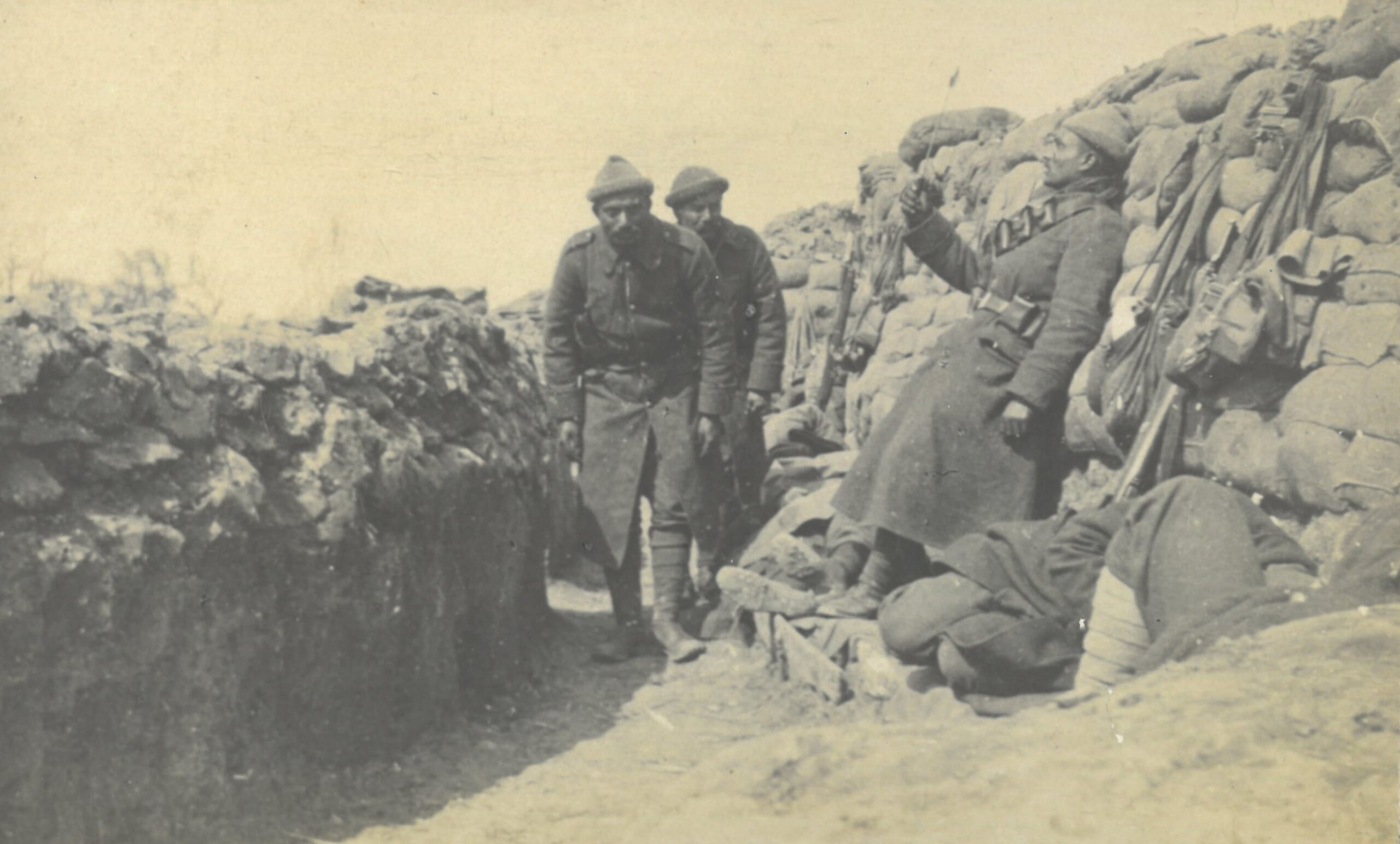
A frontline trench held by the 9th Gurkha Rifles in February 1915. Note the Gurkhas in the right hand corner sleeping on the firestep.
Those not resting would take their turn on sentry, watching closely for enemy movement:
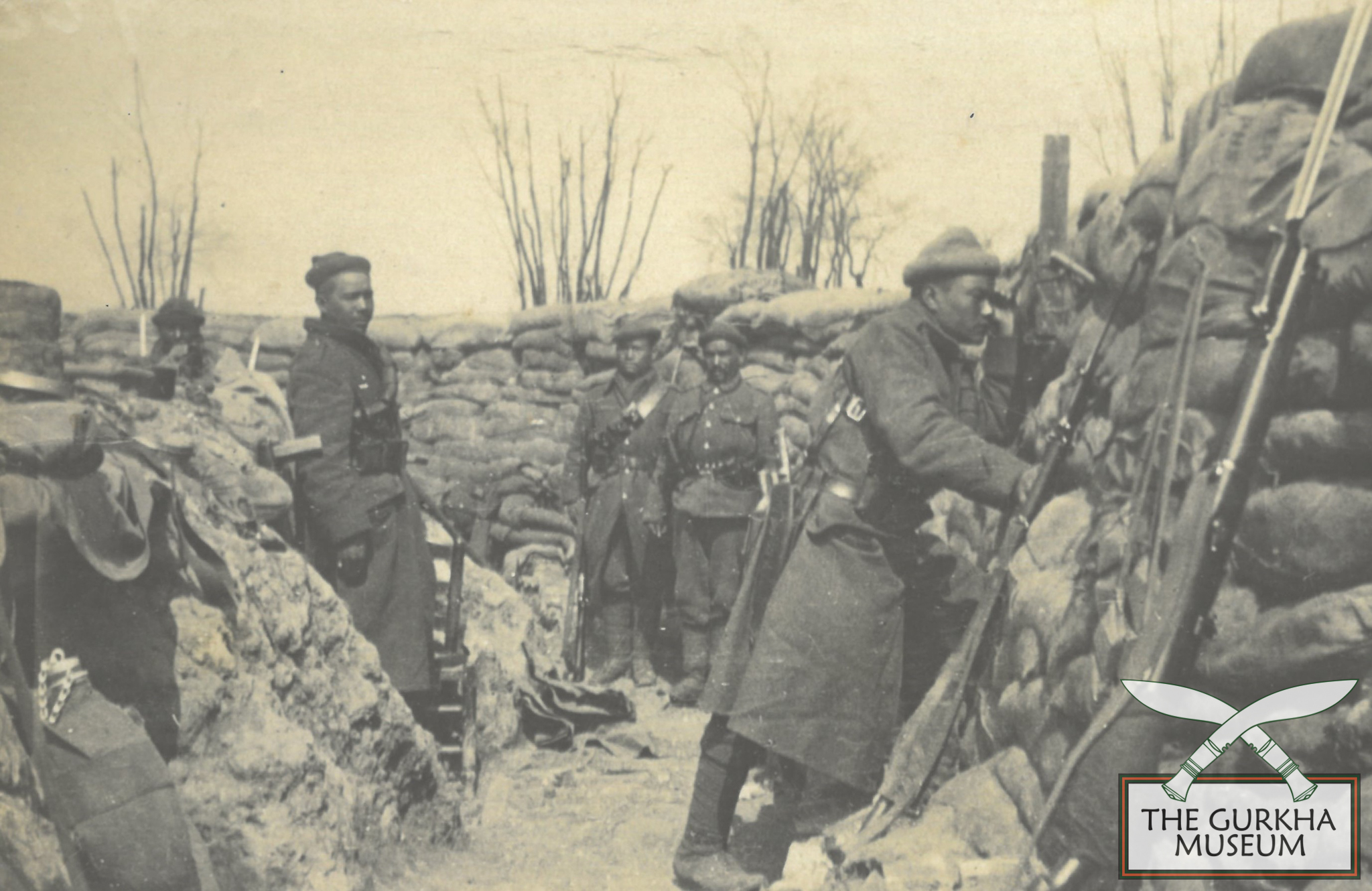
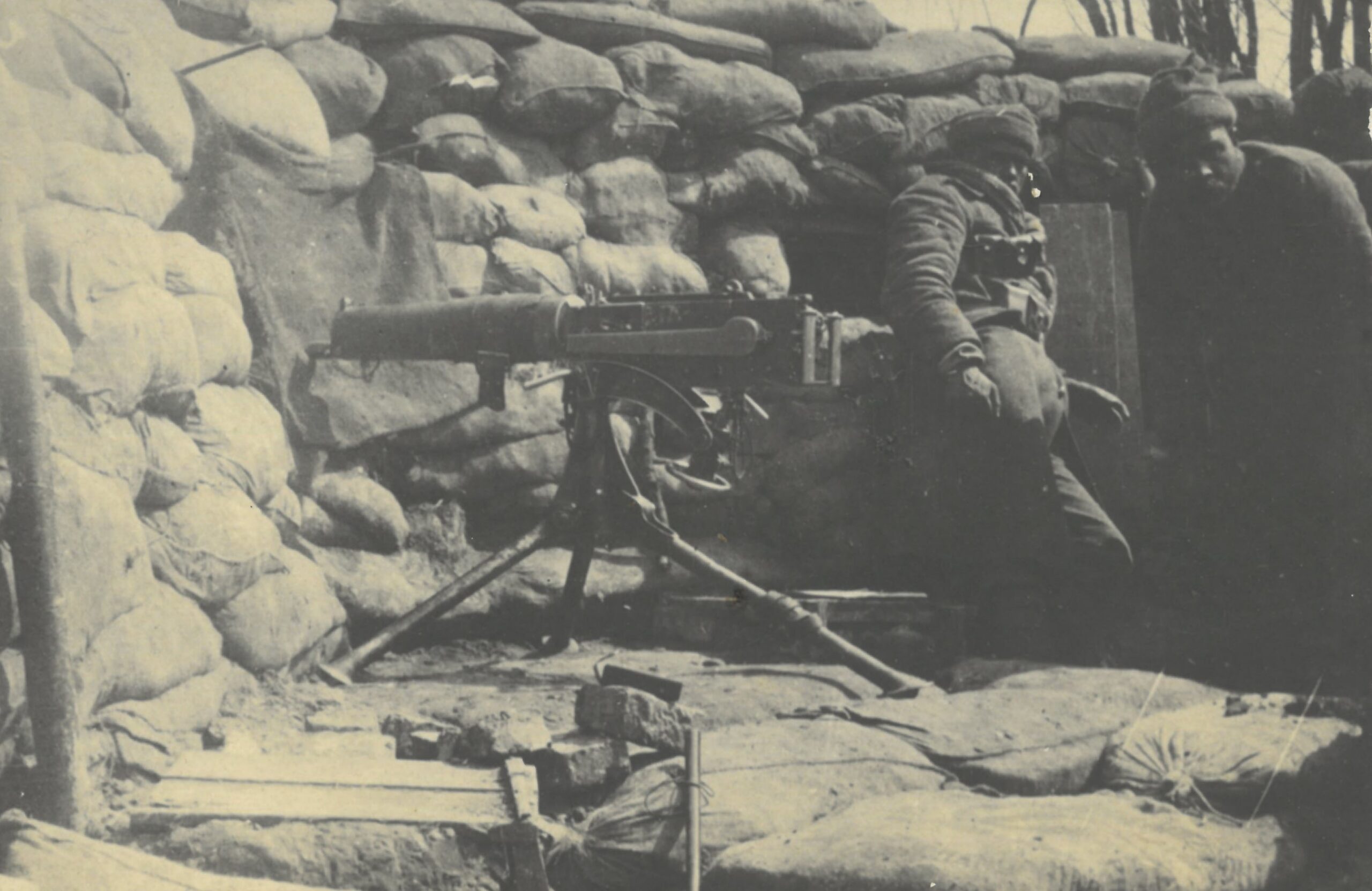
A 9th Gurkhas machine gun position, February 1915.
Evening would bring a second round of stand to. Once night fell, the trenches would become a hive of activity. With less risk of being spotted by the enemy, the parapets and barbed wire would be repaired and reinforced.
Despite the cover of darkness, this was still risky work. The Germans would frequently illuminate the British frontline with flares. For Gurkhas working in front of the trench, these sudden bursts of light would require them to either hunker down or stay stock still, lest any movement bring down a strafe from an enemy machine gun.
Other nighttime activities included patrols into no man’s land, the unoccupied land between the British and German trenches. In some areas, no man’s land could be several hundred metres wide. In others, it might be so narrow that the two sides could hear each other talking. But regardless of how wide or narrow it may be, British Army orthodoxy demanded that the space be dominated.
As such, small patrols of Gurkhas would go out after dark. Because the Germans also sent out their own patrols, skirmishes in no man’s land were not uncommon. Whilst in the line in June 1915, 2/2GR lost two men killed and another wounded as a result of patrols. However, these losses were not in vain; the corps intelligence diary later praised the battalion’s patrols for inflicting casualties on the enemy and capturing multiple prisoners for identification.
The number of casualties suffered during an average trench tour could vary massively. Whilst holding the line at Givenchy in December 1914, the 1st Battalion, 4th Gurkha Rifles took over 200 casualties when the Germans blew a mine they had dug under the battalion’s line. However, instances like this were an outlier. During the quieter periods of 1915, a Gurkha battalion in the trenches might take only a handful of casualties from shelling or enemy snipers.
Back East Again
The First World War saw a significant upshot in the number of Gurkhas visiting the UK. In many cases, these were wounded men who had been sent to hospitals in Britain to rest and recover. The primary hospital in the UK for Indian Army soldiers was set up in the Royal Pavillion in Brighton, which accommodated 600 beds.

Wounded Indian soldiers at the Royal Pavillion, Brighton. Modelled after Indian architecture, it was hoped that the building would be a comfortable and familiar environment for wounded Indian servicemen.
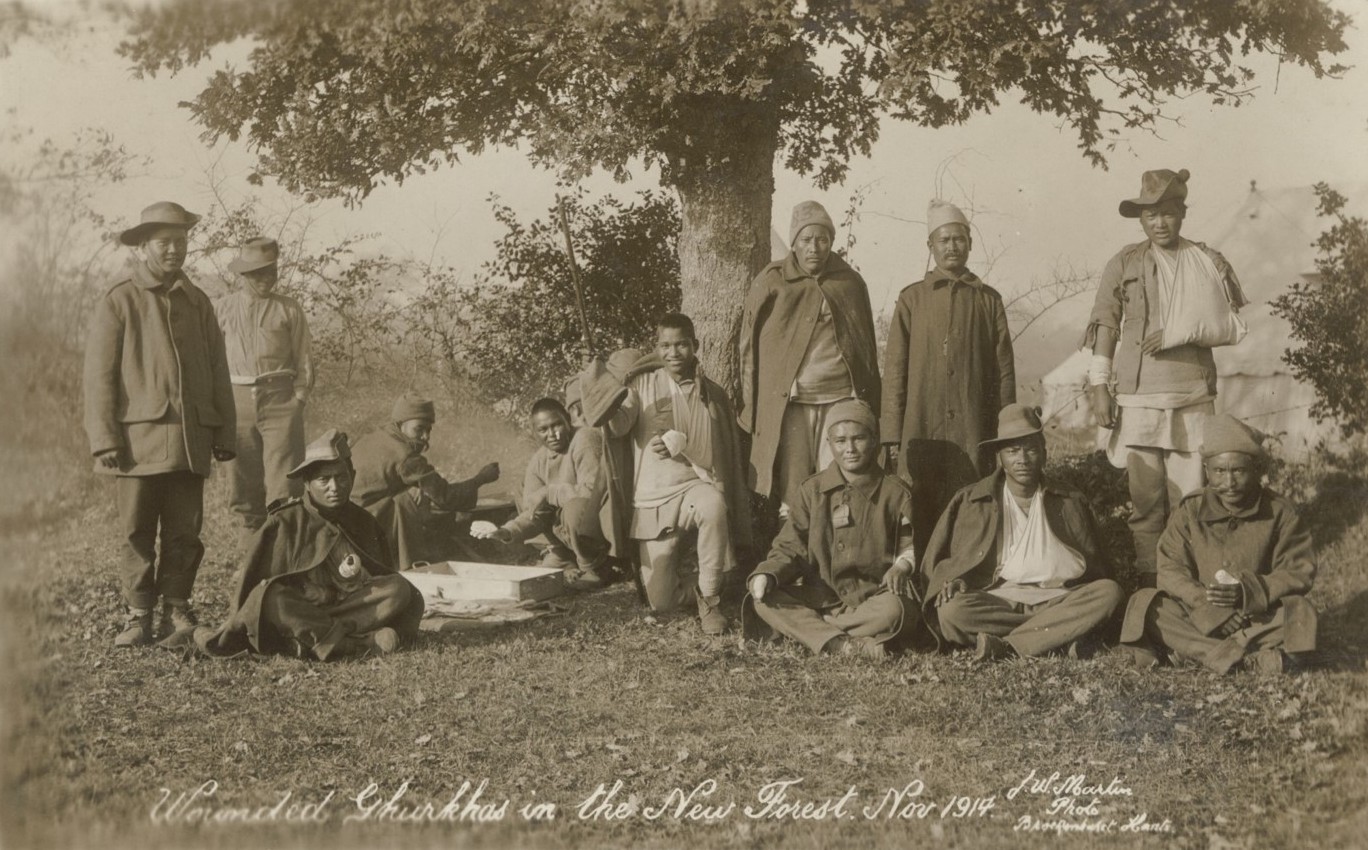
Wounded Gurkha soldiers convalescing in the New Forest, Hampshire, November 1914.
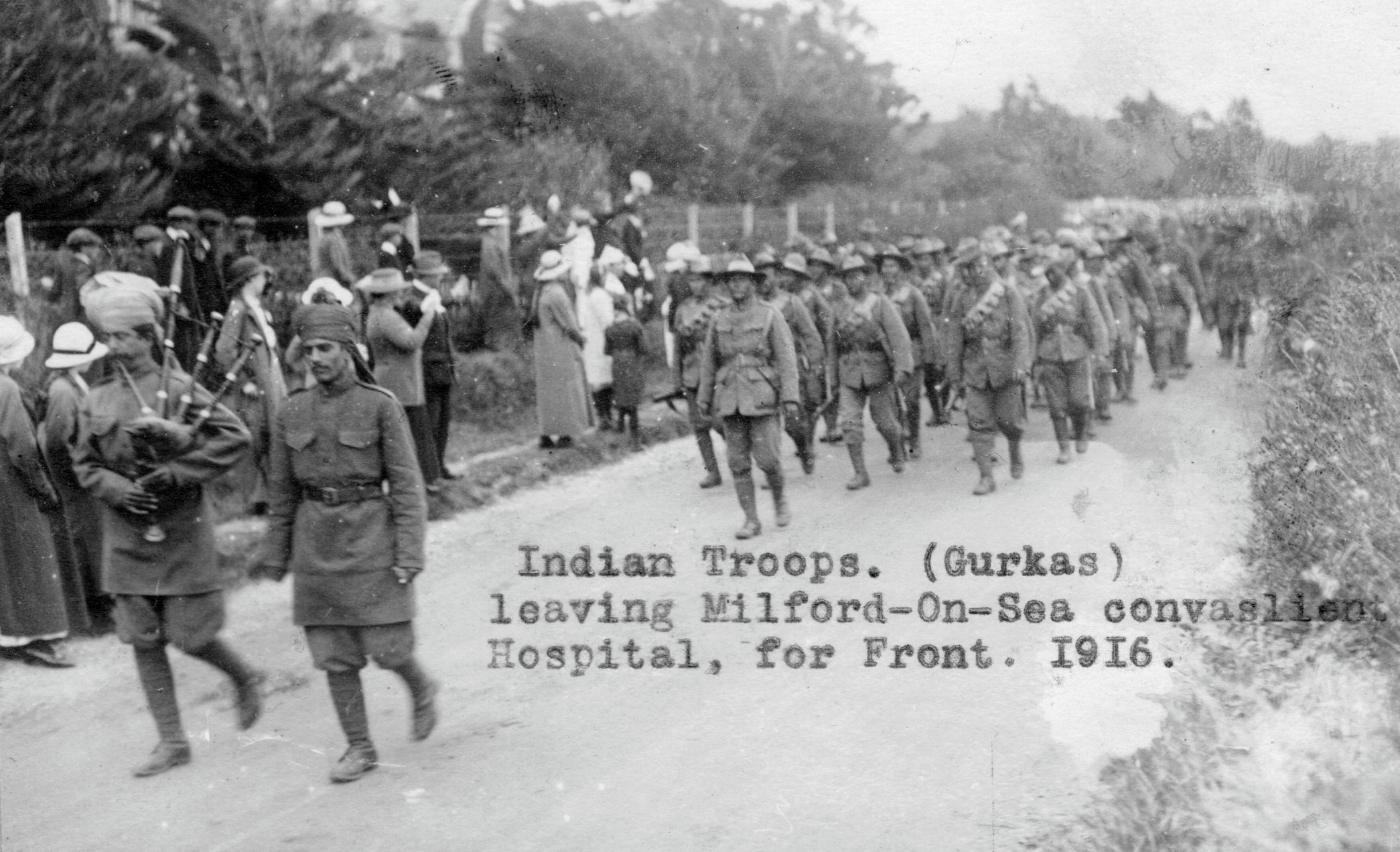
Recovered Gurkha soldiers leave hospital after convalescing in Milford-on-Sea, 1916.
This presence in the UK, as well their exploits in France, raised awareness amongst the British public about Gurkha soldiers. By the end of the war, souvenir shops in British seaside towns were selling Gurkha themed souvenirs, such as crested china khukris.
In November 1915, the Indian Corps and its Gurkha battalions were withdrawn from the Western Front, with only Indian Cavalry units remaining.
By this time, the BEF was being rapidly reinforced by Lord Kitchener’s ‘New Army’, civilian soldiers who had volunteered at the outbreak of the war. With the frontline stabilised and manpower shortages reduced, Indian troops were made available for redeployment. From 1916, many Gurkha battalions would be sent to fight in campaigns in the Middle East. Others went back to India to garrison the North West Frontier, which had been dangerously destabilised by the war.
From 1916, the last remaining Gurkhas in Europe were those being held as prisoners of war, mostly in Germany. These men would remain as prisoners until the Armistice in November 1918.
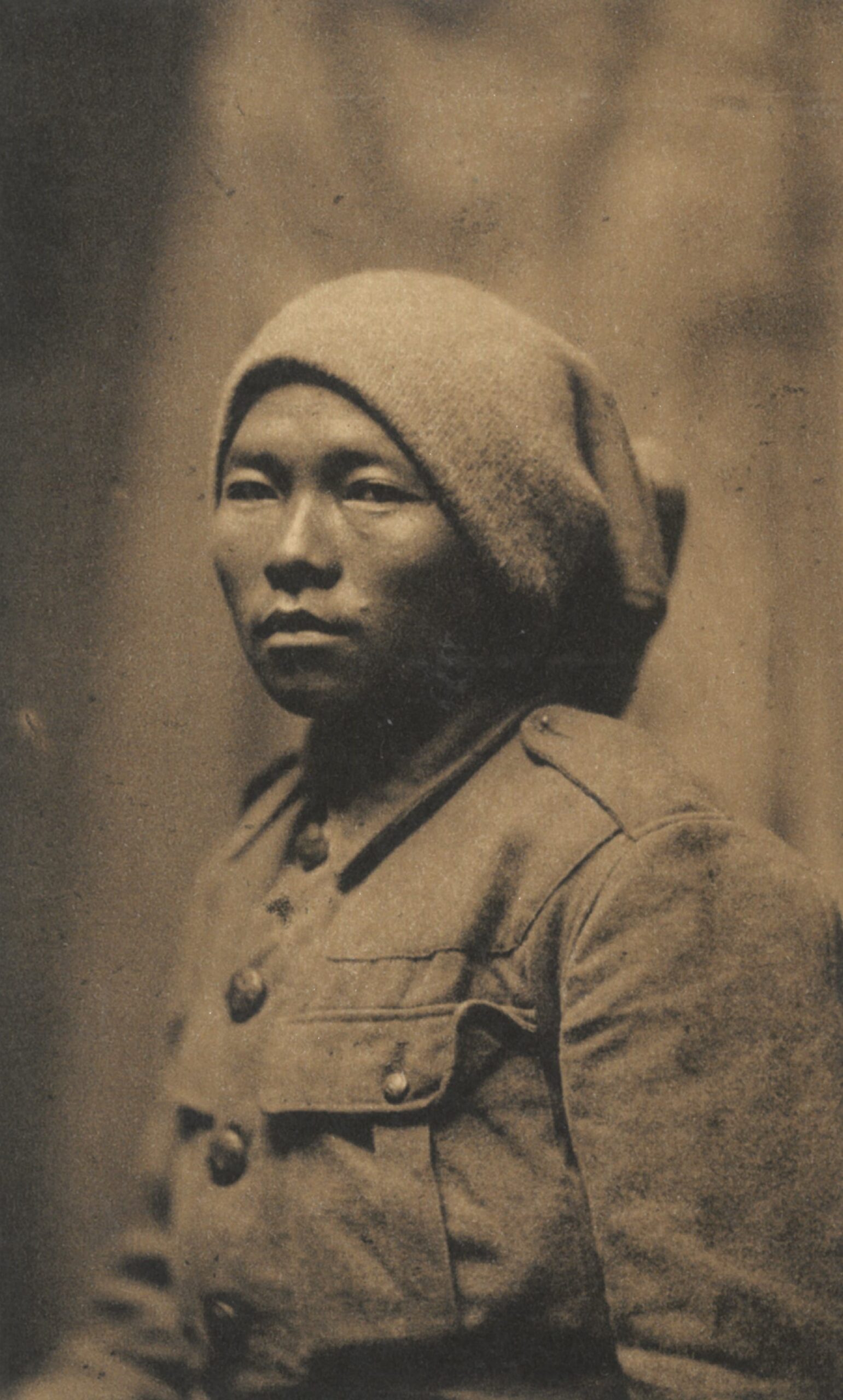
A Gurkha prisoner of war photographed in Münster, Germany, 1916.
The 15-months that Gurkha soldiers spent on the Western Front had been hugely costly in terms of casualties. However, the Indian and Gurkha soldiers that reinforced the frontline during the critical winter of 1914 were vital in keeping Britain in the fight.
Today, major sites that commemorate the Indian Army in France include the Indian Memorial to the missing at Neuve Chappelle. It holds the names of over 4,800 Indian and Gurkha soldiers and military workers who have no known grave.
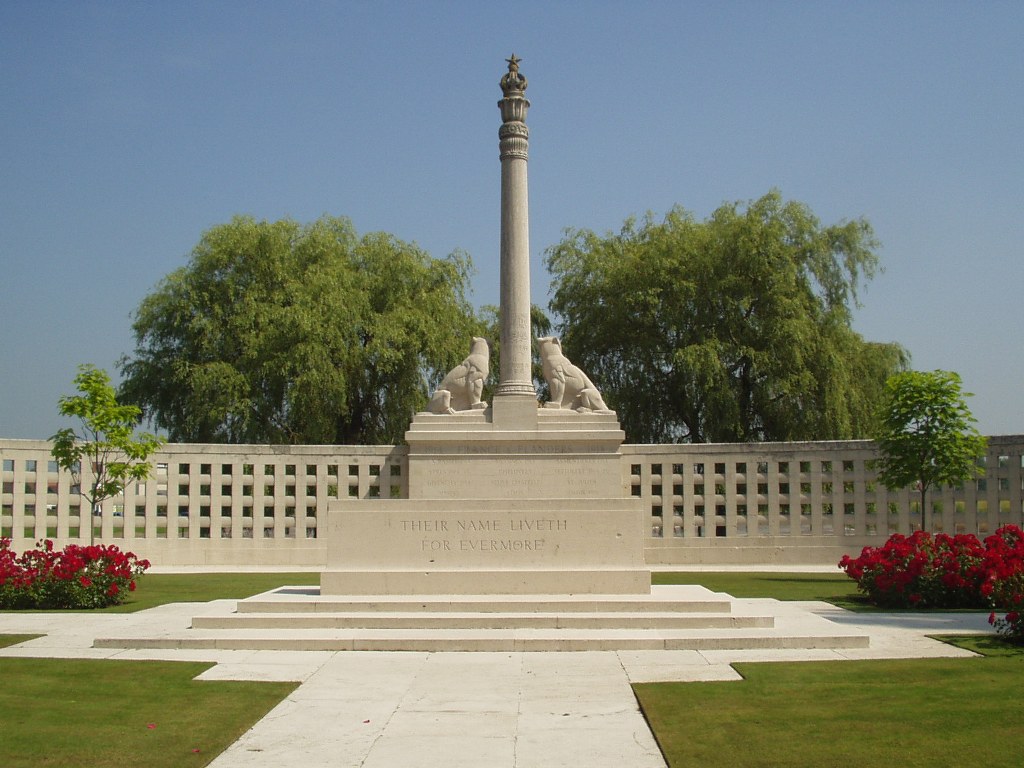
The Indian Army Memorial at Neuve Chappelle. Image credit: Commonwealth War Graves Commission