
Emergency Action: The Gurkhas in Malaya, 1948 – 1960
Emergency Action: The Gurkhas in Malaya, 1948 – 1960
Introduction
Between 1948 and 1960, the British Army fought an extensive campaign in Malaya, known as the Malayan Emergency. The conflict was fought primarily against fighters of the Malayan National Liberation Army (MNLA), the paramilitary wing of the Malayan Communist Party (MCP).
The Emergency was fought in the jungles of what is now the Federation of Malaysia. It was not resolved through set piece battles or large scale offensives, but rather by patrols, ambushes, police actions and brief but intense skirmishes.
At the forefront of this conflict was the Gurkha soldier. Lasting over a decade, the Emergency stands as the longest continual deployment of Gurkhas in a modern conflict.
After the Second World War’s Burma Campaign, many veteran Gurkhas had emerged as first rate jungle fighters. These men not only put their skills to practice in Malaya, but also passed them on to the new generation of Gurkhas joining the British Army following the war.
For the Brigade of Gurkhas, the Malayan Emergency was a crucial deployment in a time of uncertainty and reorganisation. Freshly integrated into the British Army, the precise part that Gurkhas would play in Britain’s global security was still being determined. However, the outbreak of the Emergency thrust the Gurkhas into the role they would hold for the next 50 years, as Britain’s key security forces in the Far East.
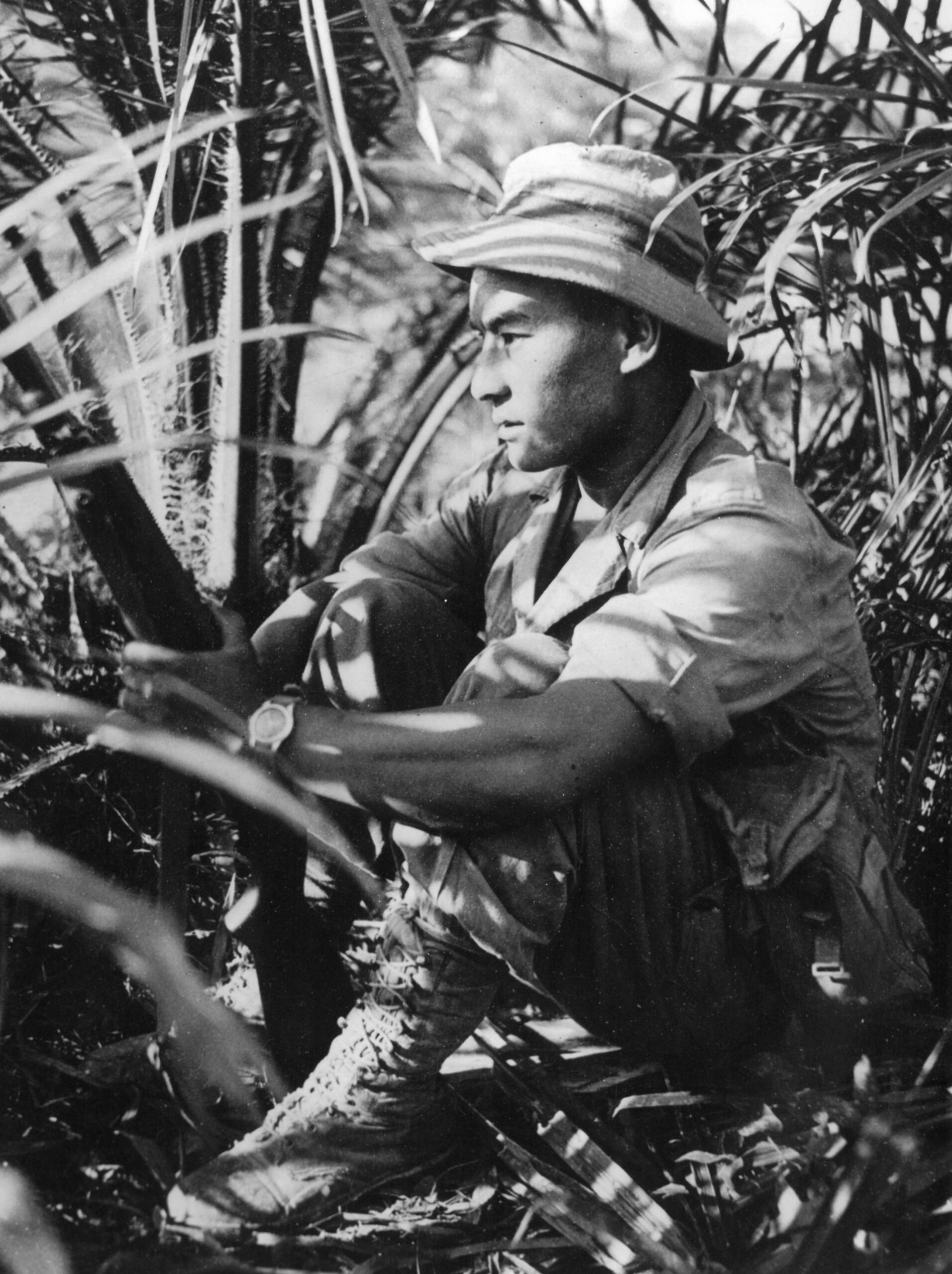
A 2nd Gurkha Rifles soldier in Malaya, 1953.
Background
In 1945, Britain’s economy was in turmoil. Among the priorities of the post-war government was to ‘withdraw from empire’, thus closing down costly overseas garrisons. However, British colonial infrastructure simply vacating a territory was not an option, as the ensuing vacuum could threaten instability.
This was certainly true of Britain’s colony in Malaya. After the war the economy of Malaya, which was based on extensive rubber plantations, was under stress. Food shortages, massive unemployment and poor wages had created a pro-communist, pro-independence movement across the region. The stakes of this situation were heightened by a high level of militarisation across the Malayan peninsula.
During the war years, Malaya was occupied by the Empire of Japan. To fight the Japanese occupiers, a resistance movement was soon formed. These bands of resistance fighters were aided by Britain, who supplied them with weapons and sent special operatives (including Gurkhas) to help train and coordinate them.
By the time Malaya was liberated in September 1945, thousands of Malayans had military training and access to weapons – and were not agreeable to the re-establishment of the pre-war status quo. After Britain failed to address the economic problems in the colony and cracked down on local trade unions, many former resistance fighters flocked to the communist banner and organised into the MNLA.
By the beginning of 1948, tensions were quickly rising between the British colonial government and the Malayan Communist Party. In the context of the Cold War, Britian feared a communist takeover of Malaya would push it into the Soviet Union’s sphere of influence.
Tensions finally boiled over in June 1948, after MNLA insurgents assassinated three European plantation owners. Communist insurgency quickly ramped up, with attacks on mines and rail lines. These attacks prompted the British government to declare a state of emergency, and open conflict began. The British Army quickly scrambled together their local forces in Malaya which, partly by coincidence, largely consisted of Gurkhas.
Emergency
After the independence of India in 1947, a tripartite agreement was signed between India, Britain and Nepal that allowed for Gurkhas to continue to be recruited into British service. In 1948, four Gurkha regiments were transferred to the British Army. With garrisoning them in India no longer an option, the regiments were shipped to Malaya.
The Gurkhas were still in the process of reorganisation and training when the Emergency broke out. Almost immediately, they found themselves deployed into anti-insurgency operations. For many newly trained Gurkha riflemen, this was their first operational experience. Fortunately, each unit contained its share of veterans, with most of the British and Gurkha officers having seen action during the war.
Bolstered by this experienced leadership, the Gurkha patrols scored some early successes against the insurgents. Clearing the jungle around Pulai, men of the 2nd Battalion, 6th Gurkha Rifles (2/6GR) succeeded in capturing numerous weapons stores and an anti-tank gun.
Even in its first weeks the Emergency was an intense conflict, with ambushes against British forces inflicting casualties. The first Gurkha fatality in the Emergency was Lance Corporal Dhawa Ghale of 2/6GR, who was killed in an ambush at Kajang on 17 July 1948. Although not without cost, these early operations quickly acclimated the Gurkhas to the challenges of fighting an insurgent force.
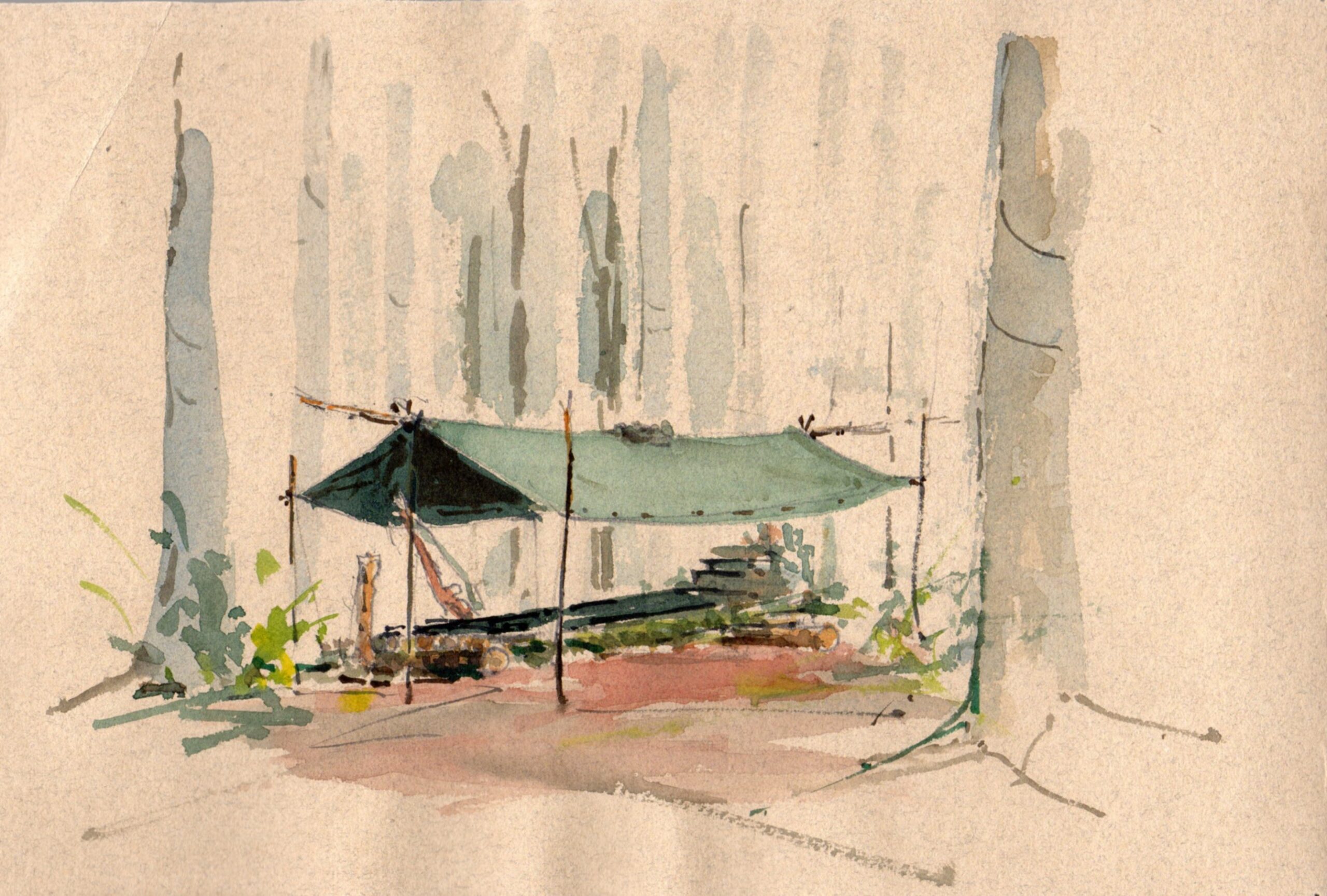
When on operations in Malaya, Gurkha units could spend weeks living in small, improvised jungle camps. 2GR officer Major John Mole made this water colour sketch of his shelter. Malaya, 1950s.
For some older Gurkhas, the conflict took on a familiar character. 10th Gurkha Rifles (10GR) soldier Gundabahadur Rai recalled being ambushed in a rubber plantation, thinking ‘It was like Burma all over again’.
For younger Gurkhas, operating in the Malayan jungles came as a shock. Chandrabahadur Rai was around 18-years old when he was posted to the 7th Gurkha Rifles. He described the severe discomforts of jungle warfare:
‘We had many contacts in those early years. At times it rained all night and there were leeches in profusion. I wore wet jungle boots without taking them off for a week, going on and on with my feet so sore that it was not easy to walk. The jungle boots made me feel very hot. When I did take my boots off my skin was in ribbons. We had to keep alert all day and patrol continuously’.
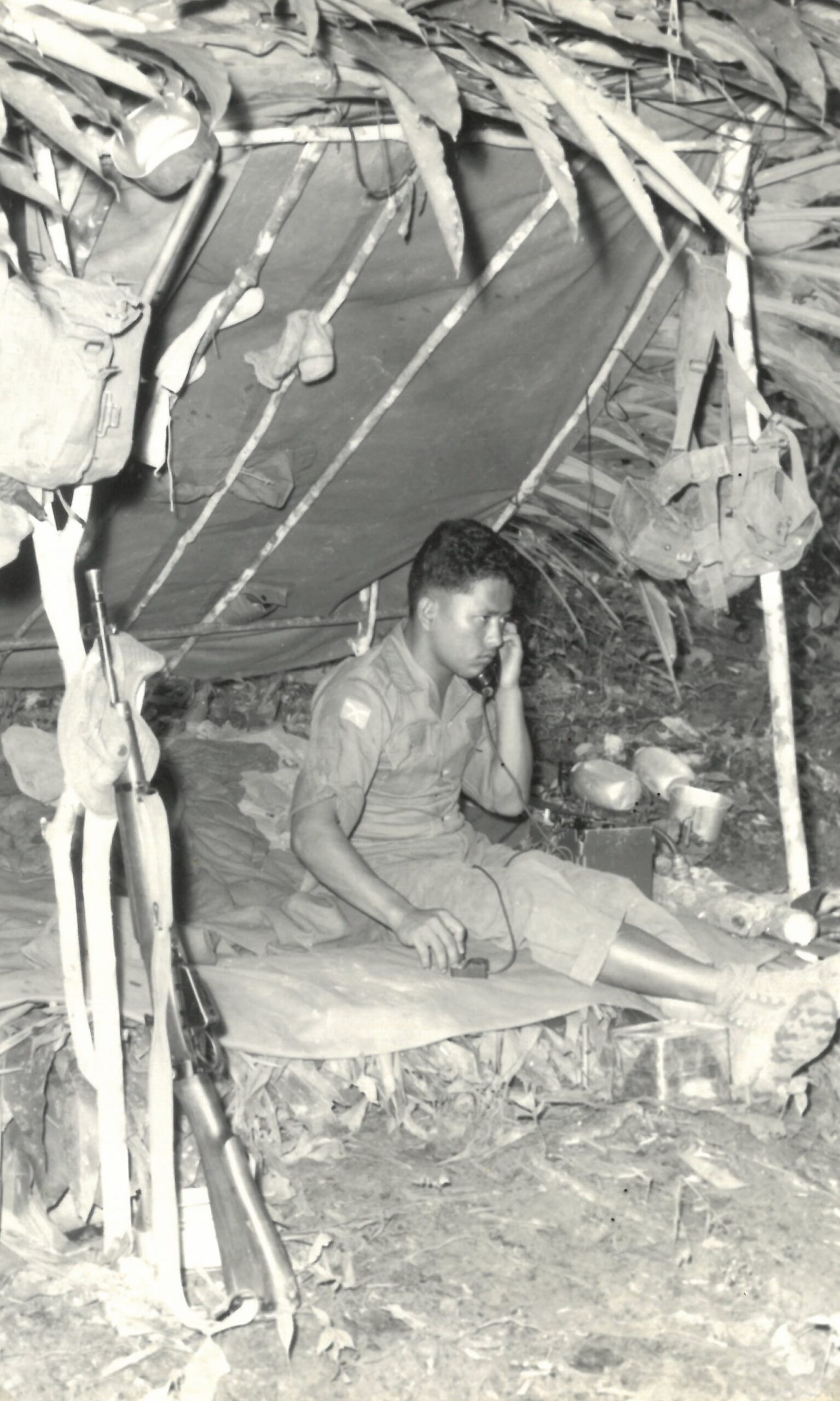
A Gurkha radio operator in a jungle camp, Malaya.
Constant alertness was the key to survival in Malaya. There were no fixed front lines, and the MNLA used the cover of the jungles to travel around the region. This meant that their camps were widely dispersed and ambushes could occur at any time.
But the Gurkhas adapted quickly, and it was not long before they were actively tracking MNLA units and laying down ambushes of their own.
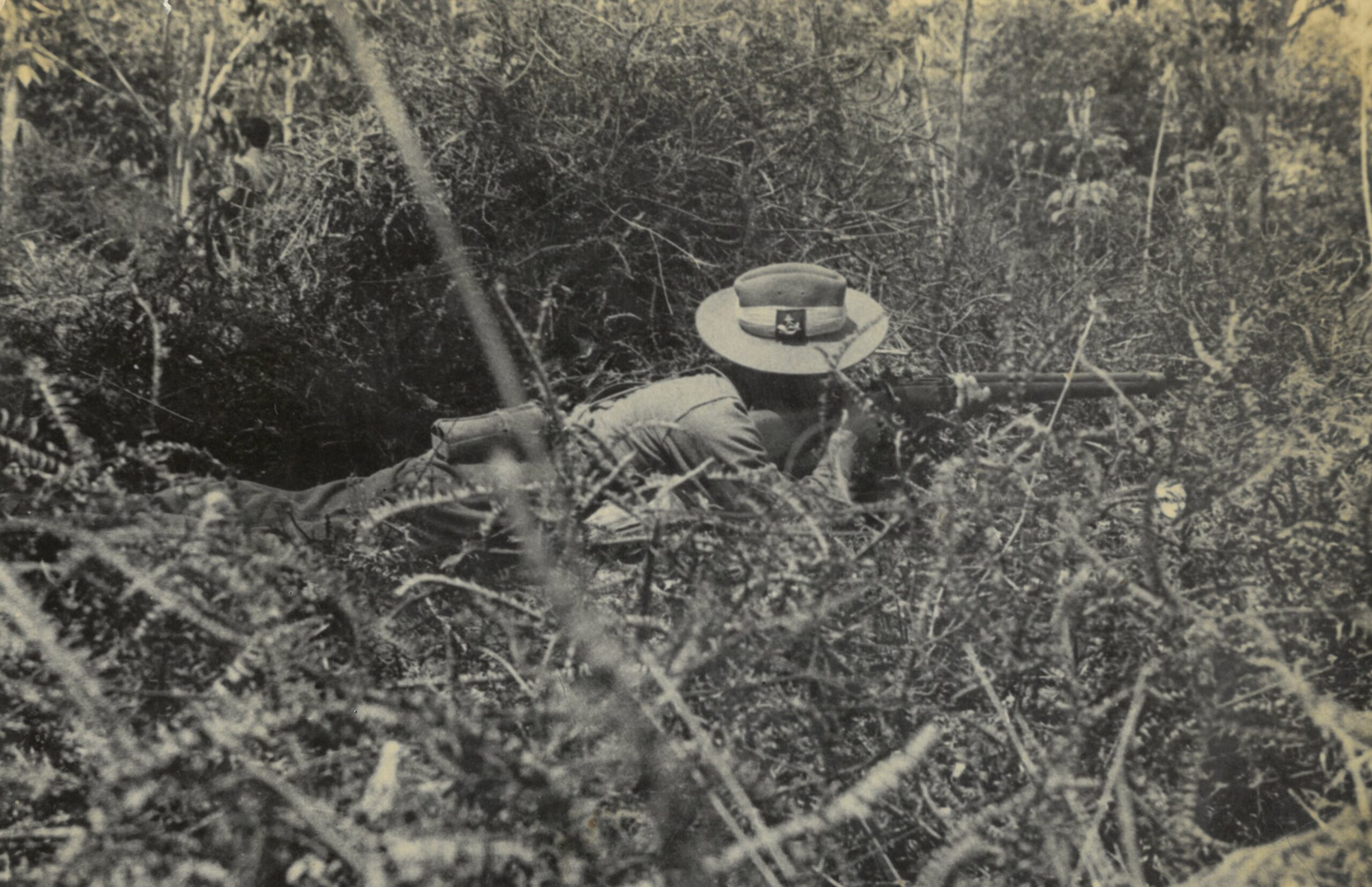
Rifleman Ranjit Rai, 10th Gurkha Rifles, in Malaya, 1950s.
The Gurkhas, because of their long history in India, took to referring to the MNLA fighters as ‘daku’, which means bandit in Hindi. Sergeant (Sgt) Chandrabahadur Rana of the 2nd Battalion, 2nd Gurkha Rifles described an ambush he took part in:
‘The approach march took all day and we reached their camp before midnight. I went forward with my men and the daku were moving around near us. We could have been seen at any moment…I went into the camp and, fumbling around, caught hold of a man’s head. He shouted in alarm and woke up all the others…
Fire broke out from automatic weapons and it was only later that we found out there were 30 daku in the camp…I saw flashes of bullets being fired at me from about 15 yards in front. In my carelessness I dropped my magazine on the ground and felt around for it to put it back on. I could not find it so went ahead to where the Bren gun was firing at me, took it out of the daku’s hands and routed the rest of them. I killed two, wounded two who escaped and, so we were told, later died’.
For his role in the ambush, Sgt Chandrabahadur was awarded the Military Medal.
By the mid-1950s, the MNLA were becoming increasingly spent. In addition to successful raids and patrols, British forces also undermined the MNLA through denial of critical resources. This strategy led to one of the Emergency’s most controversial aspects – the ‘new villages’.
Initially, the MNLA was able to gather recruits and supplies from Chinese immigrant communities living near the fringes of the jungle. Although some of the settlers gave support willingly, others were coerced into doing so through violence and intimidation. From 1950, the British-Malayan government forcibly relocated thousands of people from their communities and placed them into newly built settlements, referred to as the new villages.
The new villages were touted as an improvement over the settlers previous living conditions, with improved access to education, healthcare and protection from the MNLA. Whilst this was true in some cases, the settlers lived under strict military curfew and had their movements tightly restricted. This did little to endear local people to the British Army.
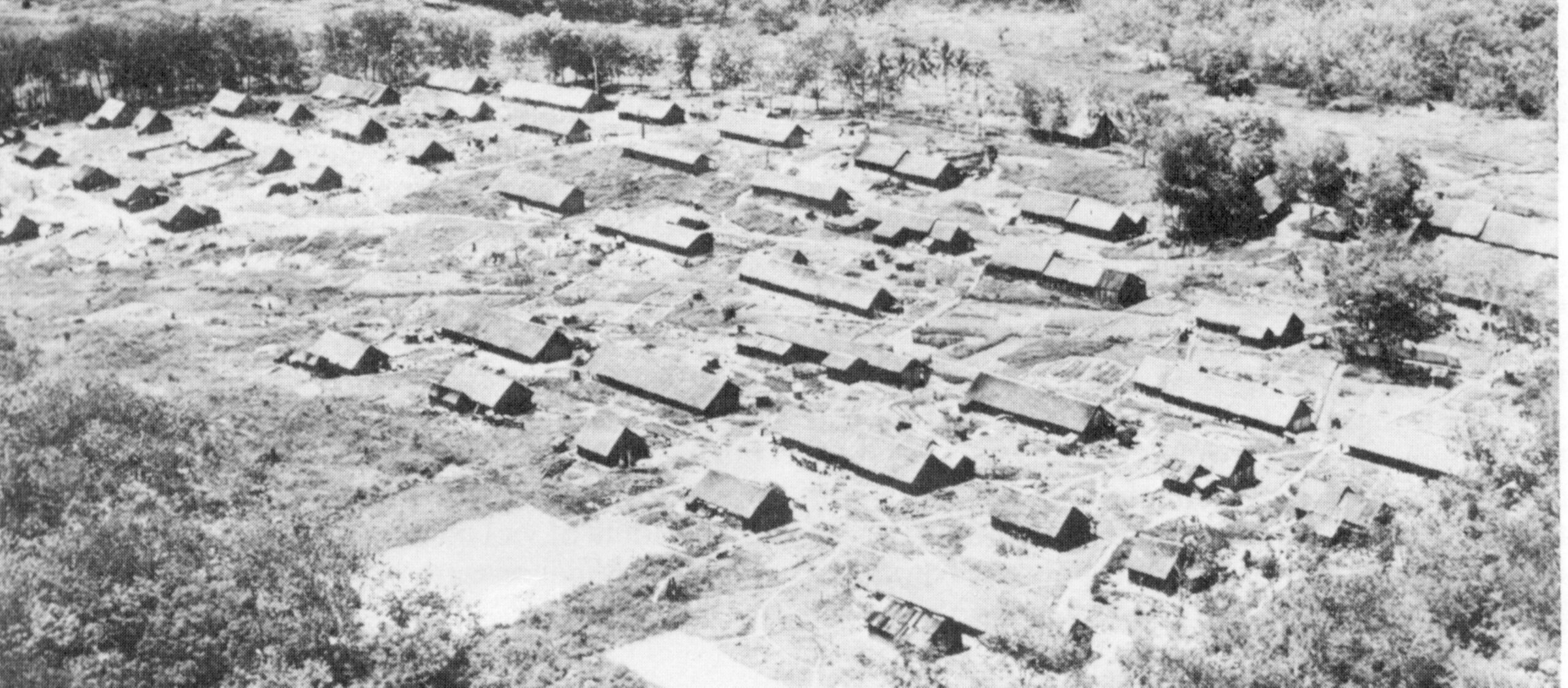
A new village.
Despite the controversy surrounding them, the relocations did succeed in thinning the MNLAs rural support and access to food. Other efforts included Operation Cobble, initiated in 1957. Cobble was primarily a food denial operation, calling for road blocks and search points at ‘the entrances and exits to every new village, kampong (compound), estate and labour line in the Segamat Police Circle’.
The 2nd Battalion, 10th Gurkha Rifles (2/10GR) were involved in this operation, which many Gurkhas felt was dull and routine work when compared to the earlier years of the Emergency. However, in July 1957 they were relieved of these duties and were able to dedicate themselves to flushing out MNLA remnants.
They had a successful action at Bukit Siput New Village in August, acting on information that food was being smuggled out of the village to an MNLA platoon. After an informant passed along intelligence about the next MNLA pickup, Major Charles Wylie laid a trap for the insurgents.
Because it was suspected there were MNLA sympathisers in the village, secrecy was essential. The ambush party, led by Sgt Damberbahadur Tamang, was placed in the only hiding place available – a chicken coop. Further ambush positions were laid on the tracks around the village, to prevent any enemy escaping.
On 28 August, Sgt Damberbahadur’s party lay in wait in the coop, peering through the wooden slats for enemy movement. Suddenly, the door to the coop sprang open and Corporal (Cpl) Jitbahadur Pradham found a shotgun pointed at him. Without hesitation, Cpl Jitbahadur fired a burst at the enemy figure, downing him. Cpl Jitbahadur then killed two more insurgents as they tried to flee. With the sound of gunfire, the remaining MNLA soldiers scattered. However, two would be killed by the following day, including an MNLA platoon commander.
The action, known by 10GR as the ‘Chicken Coop Ambush’, signalled the end of MNLA insurgency in the Segamat area. It joined many other districts in which MNLA activity had been so thoroughly suppressed that it was no longer classified as a significant threat.
Just days after the ambush, the British government ceded independence to Malaya. This undermined the MNLAs anti-colonial, pro-independence messaging and its remaining popular support quickly diminished. By 1958, the peak of the Emergency was long past, and the remaining MNLA fighters were scattered across the jungle. Increasingly starved of support and with their numbers dwindling, most MNLA holdouts either fled the country, surrendered, or ceased activity. The Malayan Emergency was finally declared over on 31 July 1960.
With the loss of 1,443 British servicemen, the Emergency is the UKs deadliest conflict since the Second World War. In addition to Britain’s casualties, Malayan security forces suffered over 1,300 killed. The MNLA also suffered heavy losses, with over 6,000 killed.
If you would like to learn more about the Gurkhas contribution to the Malayan Emergency, the Gurkha Museum is hosting a lecture on this topic, The Gurkhas and The Malayan Emergency, on 30 November 2026.
The talk explores why preventing a Communist takeover of Malaya was strategically important, the key personalities on both sides of the conflict, and the tactics, weapons and challenges of fighting in dense jungle terrain. Particular focus is given to the extraordinary resilience, endurance and professionalism of the Gurkhas, whose contribution was instrumental to the campaign’s success. It is delivered by military historian and author Rupert Hague-Holmes.
To purchase a ticket, please visit the link on our website: https://thegurkhamuseum.co.uk/event/gurkha-contribution-malayan-emergency/