
After Victory V: The Partition of India
After Victory V: The Partition of India
Introduction
In the summer of 1947, Gurkha soldiers found themselves amid the Partition of India. With an estimated death toll ranging between 200,000 to 2 million people, mostly the result of intercommunal violence, starvation and disease, it was one of the worst humanitarian disasters of the 20th century.
The Partition of ‘British India’ into the two states of India and Pakistan came as the result of negotiations between the British government, the Indian National Congress (which would soon become the dominant political party in India) and the All-India Muslim League.
The Muslim League, which was committed to forwarding the interests of Indian Muslims, felt that they would be ignored by a Hindu-majority Indian government. Consequently, it campaigned for the formation of Pakistan, a sovereign Islamic state that would be largely centred around the Punjab region. This was contentious because the Punjab also held large communities of Hindus and Sikhs, who faced the threat of persecution and displacement. This fuelled intercommunity tensions and violence around the country.
Though the topic remains debated, it is generally thought that had the British government paced Indian independence over several years, then the violence may not have reached the scale that it did. However, in 1947 the British government was under tremendous pressure to ‘Quit India’.
Part of this pressure was economic, as in the aftermath of the Second World War, Britain’s strained economy could no longer afford to maintain its overseas empire. Politically, it was also seen as hypocritical for Britain to be an advocate for the United Nations and the spread of democracy and self-determination whilst also continuing to hold vast colonial possessions. As a result, the deadline for independence was moved to 15 August 1947, barely two years after the end of the war. Although religious division amongst the Indian population played its role, the lack of preparation that resulted from the accelerated deadline was a significant factor in the violence that followed.
On 17 August 1947, the new borders between India and Pakistan came into effect, beginning a two-way exodus as millions of Hindus and Sikhs struggled south towards India, whilst millions of Muslims moved north to gain refuge in Pakistan. With refugees of all faiths under severe risk of violence, Indian Army soldiers were detailed to protect them.
However, Indian soldiers in many cases had their own religious and cultural loyalties, and were not seen by the British as impartial mediators. A more neutral force was required, and it was found in the Gurkhas. Although mostly identifying as Hindu, Gurkhas were not Indian subjects and so were largely less partisan about the India-Pakistan divide. Forming a large part of the new ‘Punjab Boundary Force’, the Gurkhas were flung into the centre of the crisis.
A Gurkha Battalion in the Punjab
The Punjab Boundary Force (PBF) was hurriedly thrown together in July 1947, weeks before the official Partition. Many of its units had previously been a part of the 4th Indian Division, which during the war had fought in North Africa, Italy and Greece. The Gurkha component of the PBF included soldiers from the 2nd Battalions of the 7th, 8th and 10th Gurkha Rifles. Its orders were to protect refugee columns, maintain order in towns affected by riots or looting and combat any attempts at banditry. But, faced with thousands of miles of territory to police, the force would find itself critically undermanned.
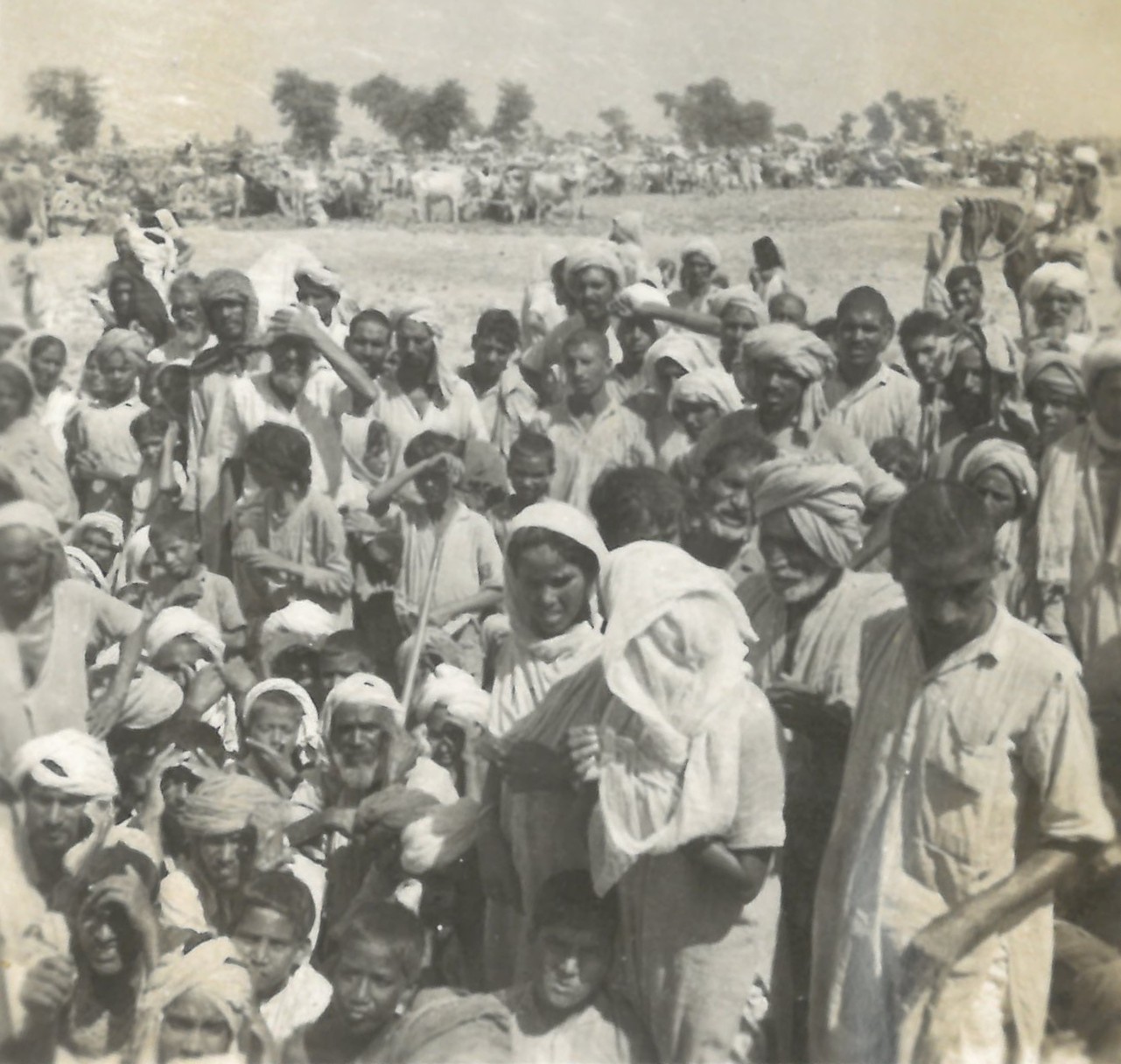
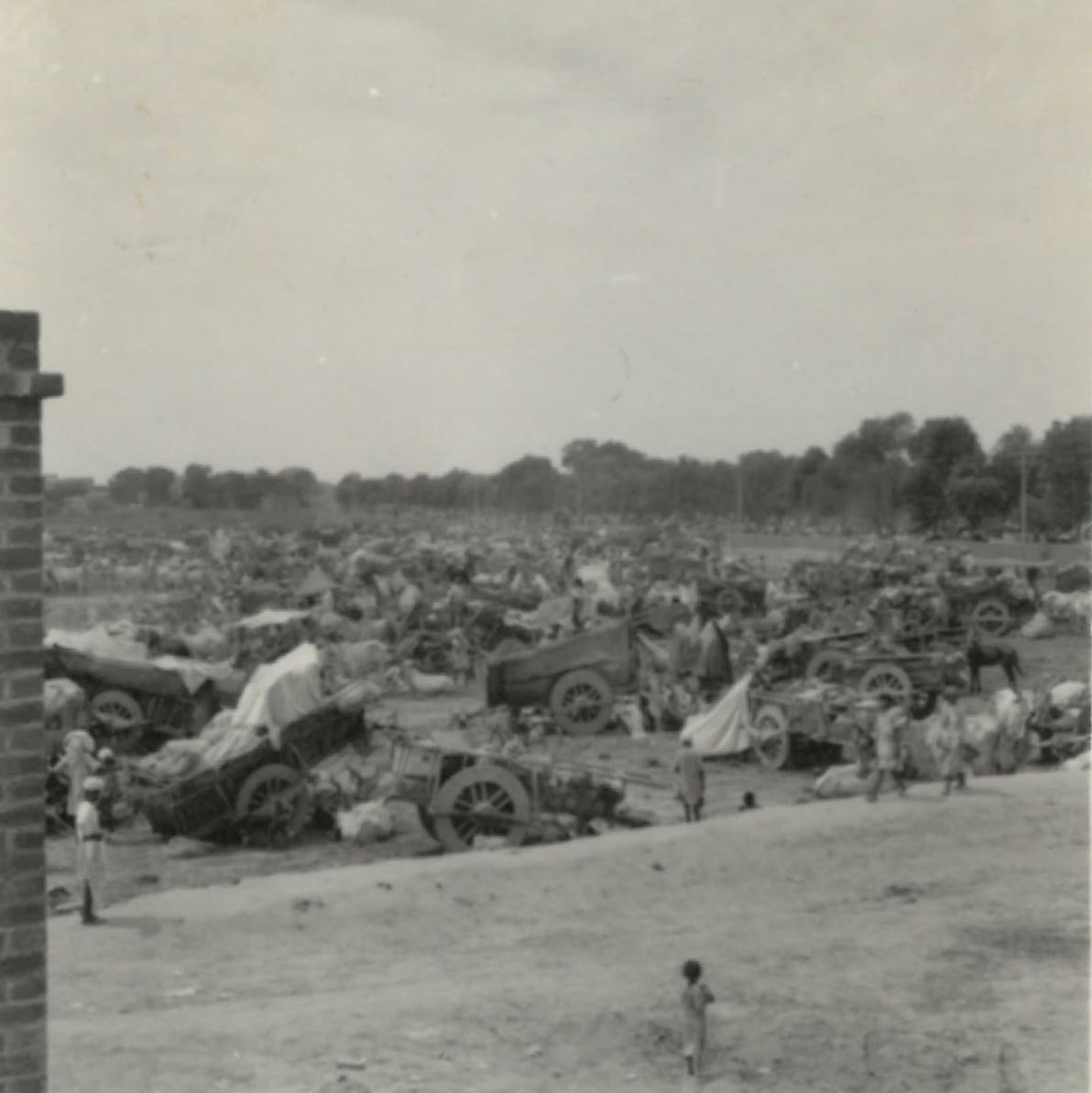
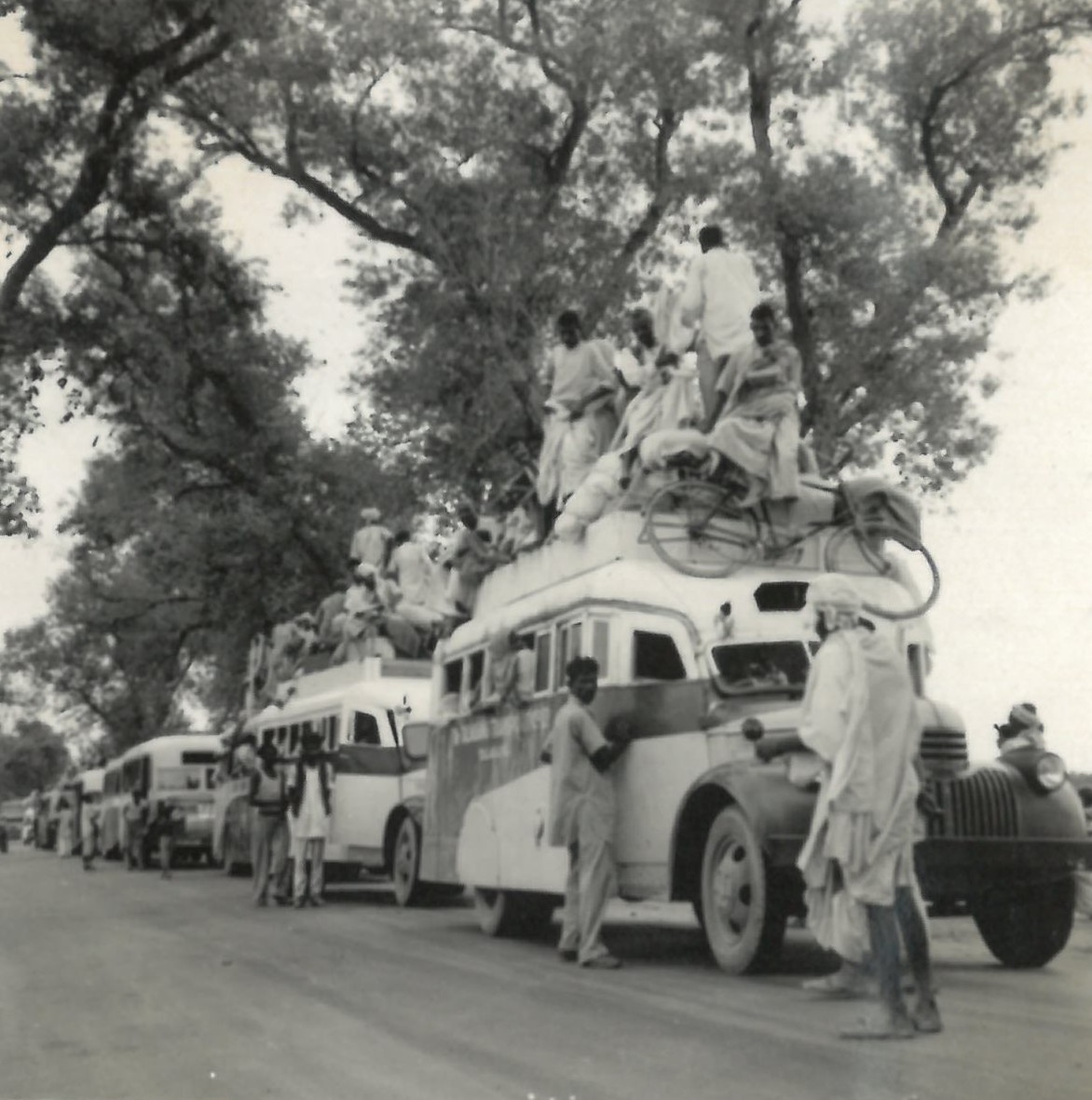
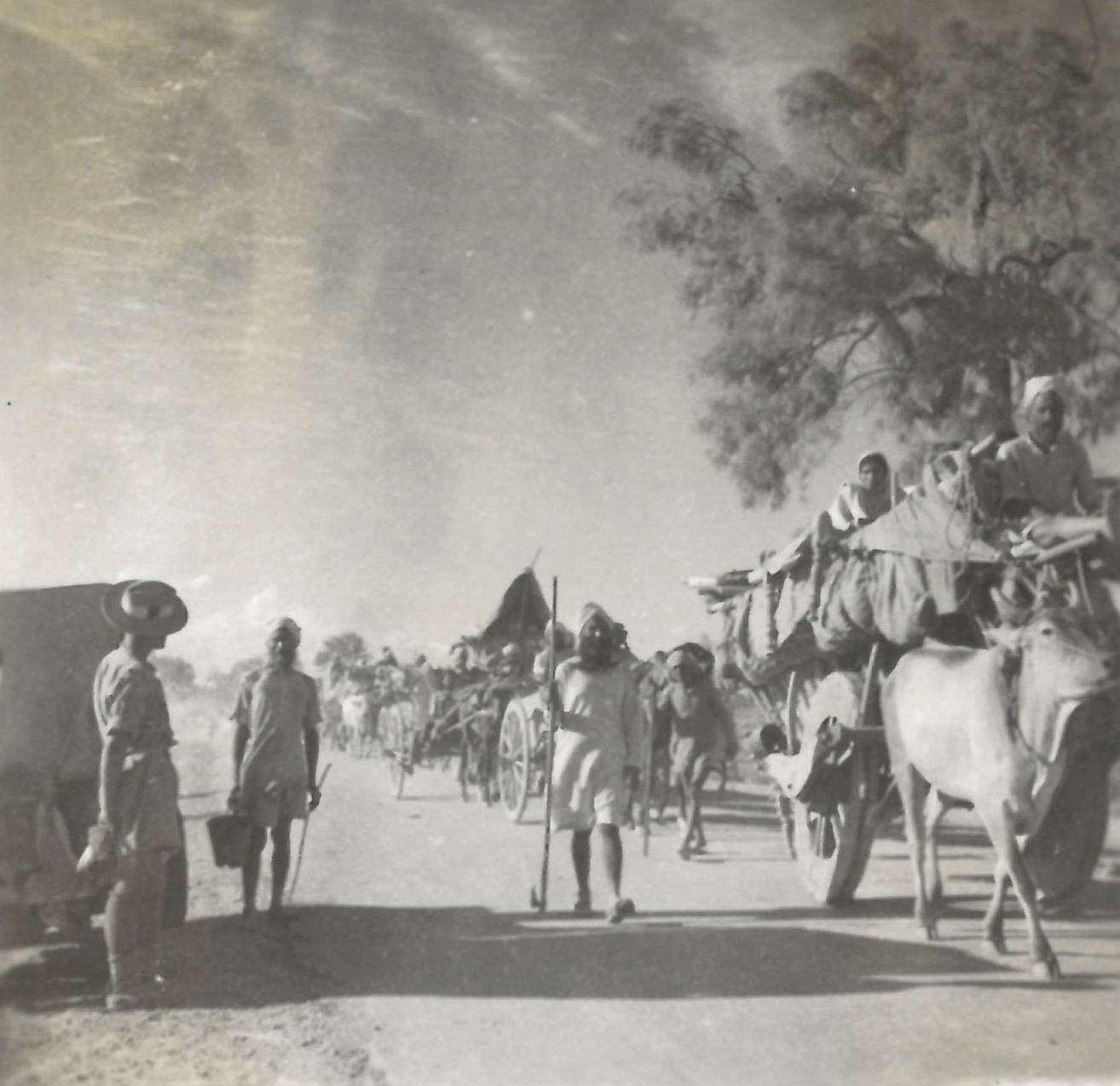
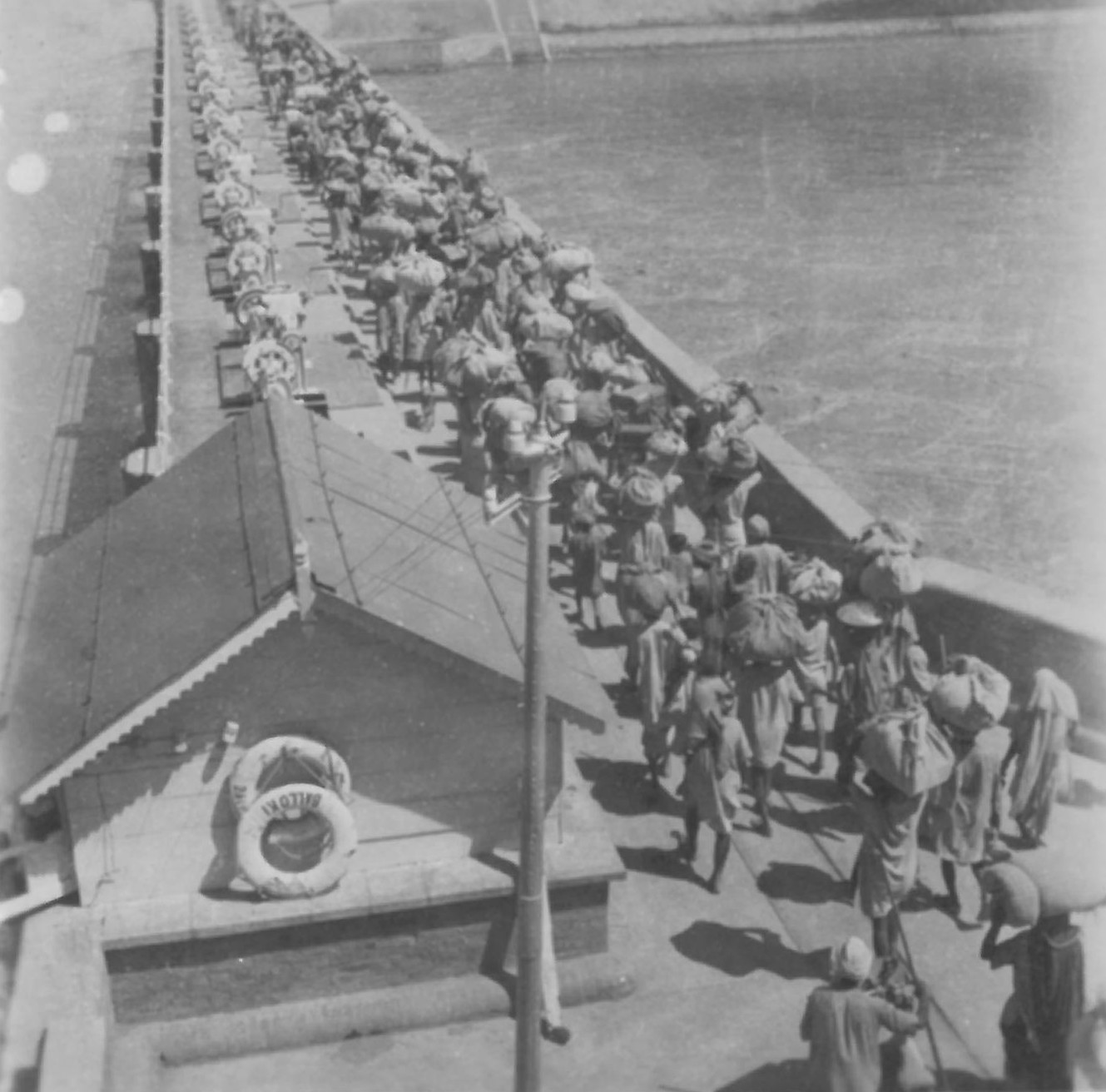
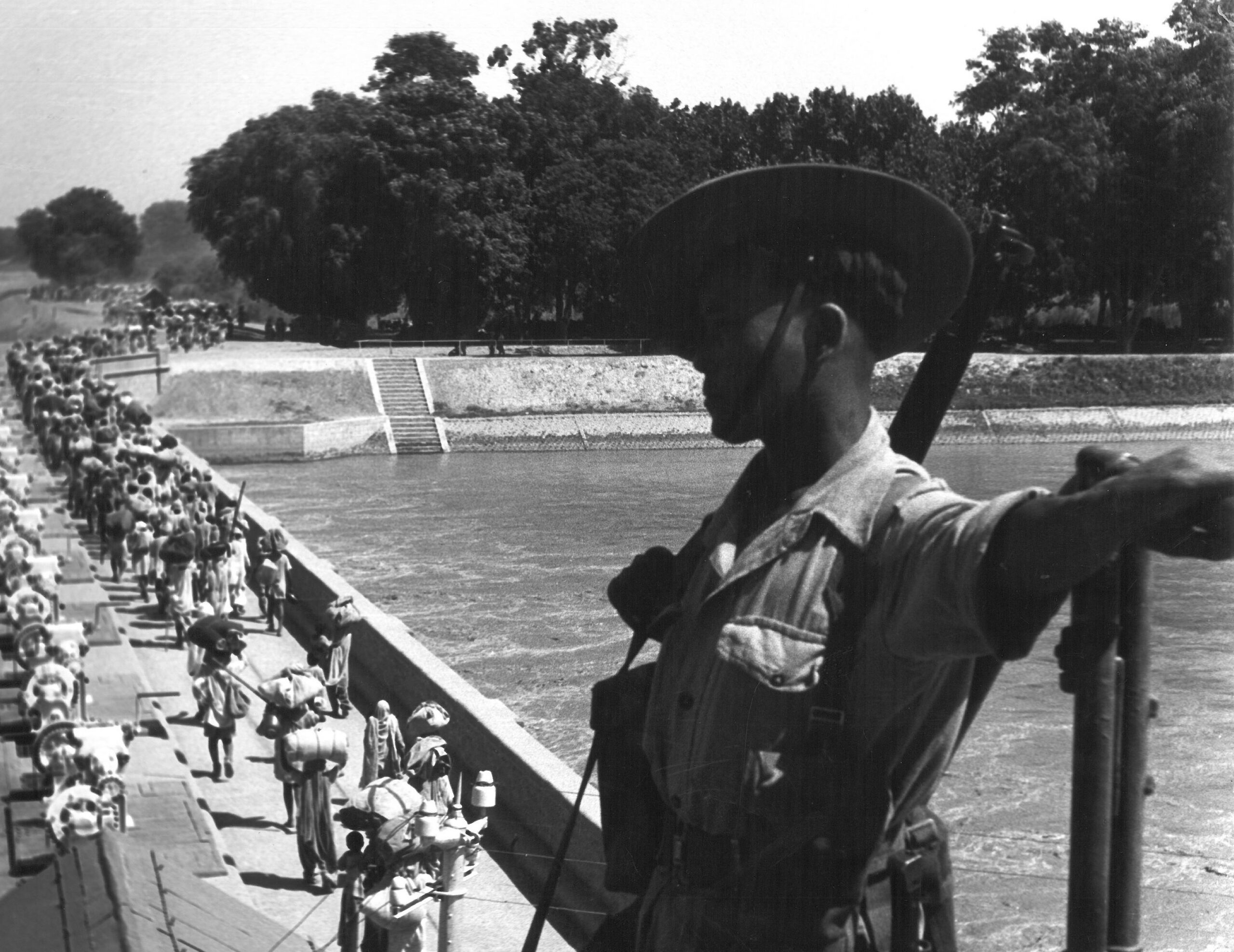
The 2nd Battalion, 10th Gurkha Rifles (2/10GR) had been enjoying a peaceful period in Secunderabad when it received an urgent call to move to the Punjab. Accompanying the battalion was Major Robert Taylor. Through a series of photographs, Major Taylor kept a record the day-to-day routine of protecting a refugee column. Donated to the Gurkha Museum in 2002, the photographs are a precious visual record of the Gurkhas’ service in the PBF. The column that Major Taylor photographed were Hindus and Sikhs, who were making the journey to India.
At the beginning of the days march, the column was ‘formed up’:
Whilst a majority of the refugees would travel on foot, some were able to make use of vehicles and pack animals:
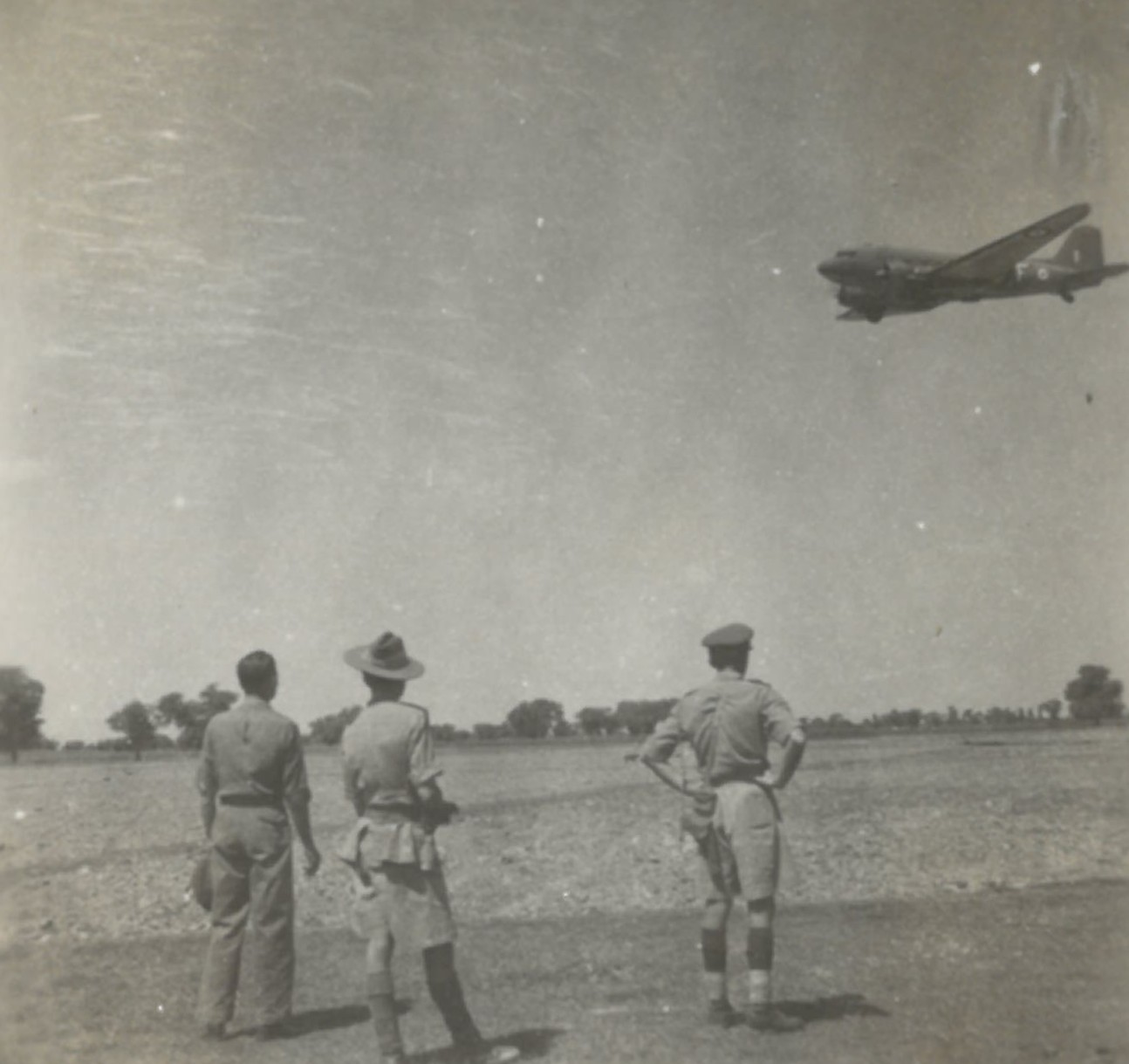
Supplying food for the refugee column was a constant challenge. To remedy this, supply drops were made by air, with the Gurkhas working hard to make sure food was fairly distributed:
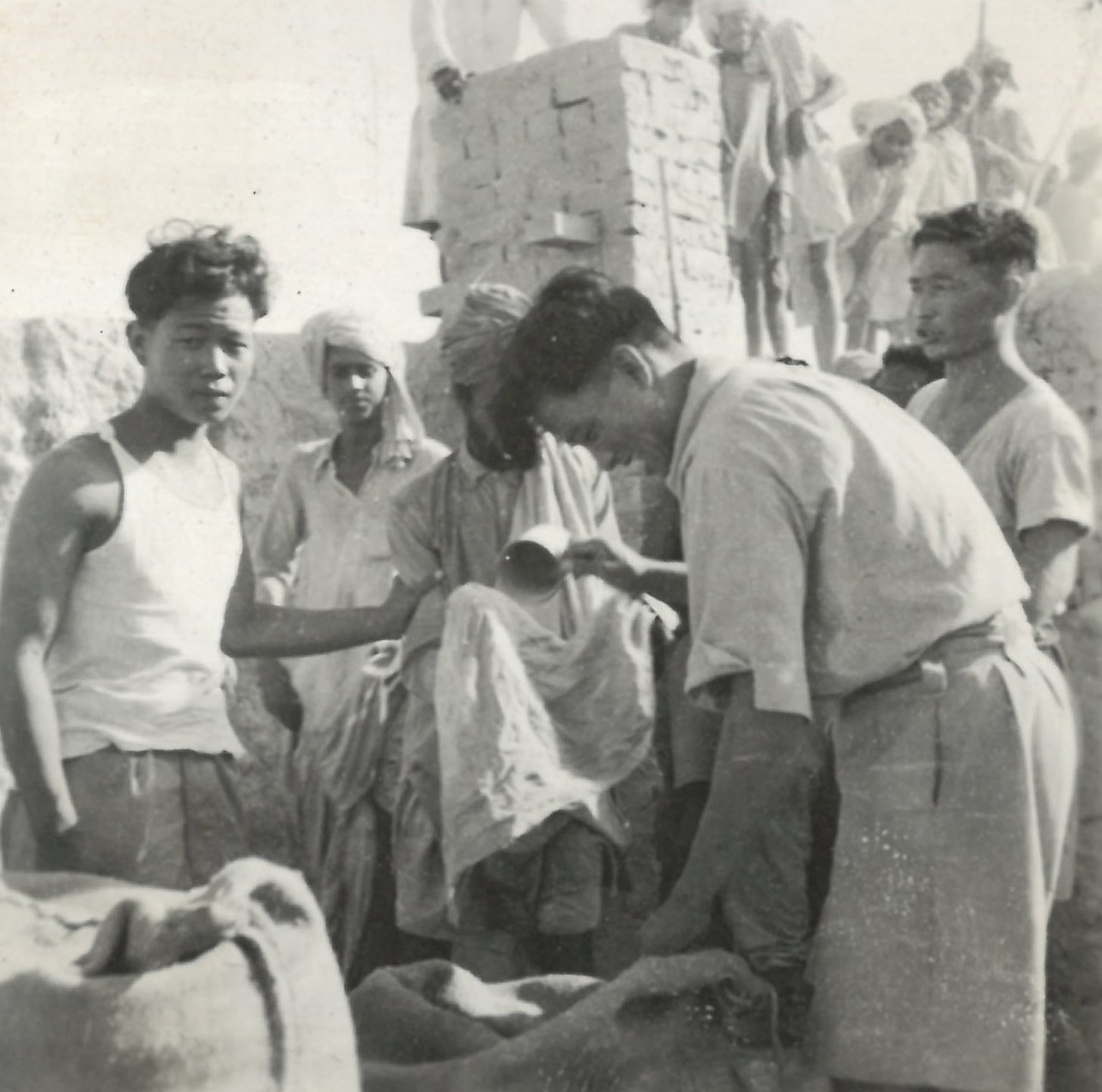
Other measures made by the Gurkhas was to ensure that as many refugees as possible were inoculated for cholera:
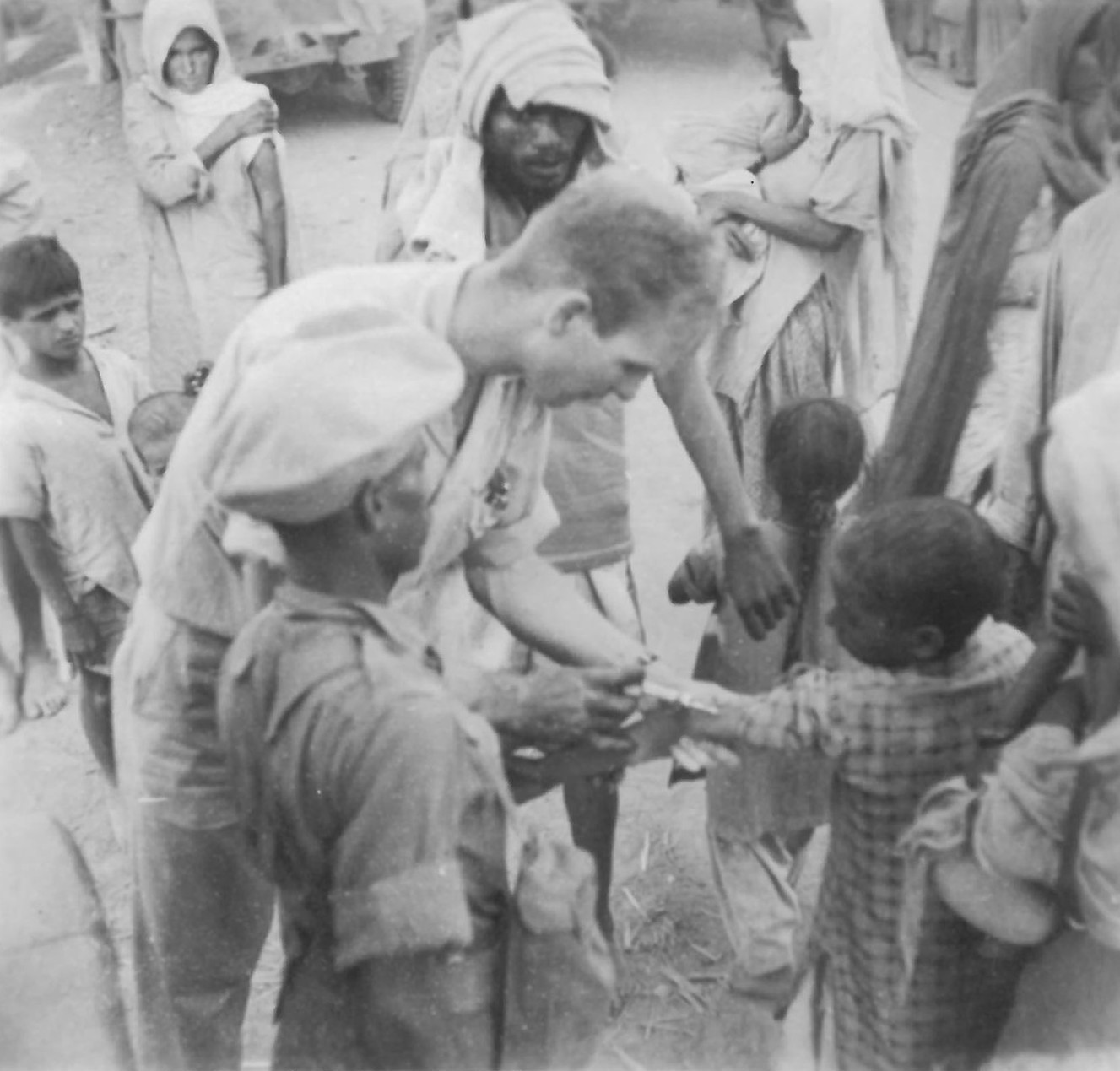
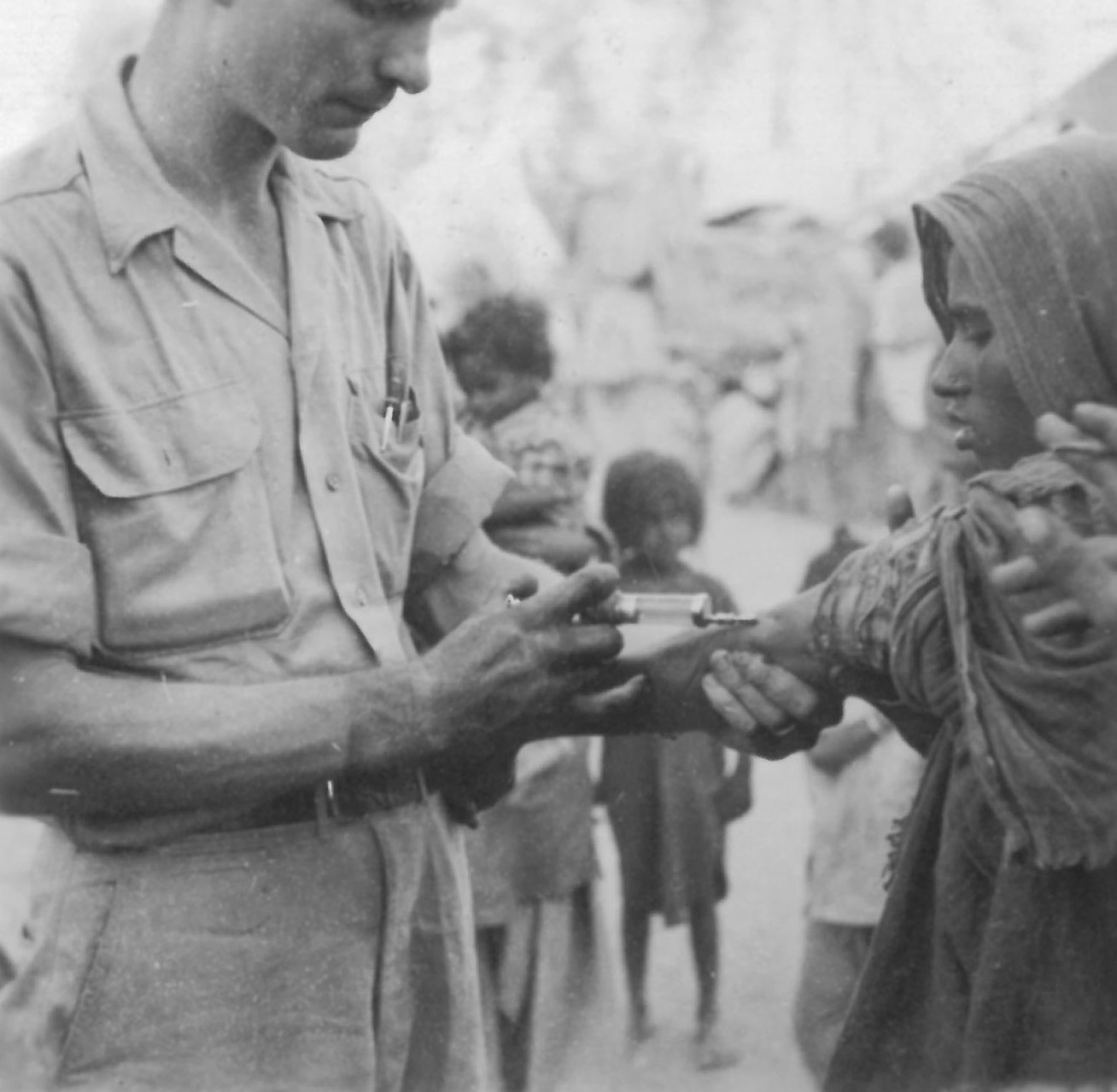
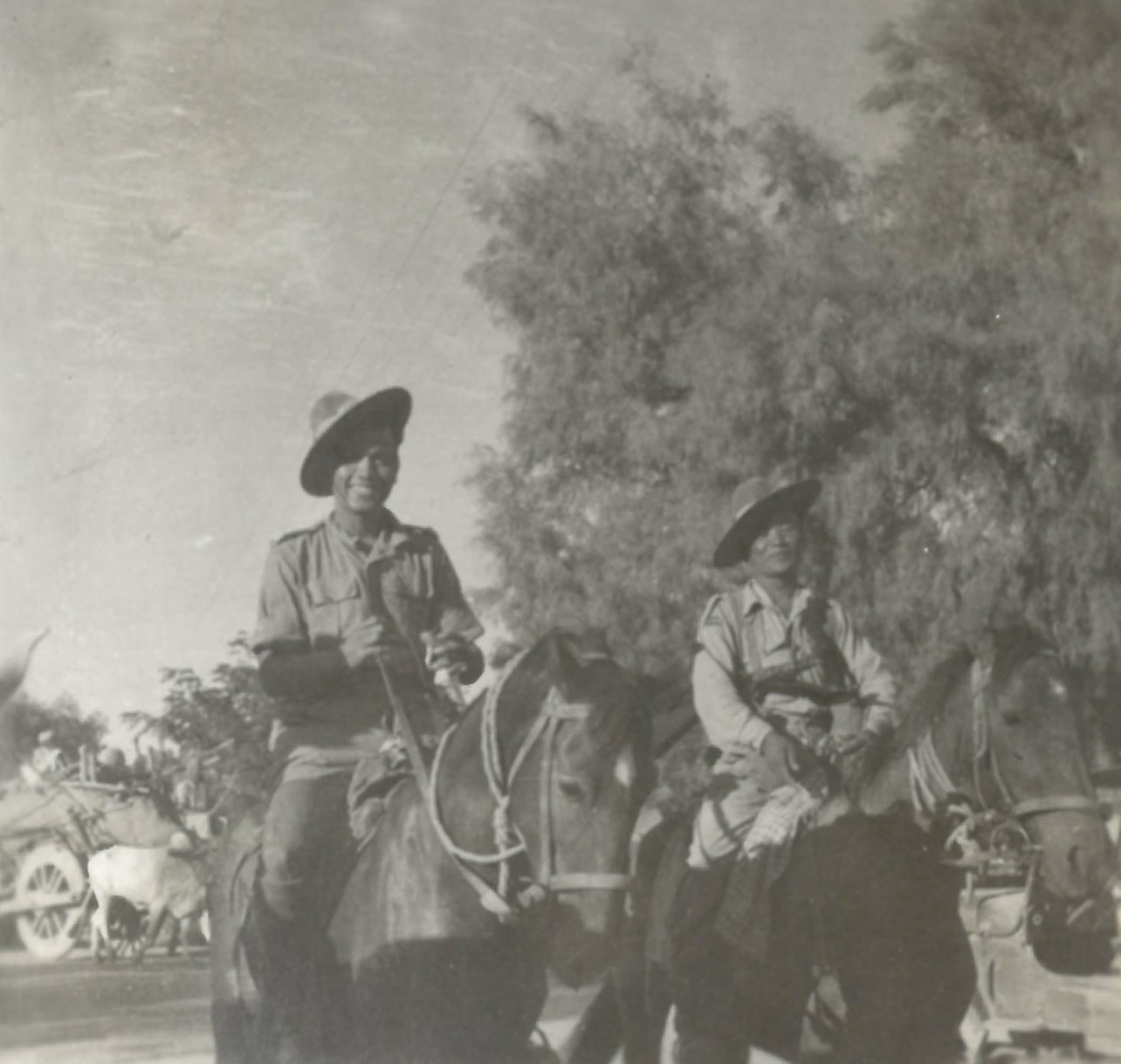
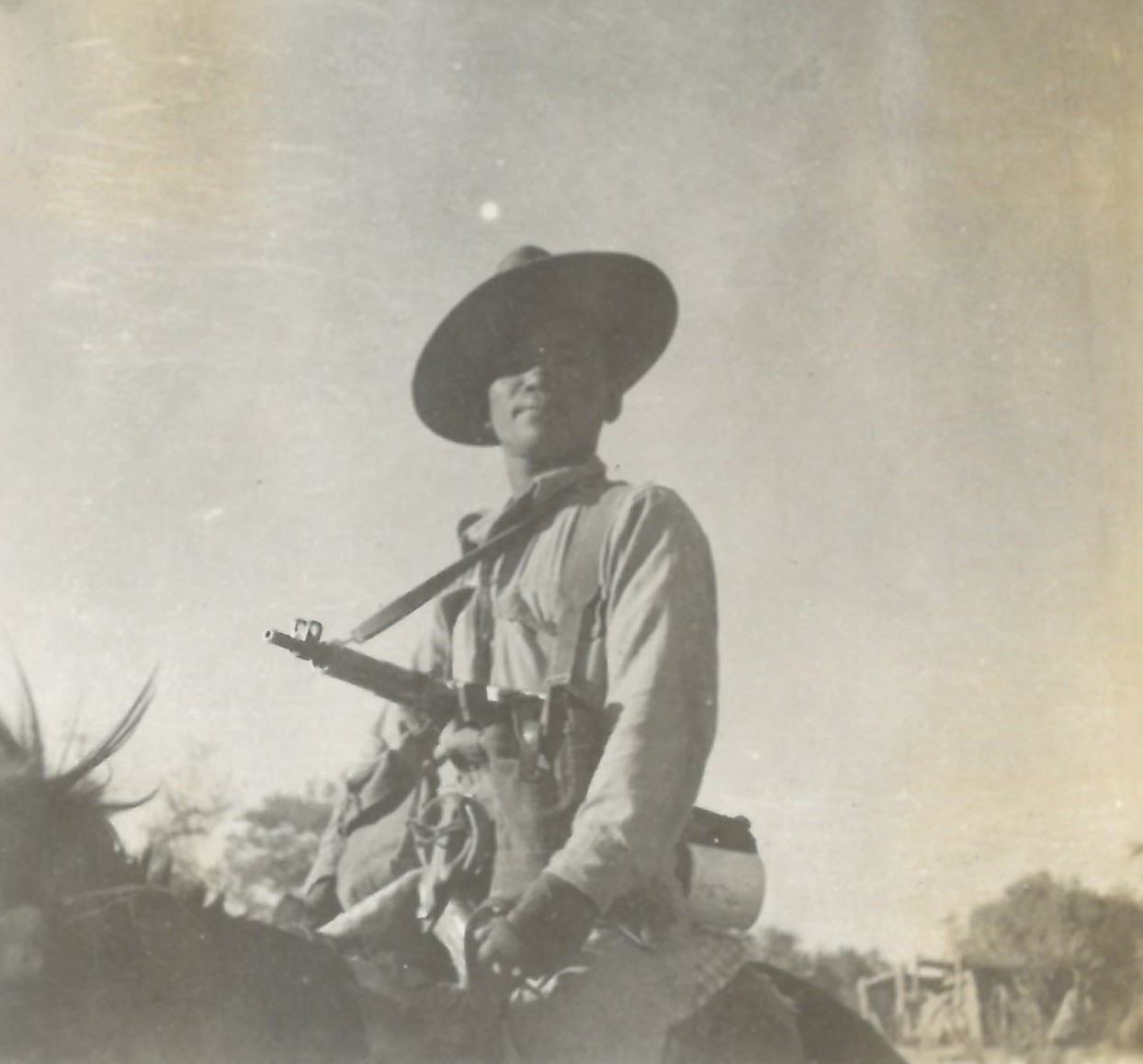
However, the main priority for 2/10GR was to ensure the refugees safety. To cover as much ground as possible, some Gurkhas patrols went out on horseback. This is one of very few examples of Gurkhas serving in a mounted capacity throughout their over two centuries in British service.
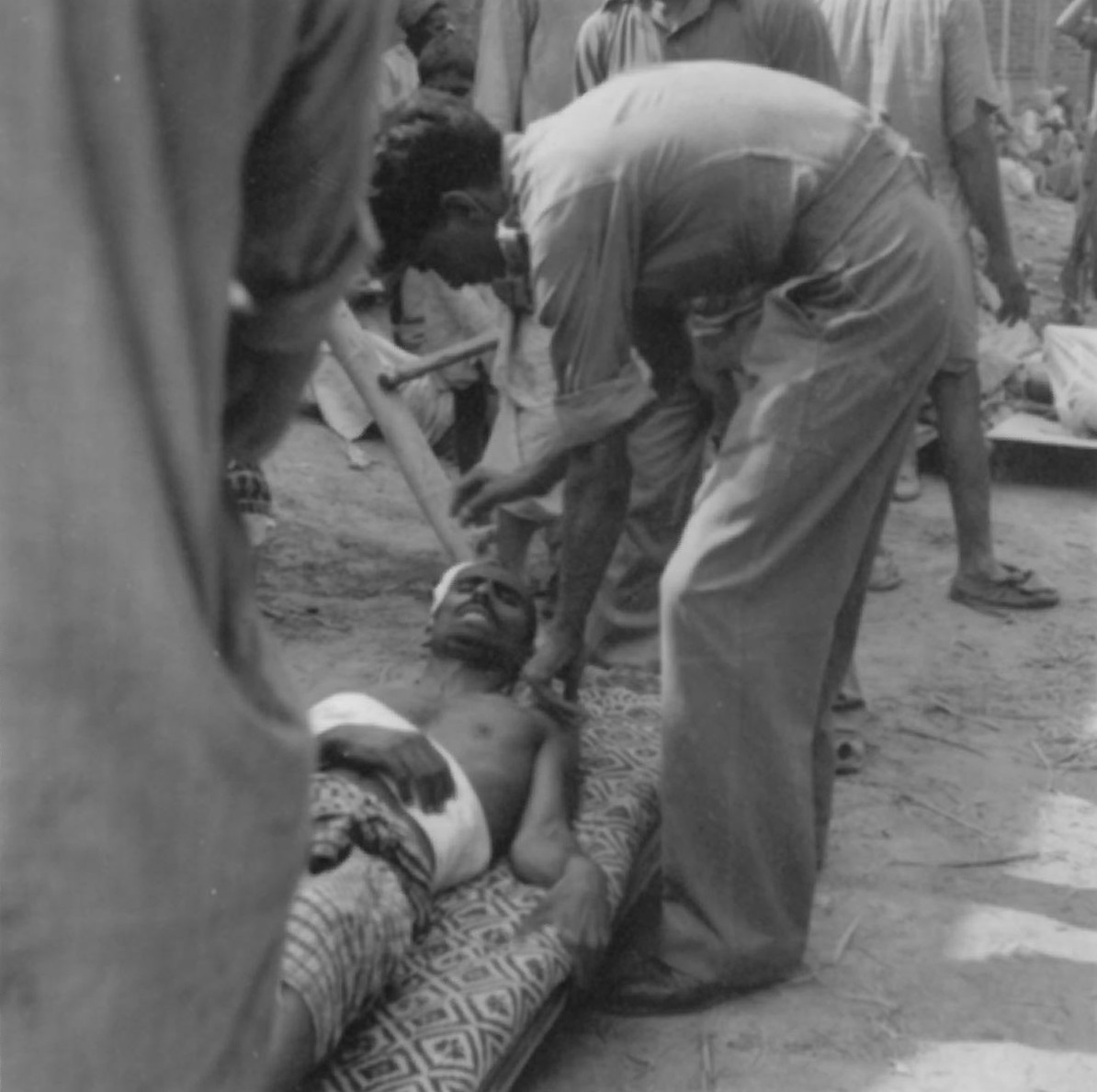
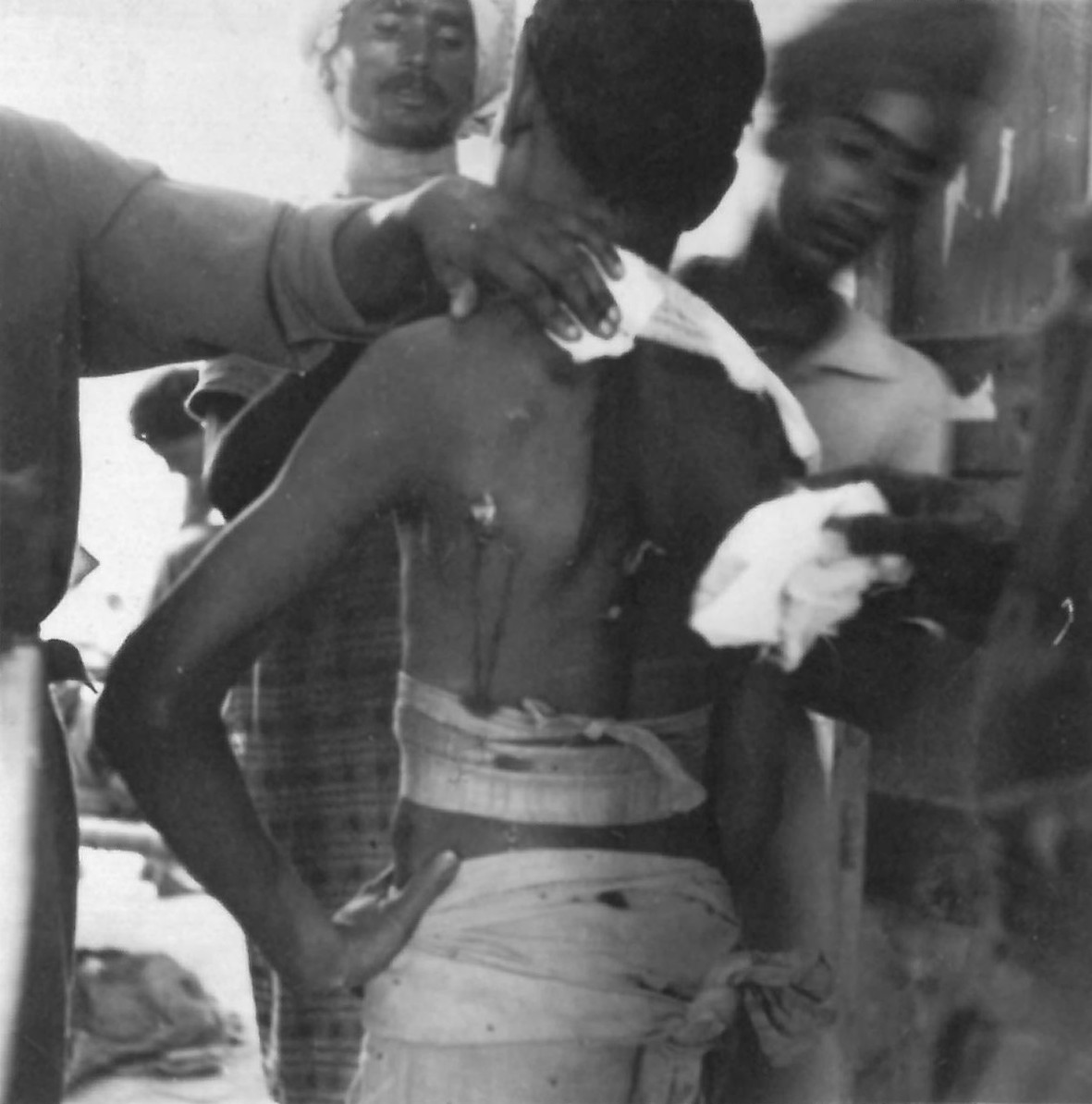
Despite their best efforts, armed groups would still sometimes reach the refugees, inflicting as much death and injury as they could before being driven back. Gurkha medical teams would do what they could to treat and evacuate casualties:
As 2/10GR moved through the Punjab, evidence of the violence was all around them as they passed burned and looted villages, some of them filled with the unburied bodies of massacre victims. But after its long march, the column finally reached its destination at the Sutlej river. Here, it passed over the bridge into India:
Another 2/10GR officer who recorded his partition experiences was Captain Stanley Roberts. In August 1947, Captain Roberts was the battalion’s adjutant. One afternoon, whilst engrossed in administrative work at battalion headquarters, he received an emergency call. A train carrying Hindu refugees had de-railed at Mughalpura junction, and was under attack by Muslim rioters.
With all of the battalion’s companies elsewhere, Captain Roberts scrambled together a platoon of cooks, clerks and orderlies. Grabbing rifles and ammunition, the men mounted onto lorries and headed towards the emergency.
Captain Roberts and his Gurkhas arrived at the scene at dusk. He later described what he saw:
‘We arrived in failing light and the scene of carnage that met us rests in my mind today. I have recently seen pictures of the holocaust and the dreadful count of dead bodies; the scene at Mughalpura was similar except the bodies that we saw had been hacked to death beyond recognition. It was a sight, which unless you had witnessed it yourself, would have been impossible to believe.’
As darkness fell, Captain Roberts positioned his men along the railway track. They would not have to wait long for a renewed attack. Under the glow of flares, a large group of Muslims rushed the Gurkha position. The Gurkhas quickly opened fire, expending most of their ammunition in an attempt to stop the attackers.
Although they halted this group, Captain Robert’s force was too small to completely stop the attacks. Throughout the night, Roberts and his men lay in position, listening in horror to screams and cries further out in the darkness.
The morning brought little comfort. As the sun rose, Captain Roberts looked out on a scene of utter devastation. Dozens of men, women and children had been murdered, and many wounded were crying out for help. Throughout the morning, Roberts and his men moved as many bodies as they could into one area, and then loaded the wounded onto lorries for evacuation to a nearby hospital.
By the time Captain Roberts reached the hospital he was physically and mentally exhausted. On arrival, a group of doctors told him that they could not take the wounded in because they were Hindus, and that the hospital was full. In his exhausted state, Roberts resorted to drastic action:
‘At this stage I performed an unreasonable, ungallant and stupid act. I drew my revolver. This moment remains with me still and I question the moral principles and ethics of my action. I then ordered the hospital staff to put up beds in the corridors and fetch matrasses and blankets and tend to these wounded and suffering people. I must have appeared a very ‘low caste’ Christian to the hospital staff. I obviously smelt badly, my uniform was covered in blood and other stains and I still had the grease marks of the railway points tattooed over me’.
Although he later felt ashamed for drawing his sidearm, he succeeded in securing treatment for the wounded.
2/10GR and other Gurkha battalions remained in the Punjab until the end of the year. The incident described by Captain Roberts was not an isolated one.
Although August 1947 was the peak of the communal violence, clashes would continue until the end of the year. The partition of India, and the violence of that summer, continue to cast a shadow over relations between India and Pakistan. Since 1947, the two countries have fought four wars over disputed territory, particularly around the Kashmir region in the west and the territory which would subsequently secede from Pakistan to become Bangladesh in the east. Today, the border between India and Pakistan is one of the most heavily militarised in the world.