Gurkhas in Japan
2/5RGR arrived in Japan aboard the HMT Orduna and docked at Kure, a port city in the Hiroshima Prefecture.
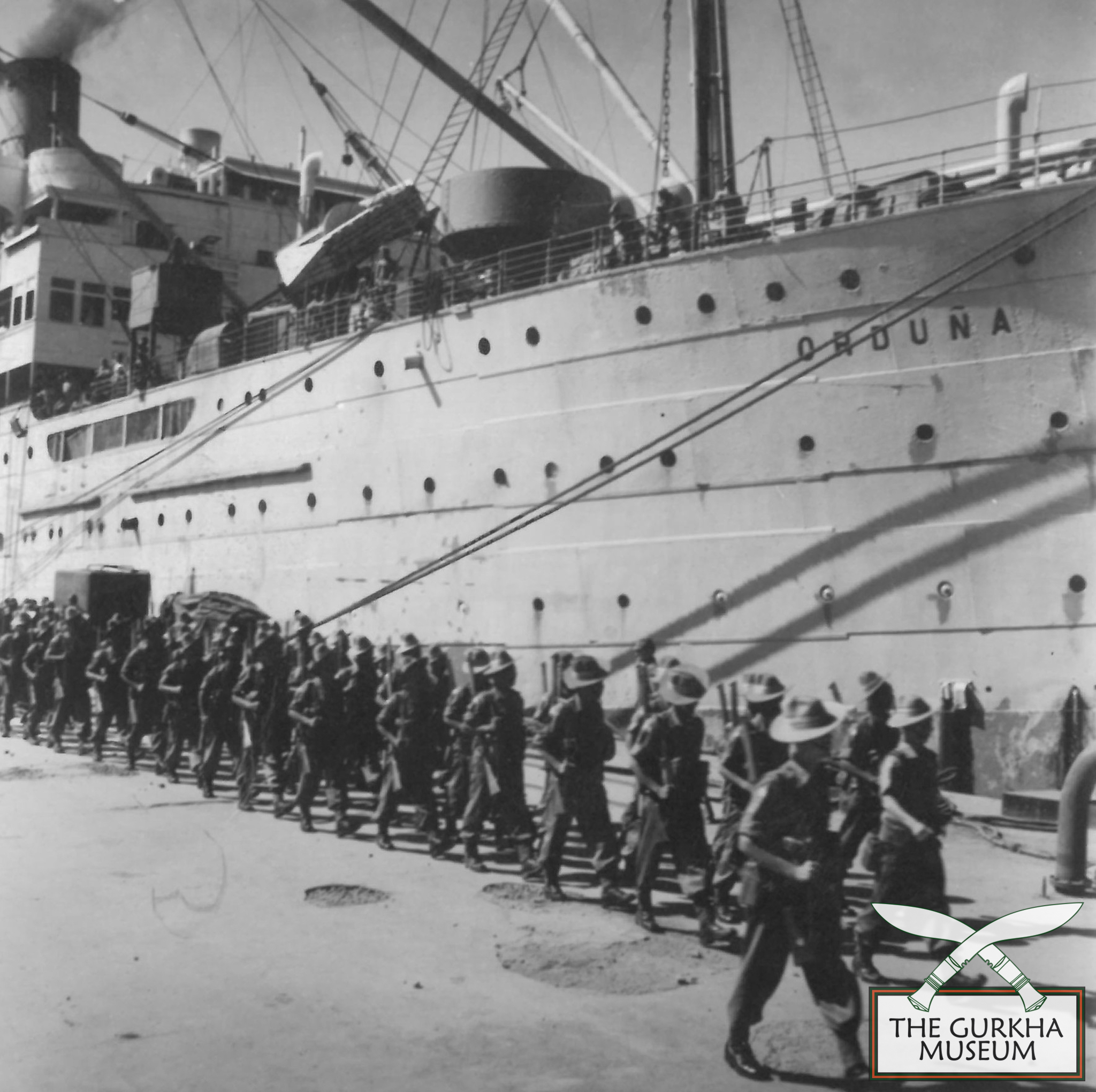
2/5RGR disembarking from the HMT Orduna, 15 May 1946.
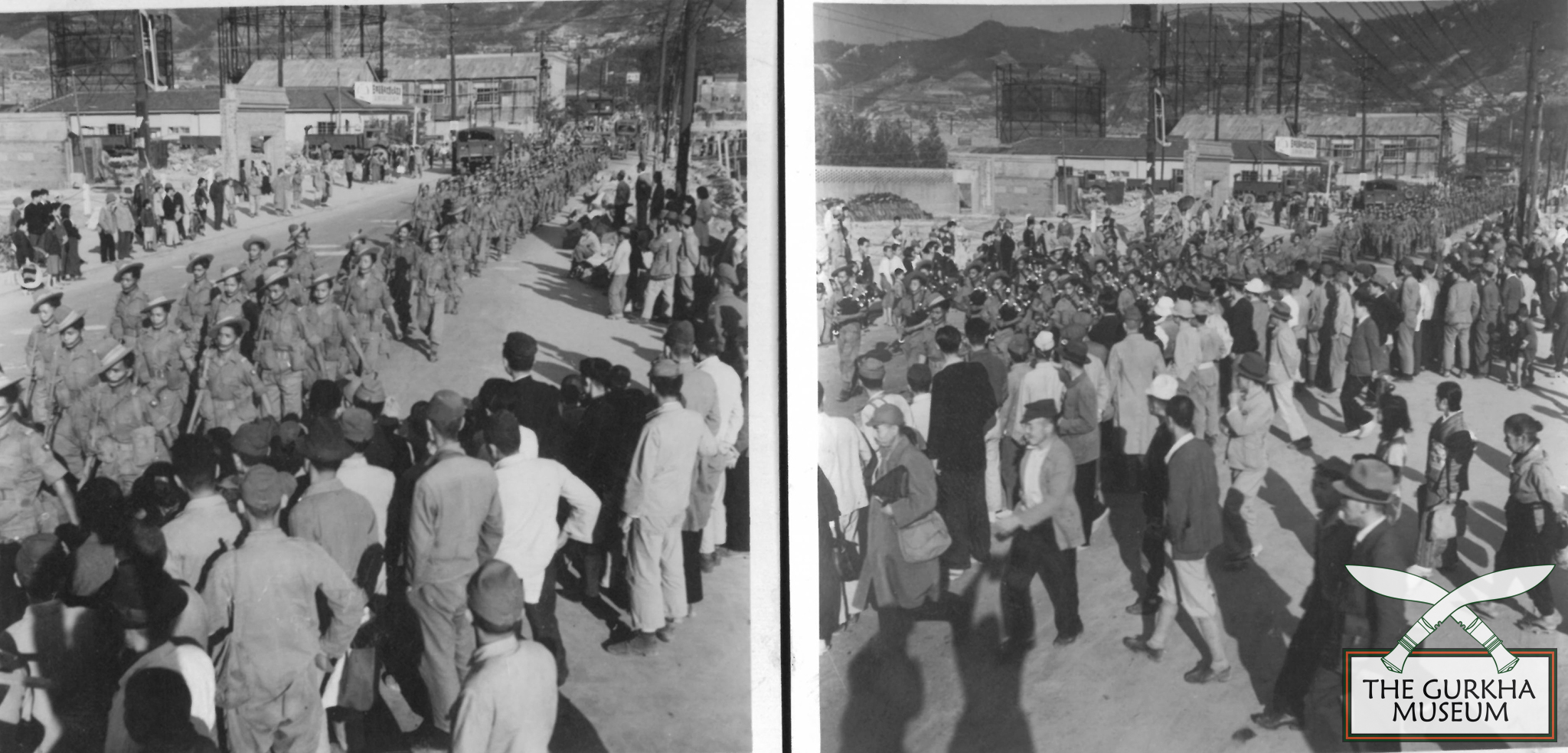
Local people look on as 2/5RGR march through Kure.
During the war, Kure had hosted a major naval base, which had made it a target for Allied bombers. When the Gurkhas disembarked, they found the city still showing heavy bomb damage.
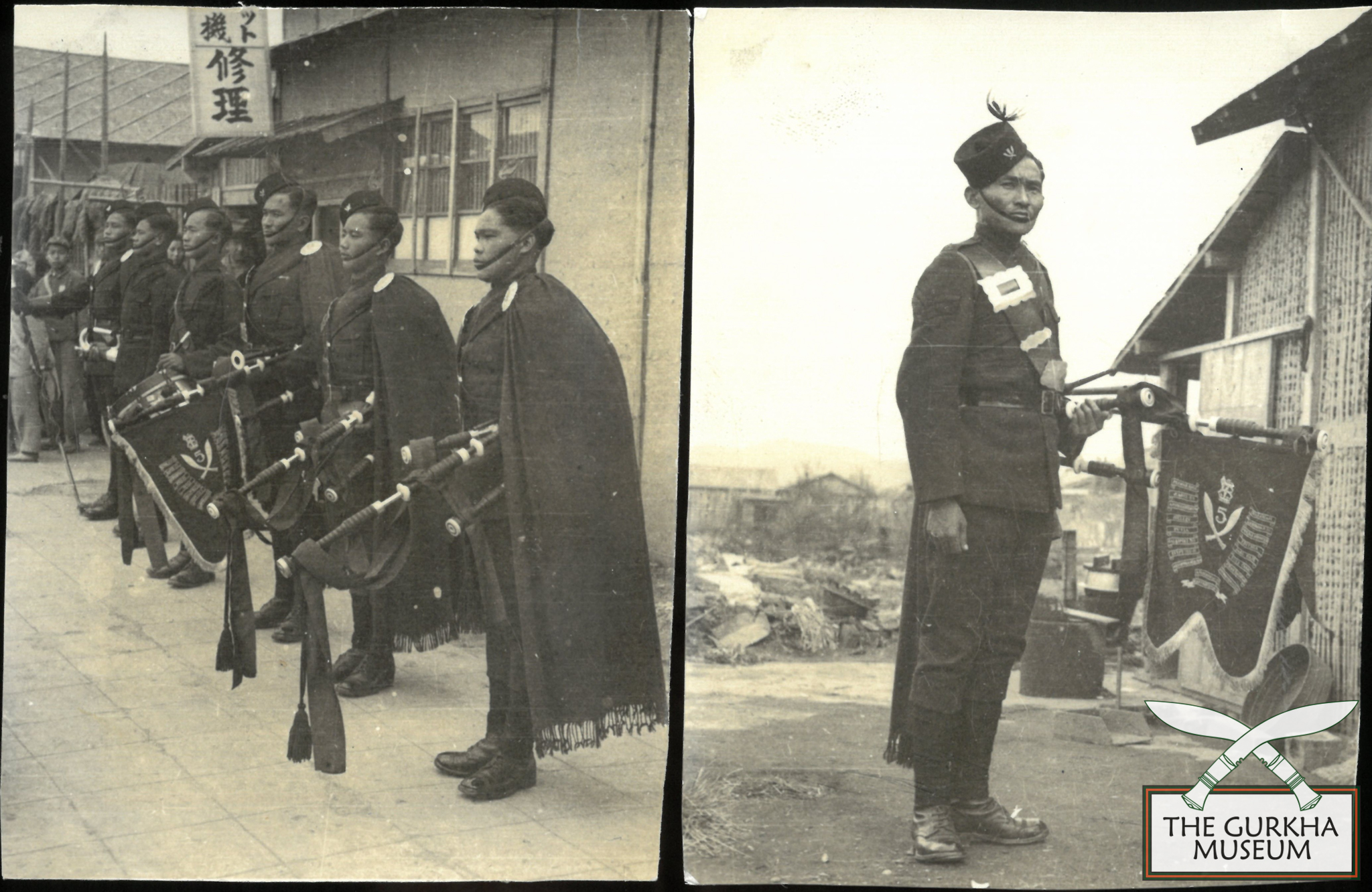
2/5RGRs pipe bad at Kure, 1946. Bomb damage can be seen in the right hand image.
The men were apparently ‘thrilled’ by their first sight of Japan, as its wooded hills reminded them of Nepal. Besides guard duties, 2/5RGRs role in the country was to help maintain internal security, patrol for weapons caches, and to prevent black market activity.
Moving into barracks near the city, the Gurkhas spent a largely uneventful time at Kure. In one instance, ‘C’ Company was moved to a town 30-miles away to suppress a riot, however the disturbance broke up peacefully once the Gurkhas arrived on the scene.
Despite their many duties, the men still found time to make sightseeing trips around the region. One point of interest for the Gurkhas was nearby Hiroshima, which had been devastated by a nuclear bomb on 6 August 1945.
Almost every man in the battalion made the trip to Hiroshima. Even 9-months after the bombing, the destruction wrought upon the city was striking. Many Gurkhas climbed a gutted 8-story building, one of the highest still standing in Hiroshima, to get a birds eye view of the ruins.
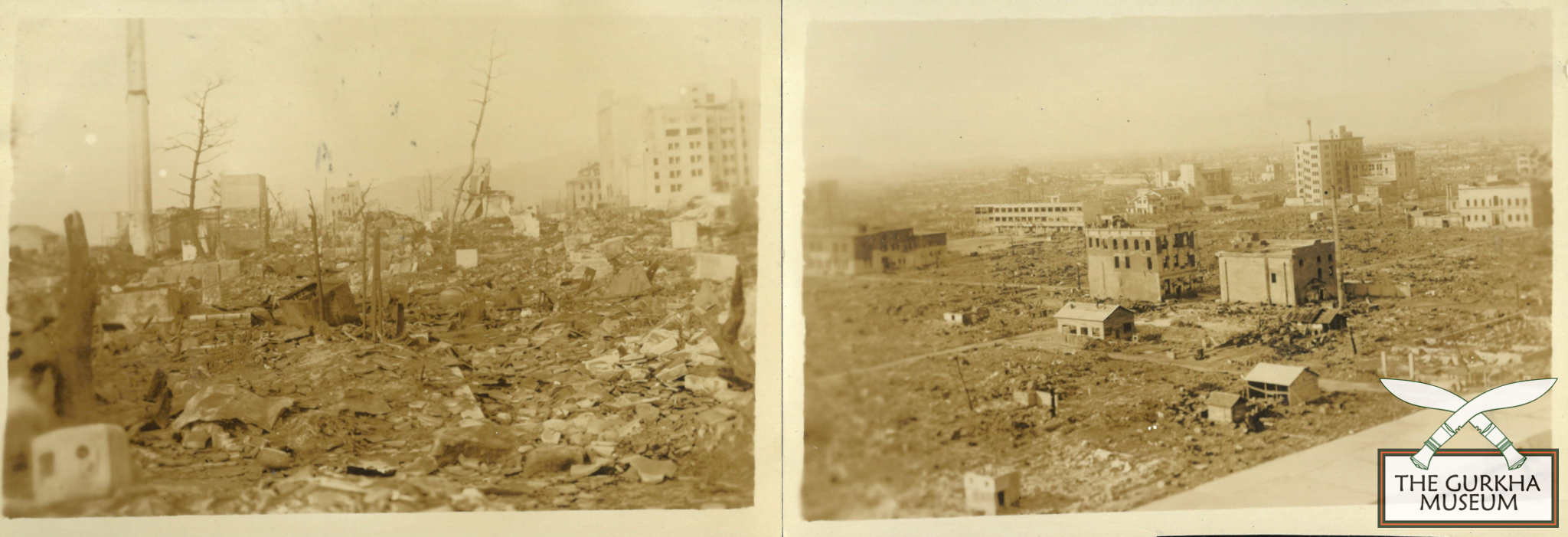
Devastated Hiroshima, photographed in September 1945.
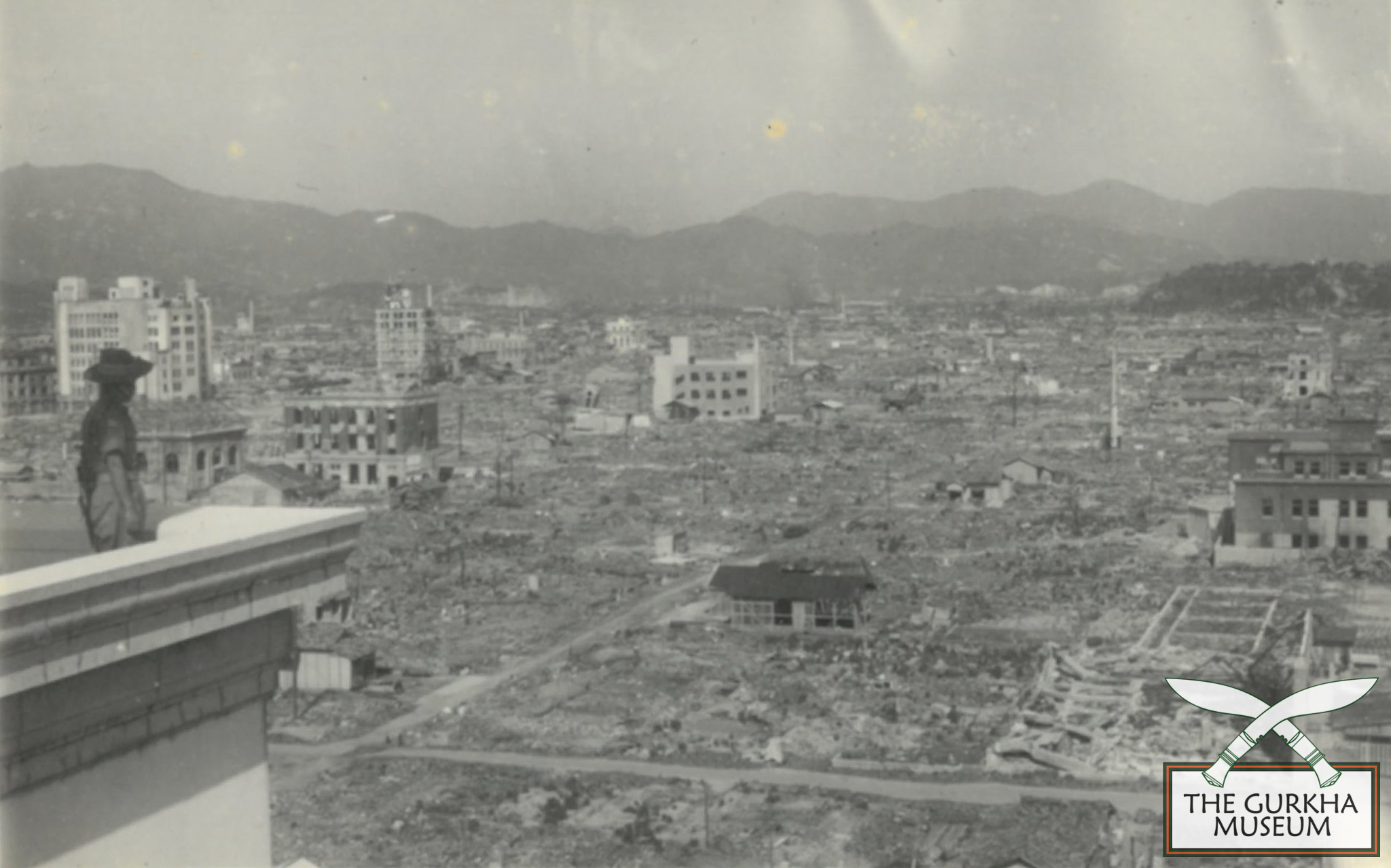
A Gurkha looking out over the ruins of Hiroshima, 1946.
In June, 2/5RGR moved 200-miles north to Okayama. A common employment in Okayama was guarding trains transporting Koreans for repatriation. Since 1910, Korea had been occupied by the Japanese, with many Korean men being conscripted as labourers in Japan and its occupied territories. The trains always required a complement of guards as some Koreans, preferring to remain in Japan, tried to escape.
In July 1946, 2/5RGR was detailed to relieve the 2nd Battalion, Dorsetshire Regiment (2nd Dorsets) from guard duties in Tokyo. After arriving in Tokyo, the Gurkhas moved into Ebisu Barracks. Life for off-duty Gurkhas in the barracks was recorded in Captain Barber’s album:
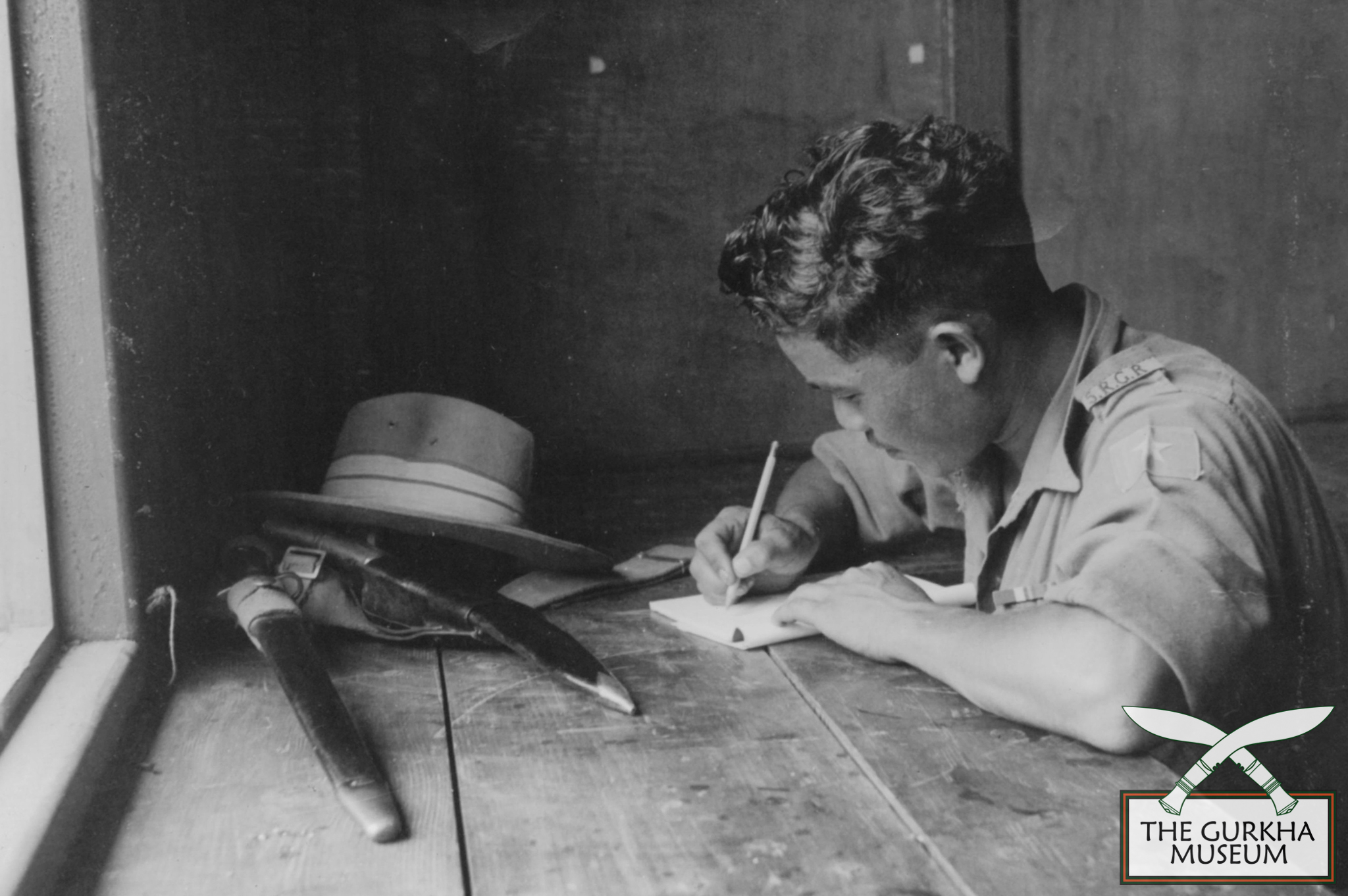
A young Gurkha taking a moment to write a letter.
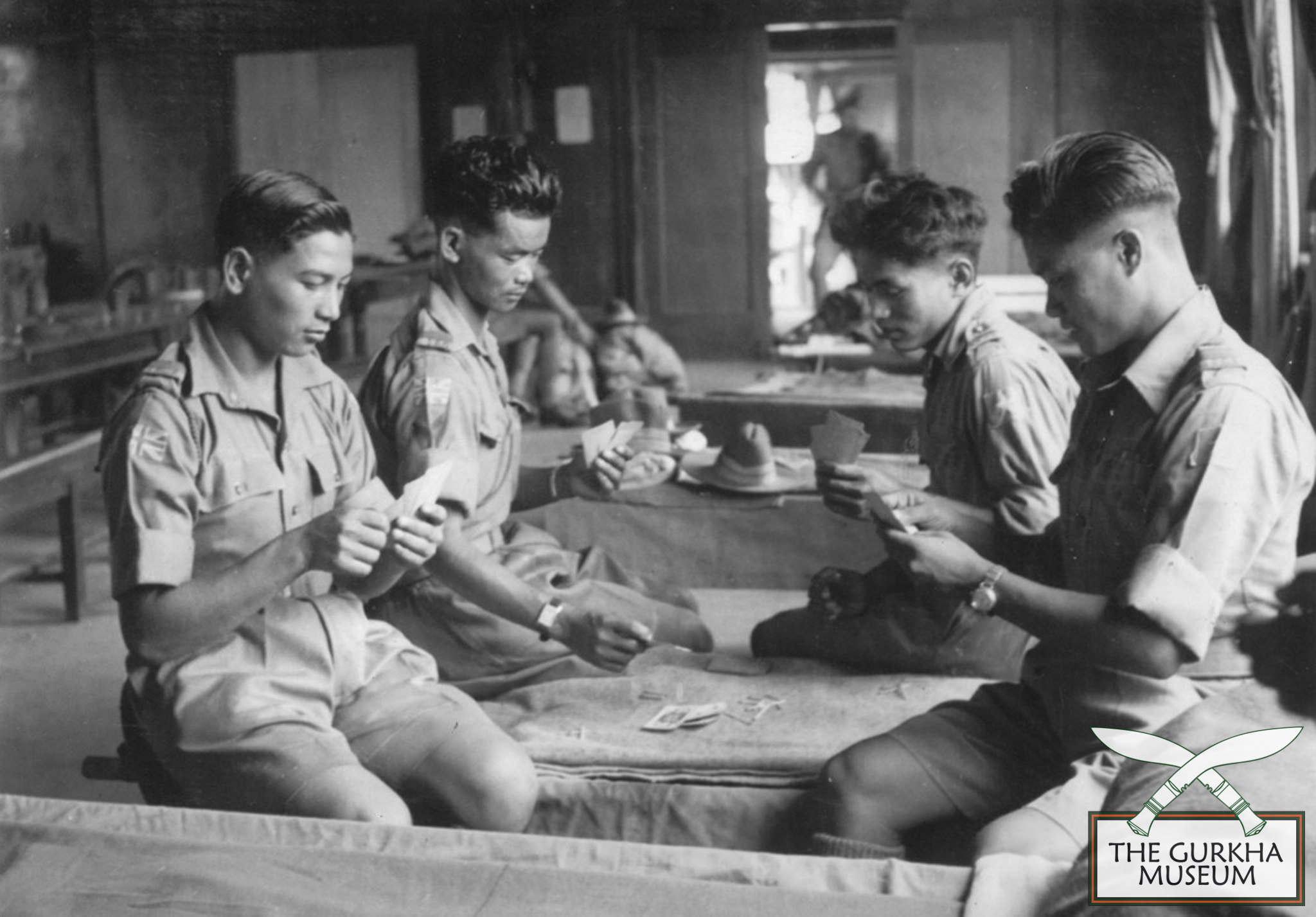
Off-duty Gurkhas at Ebisu barracks playing a game of cards.
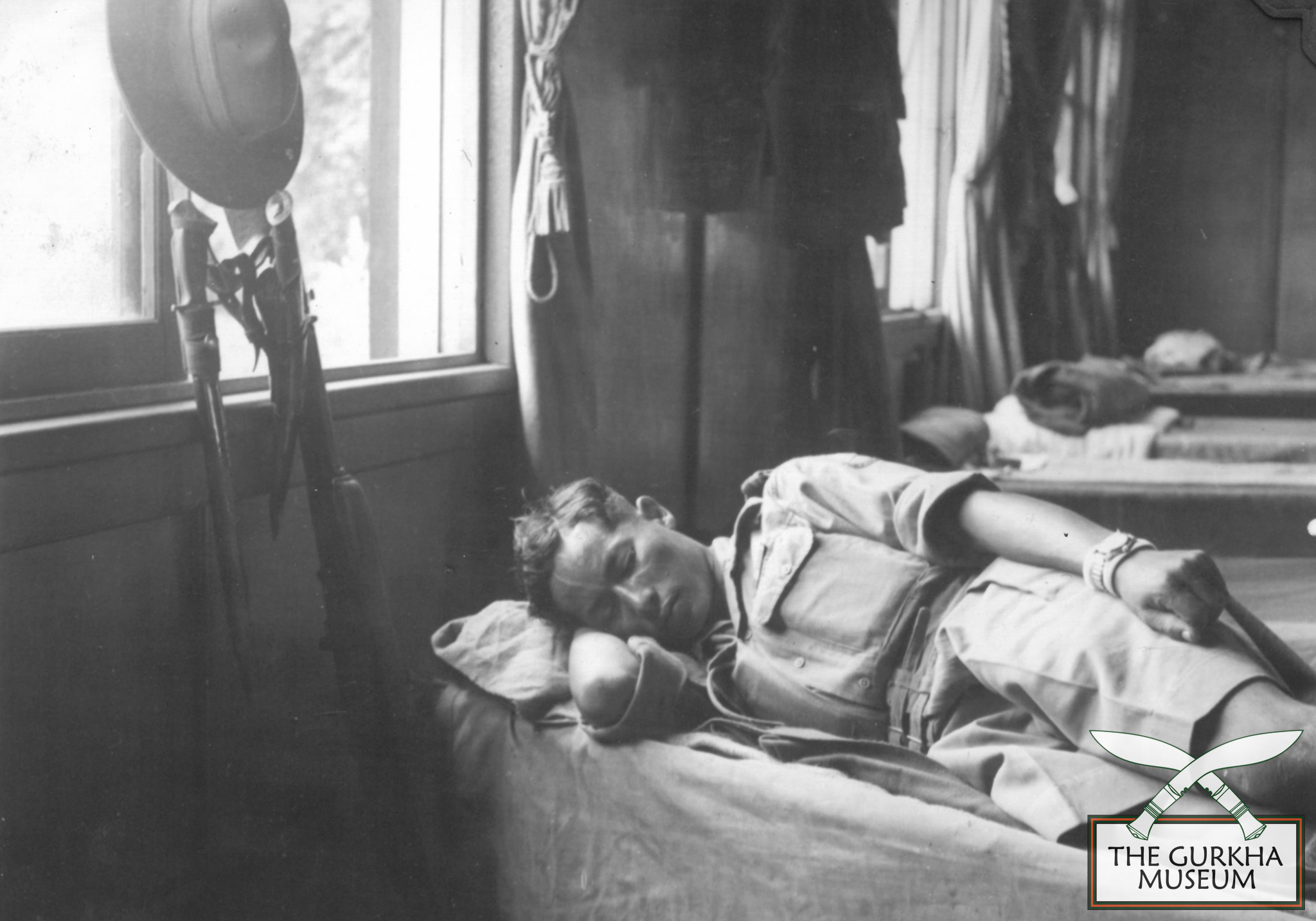
A Gurkha soldier ‘Charpoy Bashing’ at Ebisu barracks.
Whilst in Tokyo, the Gurkhas mounted ceremonial guards at the Imperial Palace and the British Embassy.
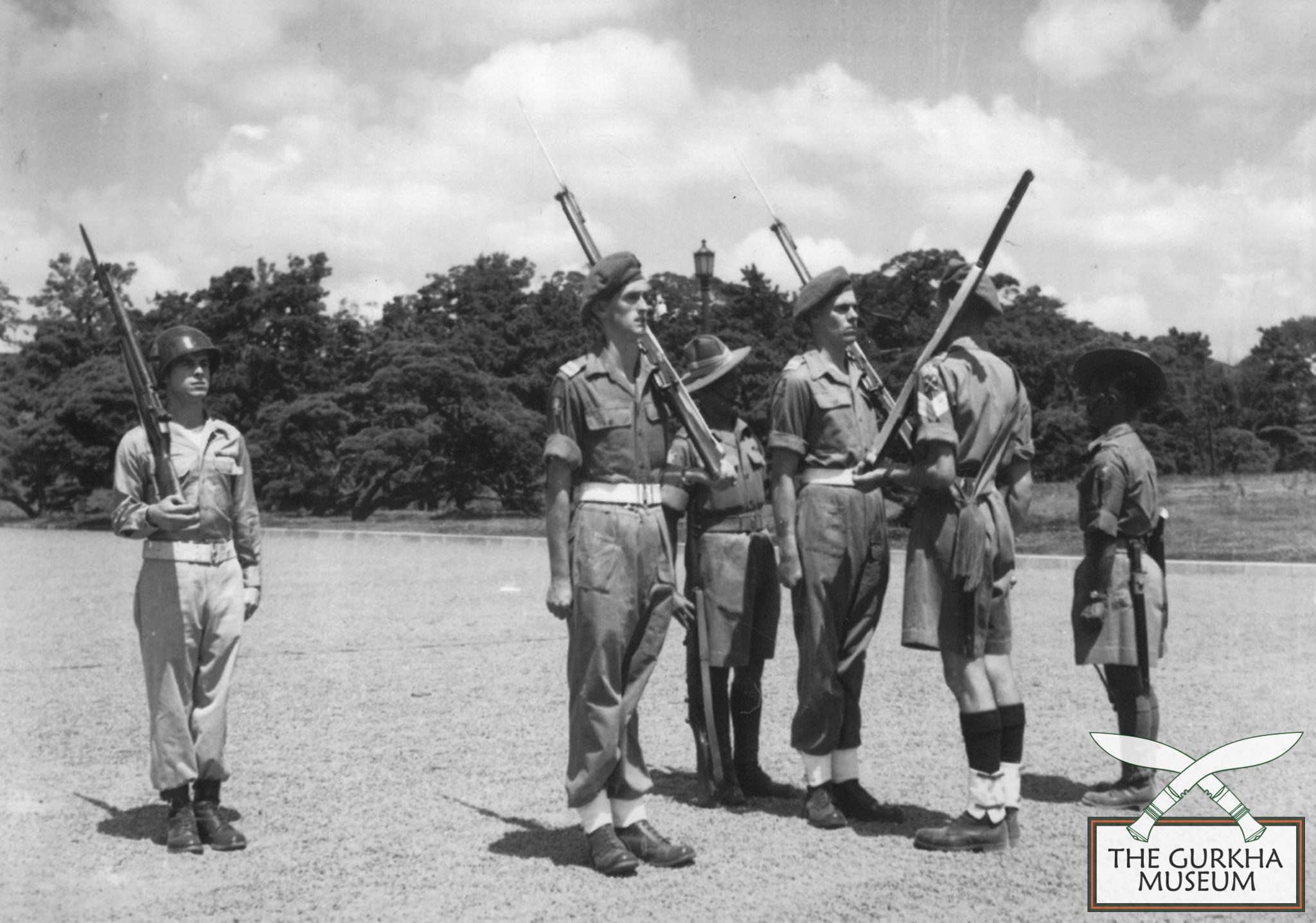
Gurkhas relieving the 2nd Dorsets at the Imperial Palace, July 1946.
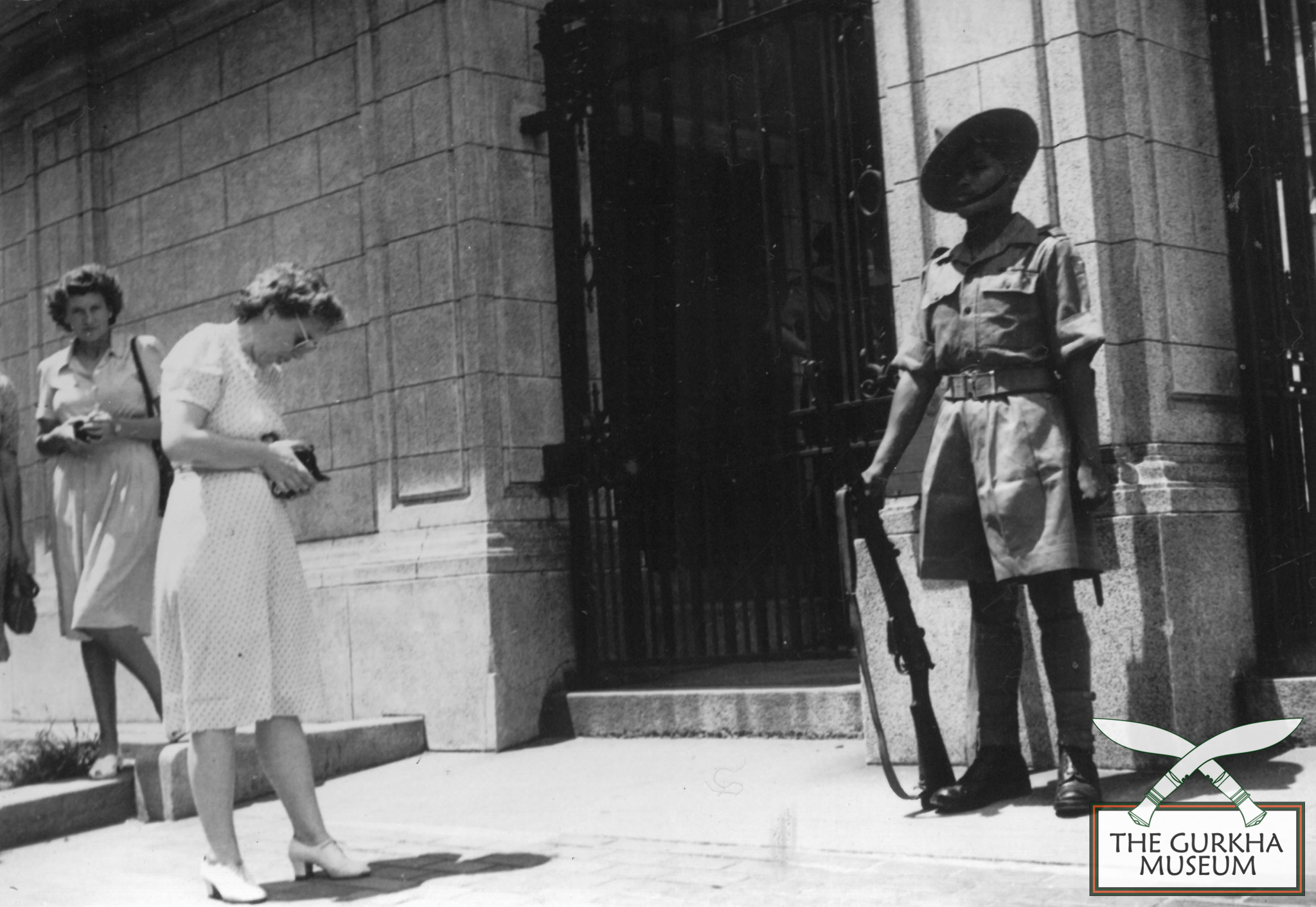
A Gurkha standing guard at the British Embassy in Tokyo is photographed by a passerby.
Almost immediately after arriving in Tokyo, the Gurkhas developed a rapport with American soldiers of the US 1st Cavalry Division. Just hours after the Gurkhas arrived at their barracks, an American jeep pulled up carrying 50-gallons of ice cream. This gift, given by the 8th Cavalry Regiment, began a friendship between Gurkha and US soldiers that would last for their whole tour in Tokyo. From this point, it was a common sight to see Gurkha and American soldiers out together in the city.
Gurkha troops would also hold guard duties with the Americans at the Imperial Palace:
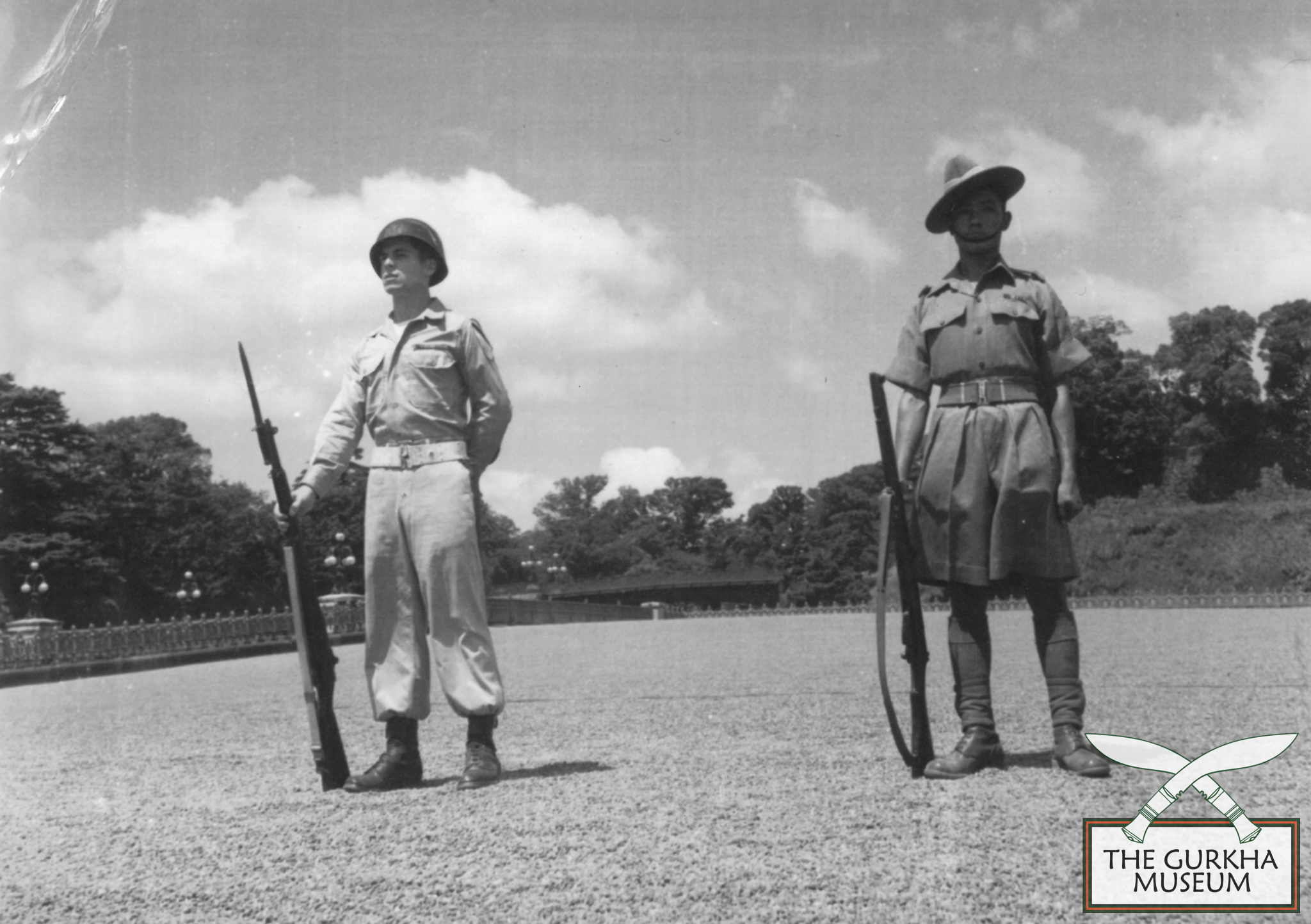
A US cavalryman and a Gurkha on guard together at the Imperial Palace.
2/5RGR returned to Okayama in September. Over the winter of 1946 – 1947, some of the officers (including Captain Barber) took advantage of the snows by taking a skiing trip.
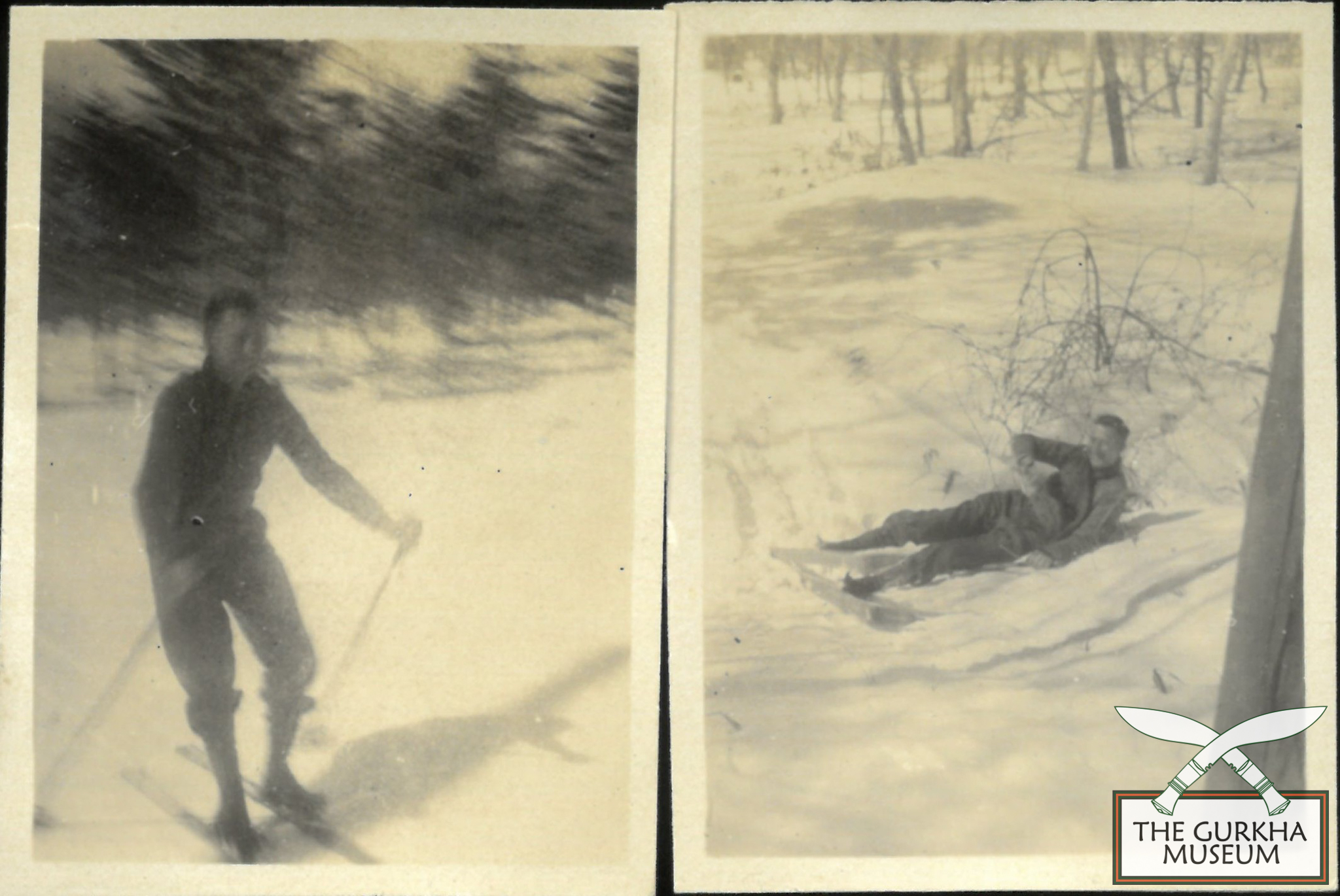
Captain Tom Huxley enjoying the snow, Japan, c.1946-47.
Whilst in Okayama, Gurkhas enjoyed educational courses and received lectures on resettlement, as many of the men were due for demobilisation from the army. In October, the battalion celebrated Dashain with a traditional ‘nautch’ dance on a specially constructed stage, and were also entertained by a Japanese concert party, which demonstrated traditional Japanese fencing and wrestling.
Around this time, two of the battalion’s VC recipients (Subedar Major Gaje Ghale and Naik Agansing Rai) rejoined for duty. Agansing had recently been in London, where he had been involved in the victory celebrations.
In May 1947, the Gurkhas performed a second tour of duty in Tokyo, where they would again mount guards at the Imperial Palace. Whilst in Tokyo, the Gurkhas renewed their friendship with the US 1st Cavalry Division. On 21 June, 50 Gurkhas mounted a unique parade alongside 50 US soldiers. Under Captain Daw of the 7th Cavalry Regiment, the Gurkhas carried out American parade drill with apparent ease.
By this time, the Gurkhas deployment in Japan was coming to an end. To thank them for their assistance, on 25 June 2/5RGR hosted a cocktail party for American officers of the 2nd Cavalry Brigade. During the evening, Subedar Major Indrabir Thapa honoured Brigadier General Hoffman, commanding the 2nd Cavalry Brigade, with a mounted khukuri.
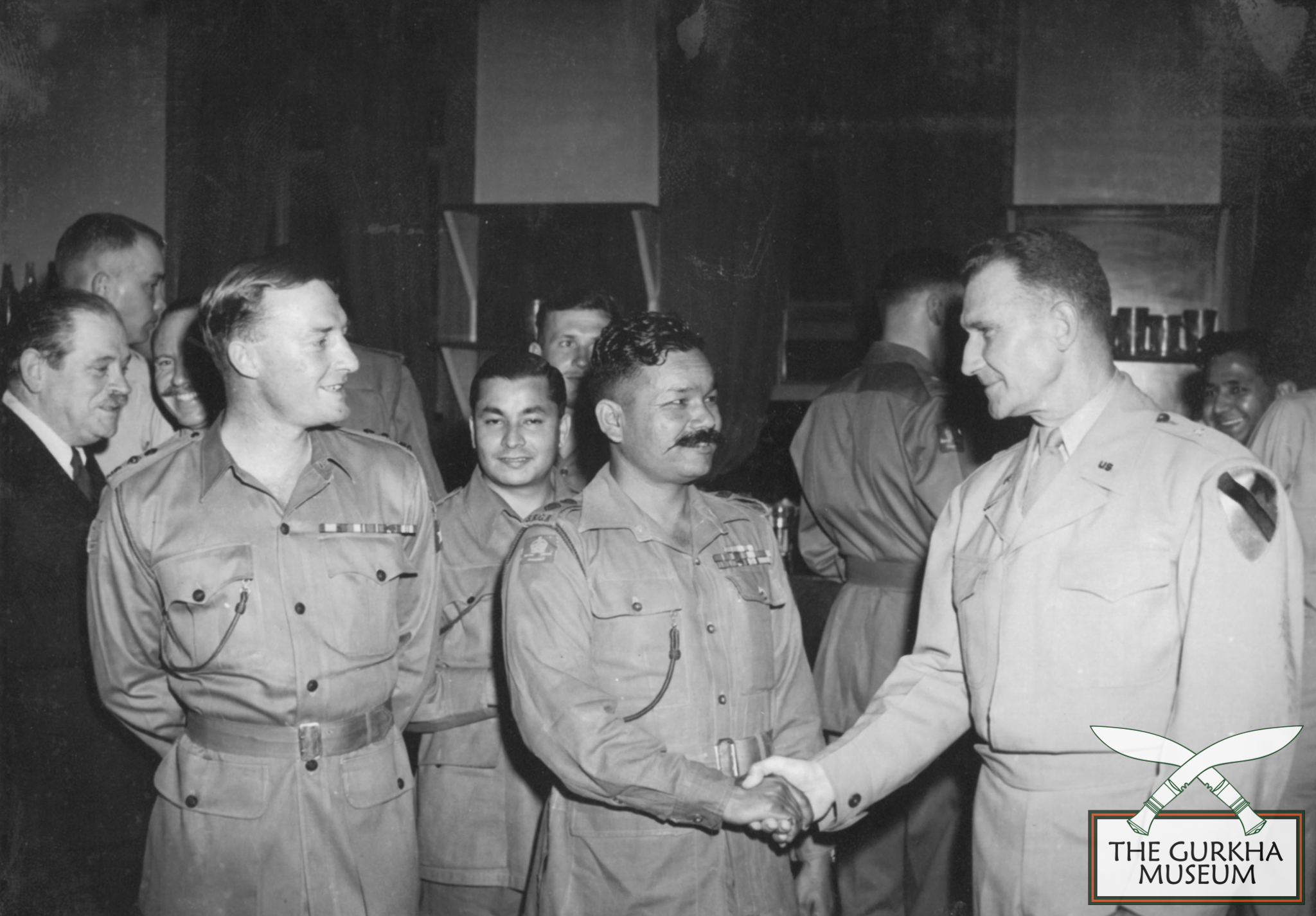
Subedar Major Indrabir Thapa shakes hands with Brigadier General Hoffman, 28 June 1947.
On 1 July 1947, 2/5RGR was back in Okayama making preparations to return to India, with departure set for 17 July.
The looming independence of India would spell great change for the Gurkhas, as the regiments would soon be split between the British and Indian armies.
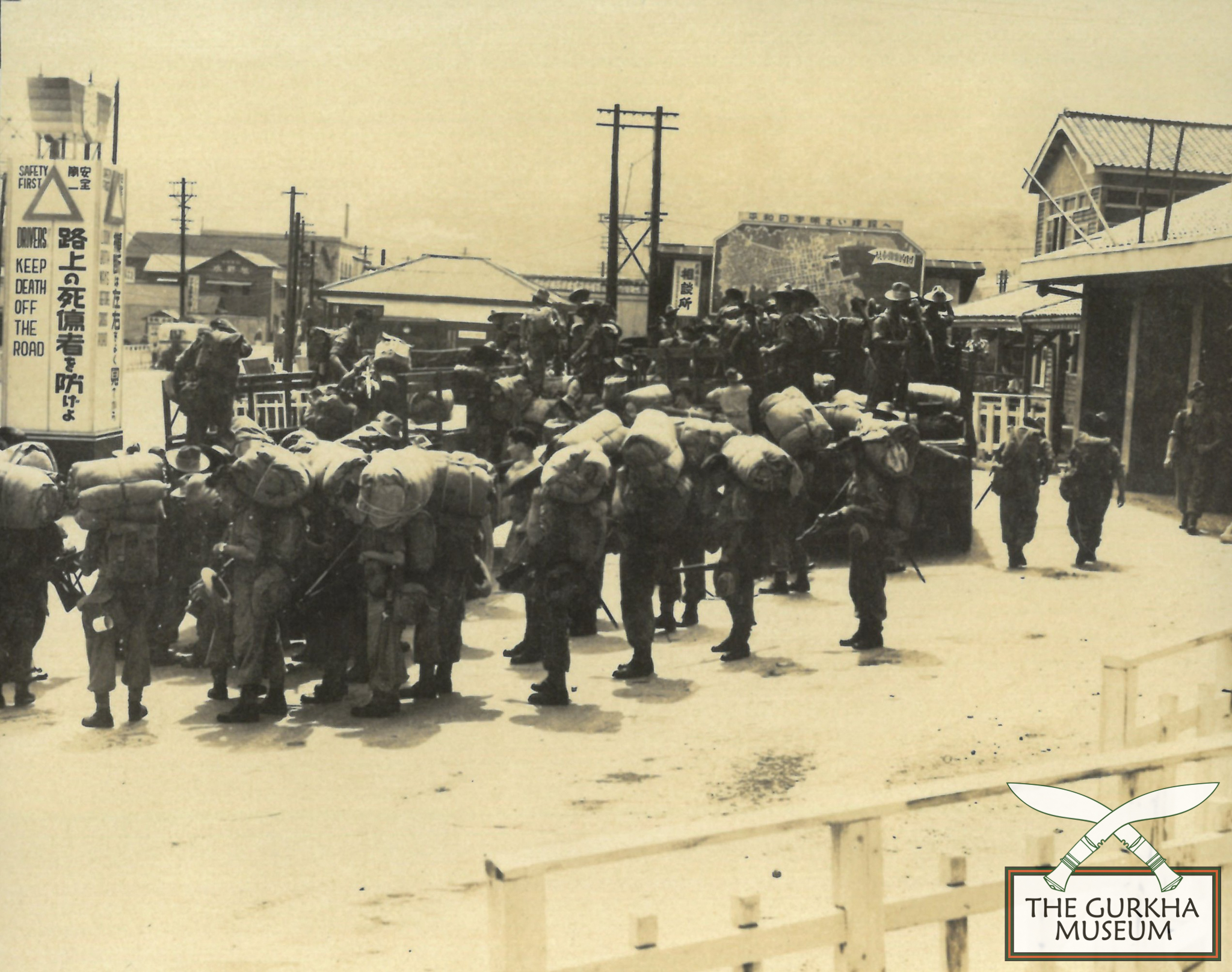
Gurkhas at Hiro train station on their way to Kure, July 1947.
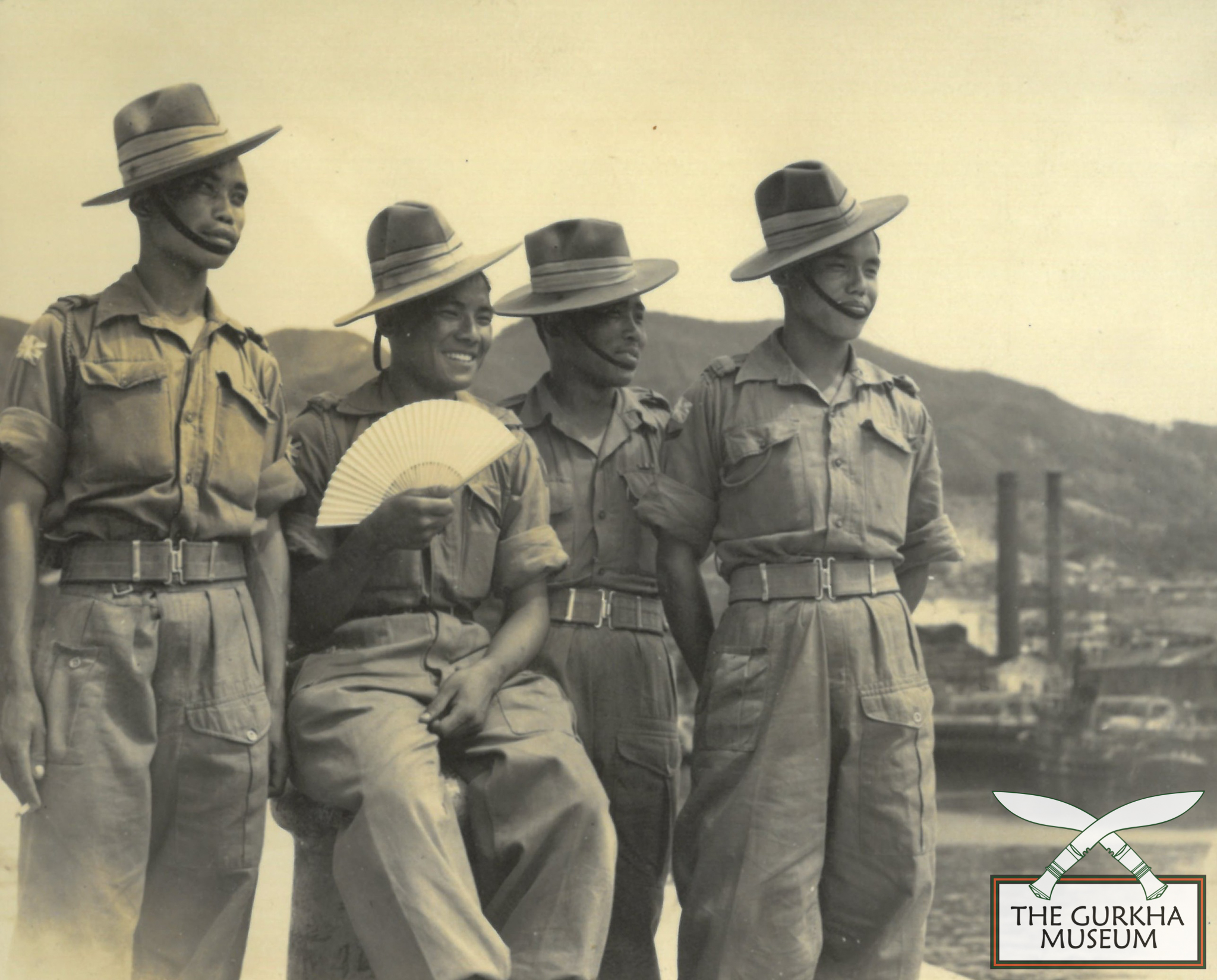
Men from 2/5RGRs rear party watching the battalion embark. The rear party, under Captain Barber, would remain in Japan for several more weeks.
The battalion embarked on the HMT Devonshire and set sail for Madras. For many, leaving Japan was bittersweet, as it was unclear whether 2/5RGR would continue in British service or if it would be transferred to the Indian Army.
Ultimately, the 5th Royal Gurkha Rifles was transferred to India, ending almost 90 years of service to Britain. Whilst some 2/5RGR soldiers would retire from service and return to Nepal, many would stay with the battalion, continuing to honour the regiments history and traditions.
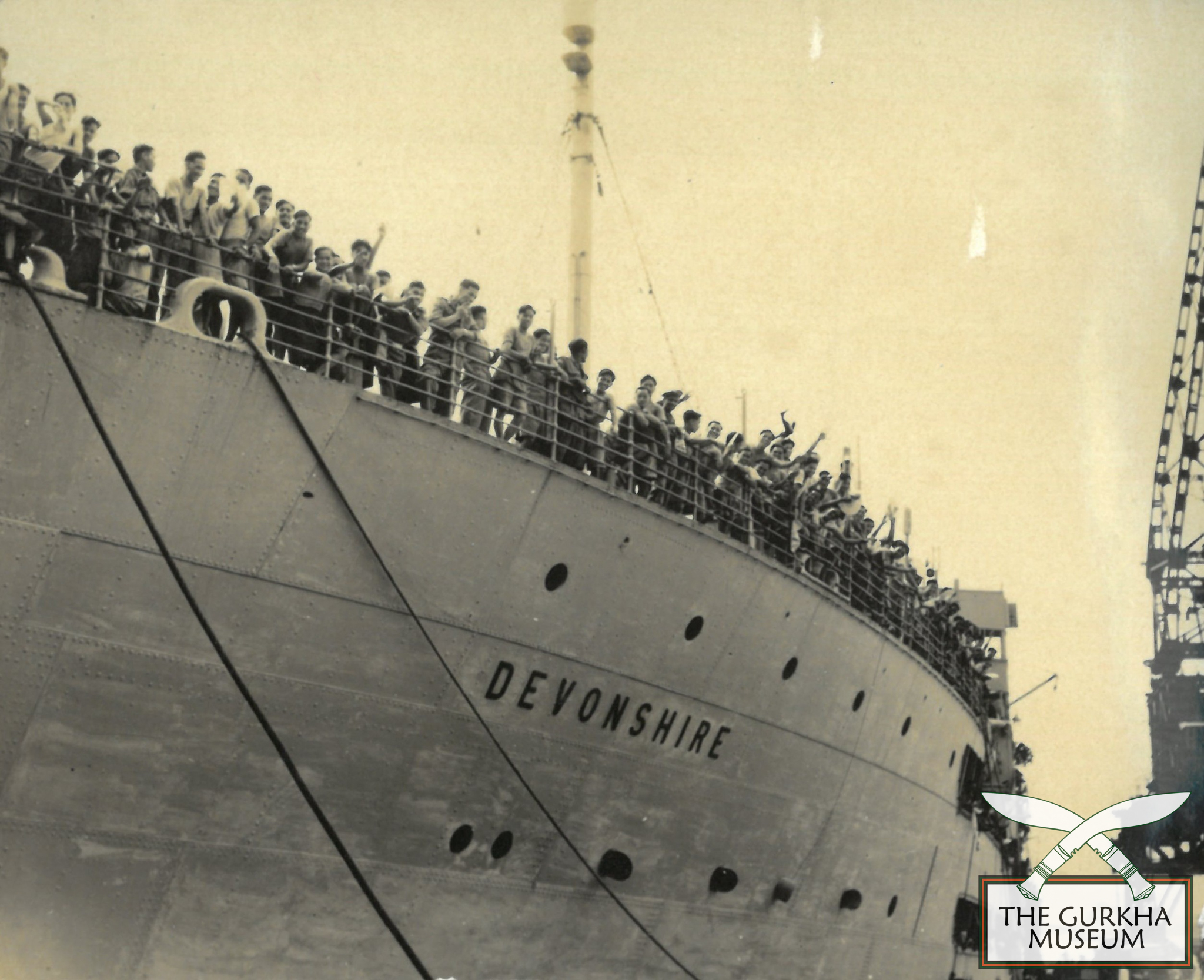
Gurkhas aboard the HMT Devonshire wave goodbye to Japan.