
The Indonesia-Malaysia Confrontation, often referred to as the Borneo Confrontation or Konfrontasi, began in 1962 when the Republic of Indonesia attempted to forcefully exert control over the provinces of Sabah and Sarawak on the island of Borneo. These two provinces formed part of the newly created Federation of Malaysia and so in response British troops were deployed to support Malaysia in combating border incursions from Indonesian troops and pro-Indonesian militias.
The first British troops on the ground were the 1st Battalion, 2nd Gurkha Rifles (1/2GR). On 8 December 1962, elements of 1/2GR were rapidly deployed into Brunei, a small but resource-rich state on the border of both Malaysian and Indonesian territory, to stop pro-Indonesian rebels from taking the Sultan of Brunei hostage and staging a coup. Entering Brunei Town amid an armed revolt, the Gurkhas successfully rescued the Sultan and, over the coming days, drove rebel forces from the city.
The Brunei Revolt is generally considered to be the opening of the Borneo conflict. Over the next three years, British Army units in Borneo would fight an undeclared war characterised by arduous patrols and violent clashes, often in remote and wild jungle.
As we approach the 60th anniversary of the end of the Confrontation on 11 August 1966, let us look at one of the skirmishes that typified the fighting in Borneo. Fought by a ‘A’ Company of the 2nd Battalion, 10th Gurkha Rifles (2/10GR) in March 1964, the fighting saw determination, heroism, and tragedy.
This is the battle for Track 6.
Reconnaissance
2/10GR first deployed into Borneo in April 1963 and began operations shortly afterwards. Over the following months the battalion patrolled extensively, and although there were occasional contacts with the enemy, no major actions occurred.
In October 1963, the battalion was withdrawn to Singapore for rest and retraining. However, no sooner had the Gurkhas settled into their new quarters than reports came through those Indonesian forces had intensified their attacks. Given just 24 hours’ notice, 2/10GR was scrambled for a second tour in Borneo.
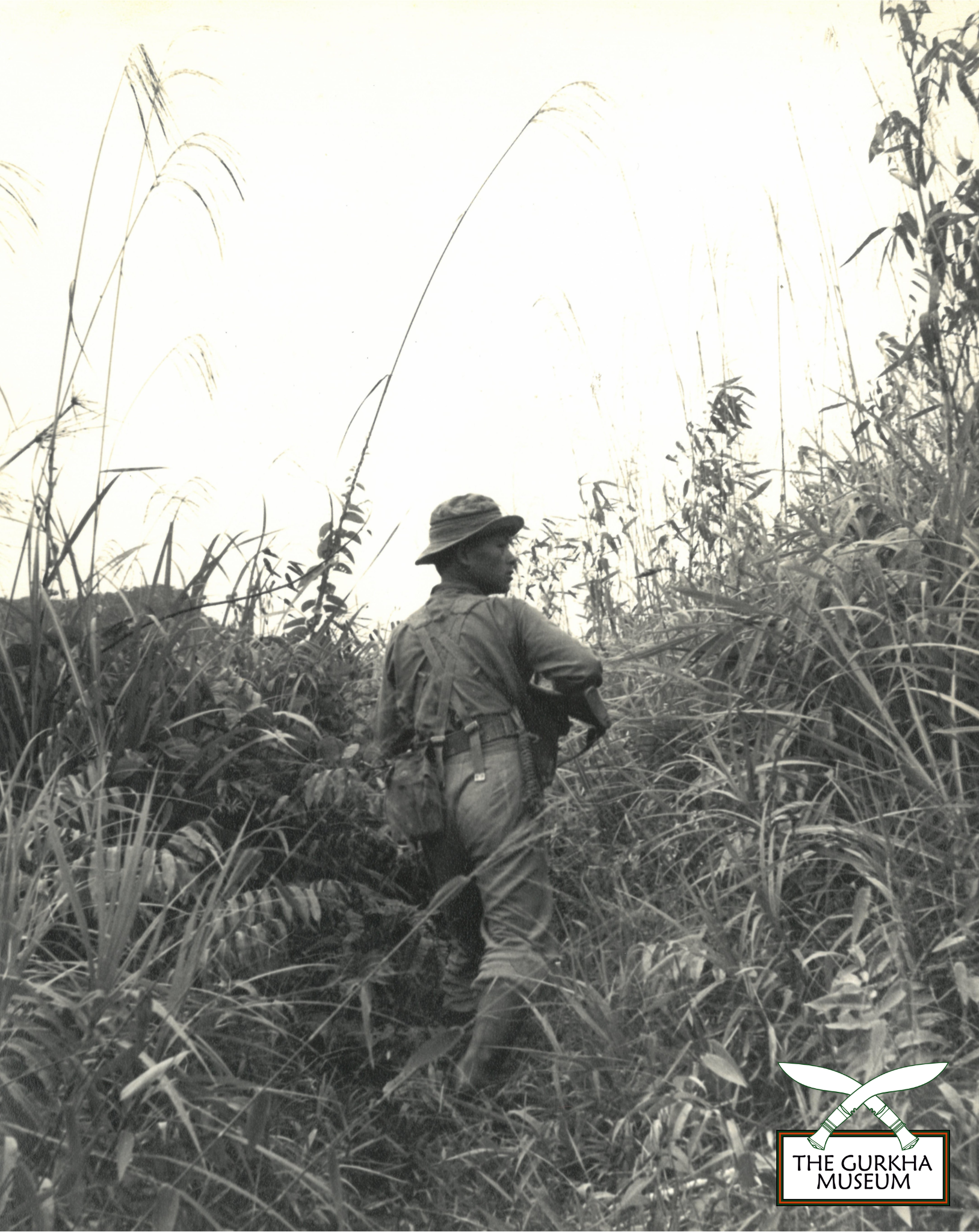
A man of the 1st Battalion, 7th Gurkha Rifles on patrol in Borneo, c.1965.
With its Battalion headquarters at Simanggang in Sarawak, companies of 2/10GR were dispersed around the local area. ‘A’ Company was operating from Sungei Tenggang, an area of scrub jungle overlooked by the Kling Klang hill range.
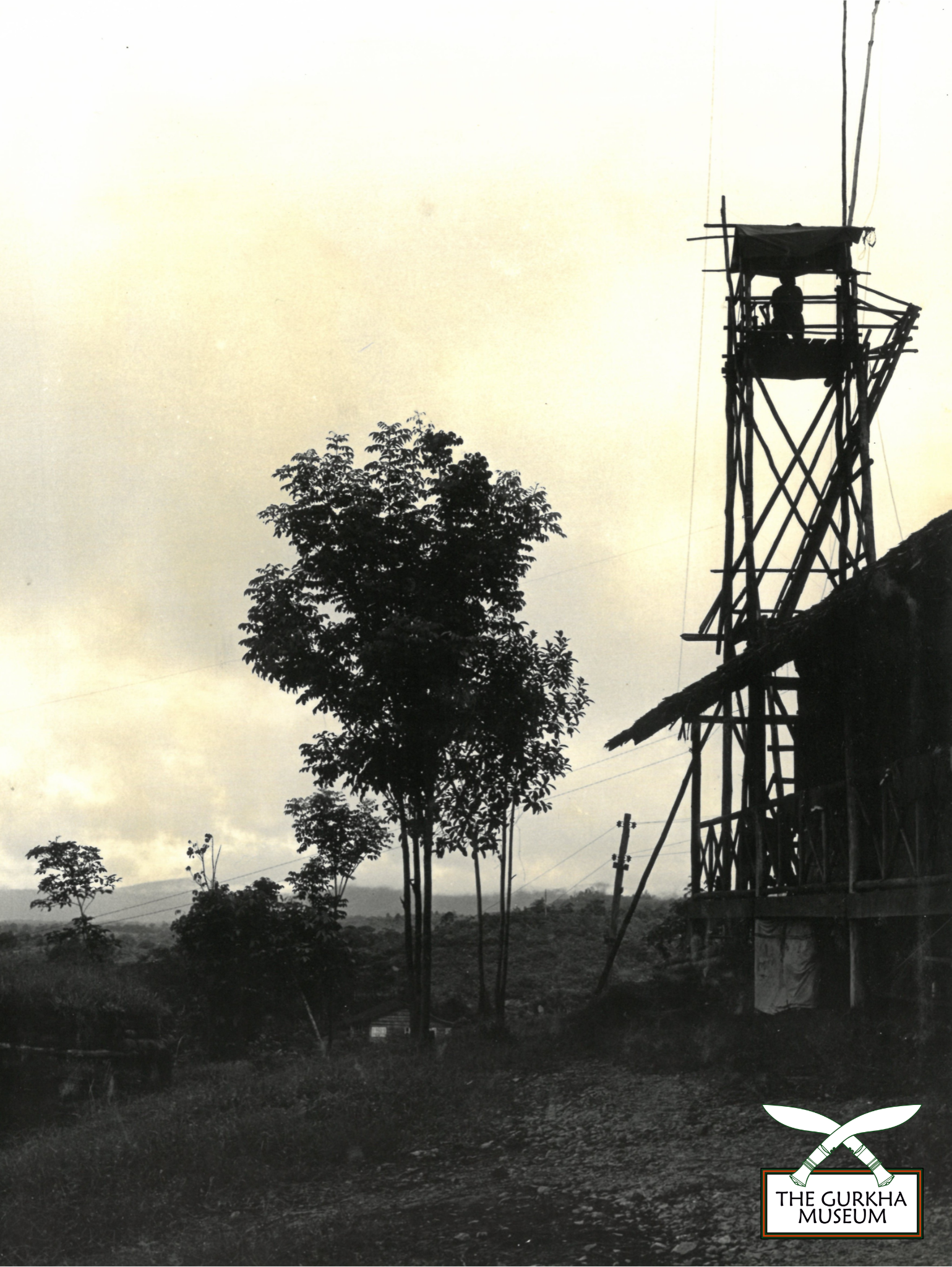
‘A’ Company headquarters at Sungei Tenggang.
These hills, made up of steep rocky outcrops capped with patches of thick jungle, marked the Malaysia-Indonesia border.
At this time, ‘A’ Company was commanded by Major (Maj) Ian Mayman. Major Mayman was a seasoned officer, having seen service throughout the Malayan Emergency (1948-1960).
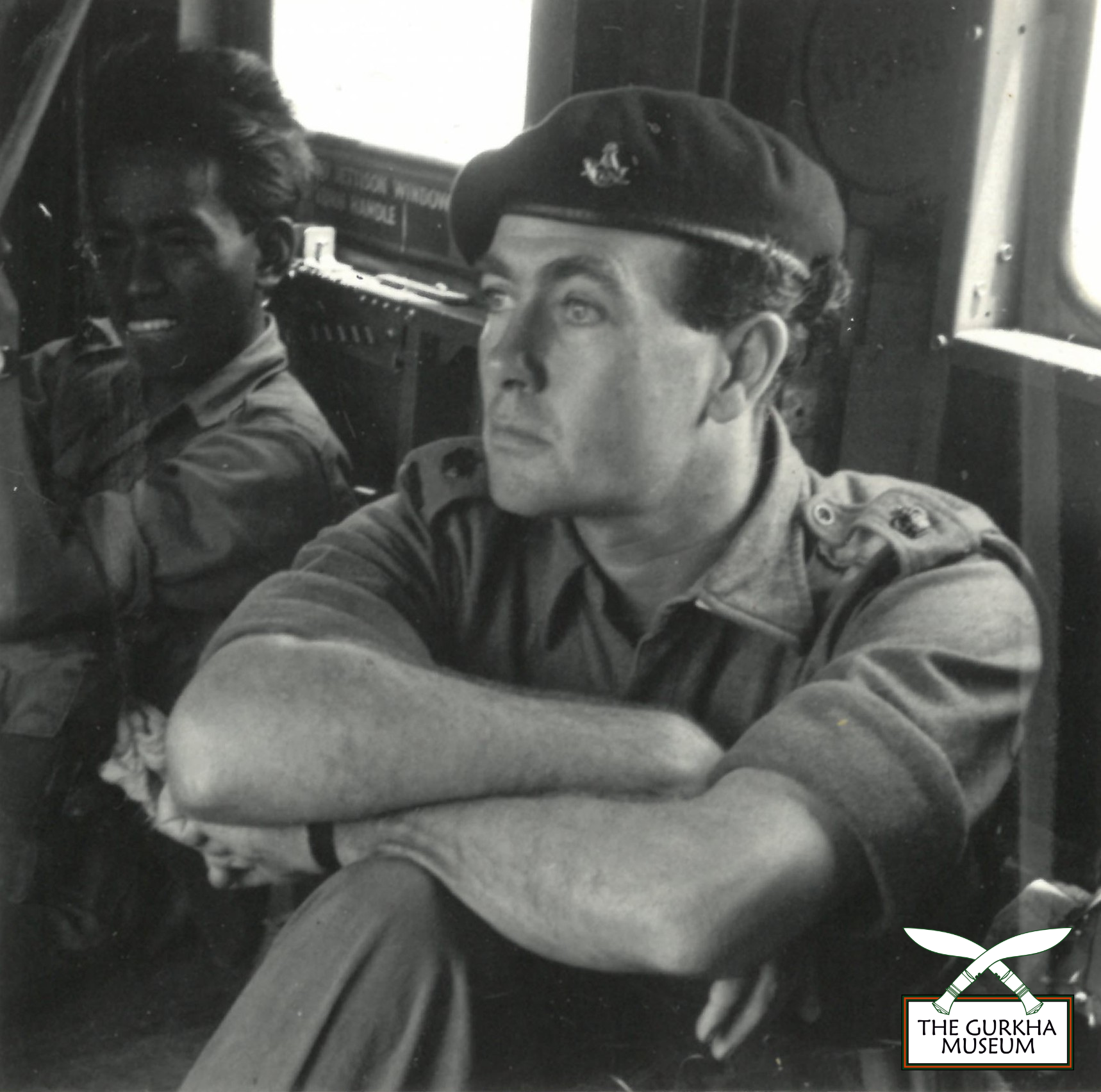
Major Ian Mayman whilst serving in Borneo, c.1963.
On 4 March 1964, campfire smoke was spotted coming from one of the surrounding hilltops. The possibility of an enemy encampment overlooking the company headquarters at Sungei Tenggang was highly concerning, and on 5 March, Maj Mayman sent a platoon to investigate the area and ambush any enemy troops they encountered. Leading up to this position were two narrow dust tracks, referred to as Tracks 6 and 6A. Unbeknownst to the advancing Gurkha platoon these tracks were soon to become the scene of a fierce battle.
Commanded by Lieutenant (Lt) Karmadhoj Sunwar, the Gurkha platoon took up position and waited through the night for enemy movements. Having seen nothing, at first light on 6 March Lt Karmadhoj led his men further up the track. Upon moving closer, the platoon heard music and hushed orders being given by radio. With the presence of an enemy force confirmed, Lt Karmadhoj sent a report to Maj Mayman. Further reconnaissance confirmed that Indonesian soldiers were fully occupying the top of the hill. By 1030 hours Maj Mayman was on the foot of Track 6 awaiting further information. He was joined by 2/10GR’s commanding officer, Lieutenant Colonel (Lt Col) Fillingham. After a radio conversation with Lt Karmadhoj, still in his forward position, Lt Col Fillingham ordered Mayman to lead a company assault on the Indonesian encampment.
Wasting no time, Mayman went up the track to make a personal ‘recce’. He planned to lead a feint attack on the enemy position whilst Lt Karmadhoj took his men on a flanking manoeuvre around the camp. From there, the platoon could attack the Indonesians from the rear.
But despite Mayman’s planning, this staged assault was not to be. As the men moved to their positions, a section under Corporal (Cpl) Birbahadur Rai strayed too close to a concealed Indonesian sniper. The sniper fired a single shot, killing Cpl Birbahadur instantly. With the sound of the gunshot, the enemy camp was alerted to the Gurkhas attack. Within seconds, the jungle erupted with automatic weapons fire.
Contact
With the planned attack now threating to turn into chaos and an orderly withdrawal being impossible, Maj Mayman rallied his men for a direct frontal assault. In the forward positions, the section of the fallen Cpl Birbahadur quickly recovered and defeated a charge by several Indonesian soldiers. Mayman advanced to support them, with the Gurkhas of No.2 platoon dashing through heavy enemy fire to get further up the track.
At this point, the fighting became confused. The thick scrub prevented the Gurkhas from orienting themselves, and at some places the trees would give way to sheer drops down the hillside. During the running firefights that made up the first moments of the battle another Gurkha, Rifleman Hangsabahadur Limbu, was killed.
Despite this loss, the Gurkhas held their nerve and returned steady fire on the enemy, killing one soldier and causing others to flee. Although this gave them a moment to catch their breath, it became clear that between the enemy fire and the sheer slopes of the hillside, No.2 platoon was pinned down. Short of options, Mayman radioed No.1 platoon, led by Lt Purandhoj Rai, and ordered them to move around the enemies’ right flank and attack their rear. With no other path available, Lt Purandhoj and his men took the most direct route around the hill, which included charging through an enemy observation post.
At the same time, Mayman took two sections of No.2 platoon along a narrow ledge. With only a narrow foothold, Mayman and his men slowly edged along the slope as bullets whistled over their heads. Finding no viable way forward, Mayman ordered the two sections to take cover and engage the enemy as much as they could. Meanwhile, Mayman headed back to try and find No.1 platoon, which had dropped out of contact.
After several desperate attempts, Mayman was able to raise Lt Purandhoj on the radio. Lt Purandhoj and his men were facing an almost vertical climb up to their assault position. Mayman could only urge them to hurry, as No.2 platoon’s position was rapidly becoming untenable with the Indonesians now firing at them from positions higher up the slope as well as around them. To Mayman, the situation had become critical. It seemed that the only way to reduce the fire on his pinned down Gurkhas was to charge the enemy and ‘get amongst them’.
He gave brisk orders to his two section commanders; Lance Corporal (LCpl) Keshabahdur would fan out to the left, and Lance Corporal (LCpl) Dambarbahadur Gurung to the right. After throwing a smoke grenade to provide extra cover, Mayman led his men forward. Remarkably, the Gurkhas made the dash up the slopes without suffering casualties. At the hilltop, the Gurkhas came out into a more open area. Followed by LCpl Kindraman Rai, who was armed with a Bren light machine gun, Mayman dashed for cover behind a small ‘bump’ in the ground.
Kindraman had been distinguishing himself throughout the days fighting. He had taken command of a section when its leader was wounded and later, when the leader of the Bren gun team had also been wounded, once again took the initiative by picking up the dropped weapon and using it to deadly effect against the enemy. Now, Kindraman had unhesitatingly followed Mayman into danger, quickly bringing his Bren gun into action. But moments later, a burst of fire opened into Mayman and Kindraman’s position, hitting Kindraman in the chest and mortally wounding him. Despite his injuries Kindraman continued firing until he became too weak to do so, handing the Bren gun over to Mayman before collapsing.
Over the next hectic minutes, Mayman laid heavy fire on the enemy, quickly burning through two clips of ammunition. Mayman’s sustained fire gave the two attacking sections the opportunity to advance. With cries of Ayo Gurkhali, LCpl Dambarbahadur led an aggressive assault against the enemy, using grenades to dislodge them from their positions.
Mayman’s Bren gun then ran out of ammunition, leaving him in a very vulnerable situation, but at the vital moment, Rifleman (Rfn) Krishnabahadur Rai arrived with more rounds. Mayman then passed the Bren gun to Krishnabahadur, who kept up covering fire whilst Mayman carried Kindraman to safety. Placing him down behind some rocks, Mayman tried to make Kindraman as comfortable as he could. Within moments, Kindraman had died of his wounds.
Whatever Mayman felt in that moment, he could not dwell on it until the fighting was over. Remaining in action, he found that enemy resistance was now crumbling. LCpl Dambarbahadur’s attack had reached the small bump that was now Krishnabahadur’s Bren position. Once again using grenades, Dambarbahadur drove out the last of the Indonesian defenders. Before long, the Indonesians were evacuating the entire hillside – with great difficulty now that Lt Purandhoj and his men had reached the rear of the hill and were able to fire on their route back towards the Indonesian border.
After three hours of desperate fighting, the battle for Track 6 was over.
Aftermath
The Gurkhas had successfully driven the Indonesians from the hilltop, but it had come at a steep cost. Cpl Birbahadur Rai, Rfn Hangsabahadur Limbu and LCpl Kindraman Rai had lost their lives, and two further Gurkhas had been wounded.
The Indonesian casualties, though never officially confirmed, were estimated to be 5 killed and 8 wounded. It was later discovered that at Track 6, ‘A’ Company had fought 40 regular soldiers of the 328th Raider Battalion. This marked a change in the Borneo conflict. Previously they had largely fought against pro-Indonesian militias. From this point forward British soldiers would have to reckon with well-trained and well-equipped regular Indonesian troops.
For his bravery in the fighting, LCpl Dambarbahadur was awarded the Military Medal, which was presented to him personally by Prince Philip (himself a patron of another Gurkha Regiment, the 7th ‘Duke of Edinburgh’s Own’ Gurkha Rifles).
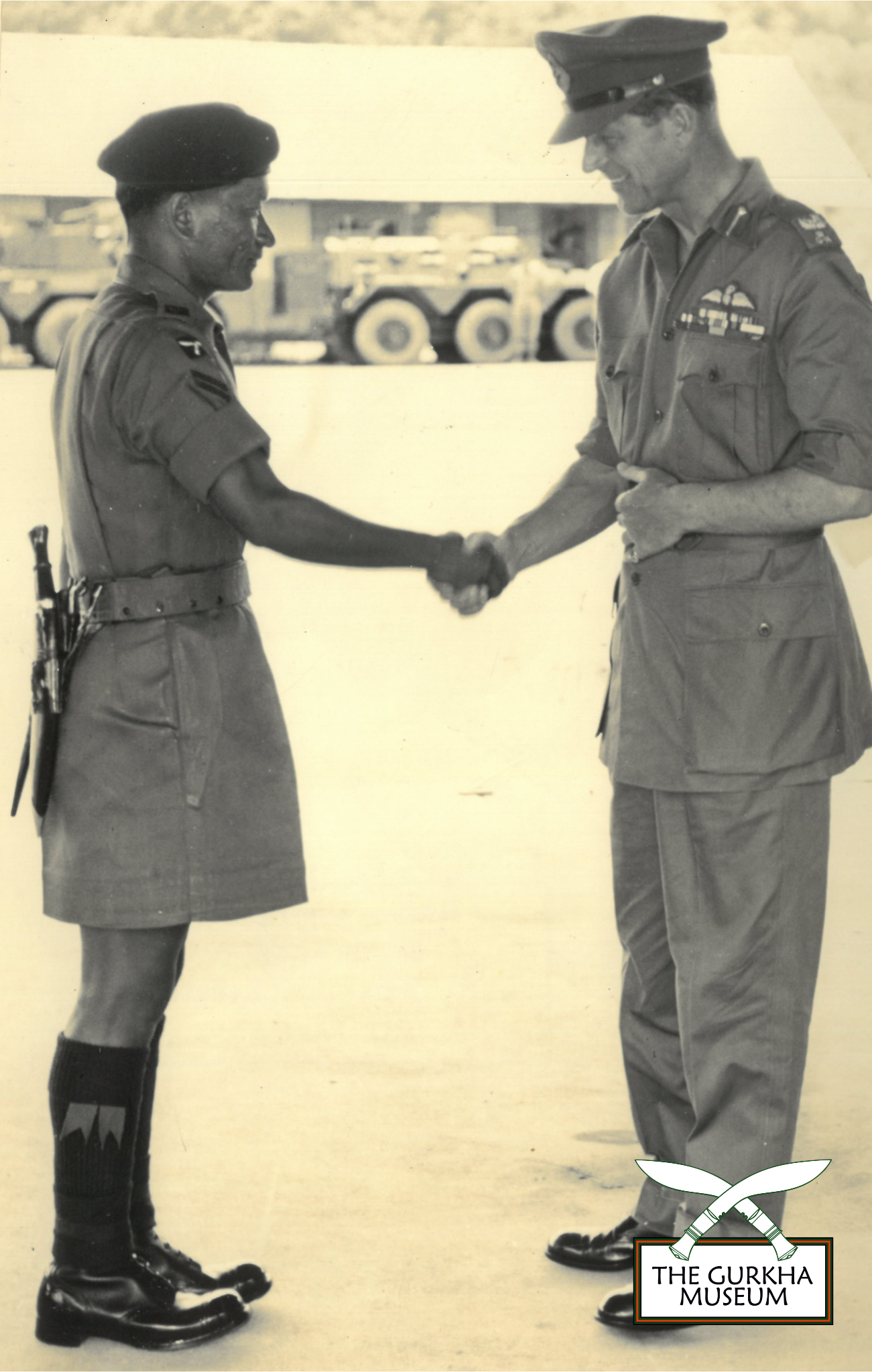
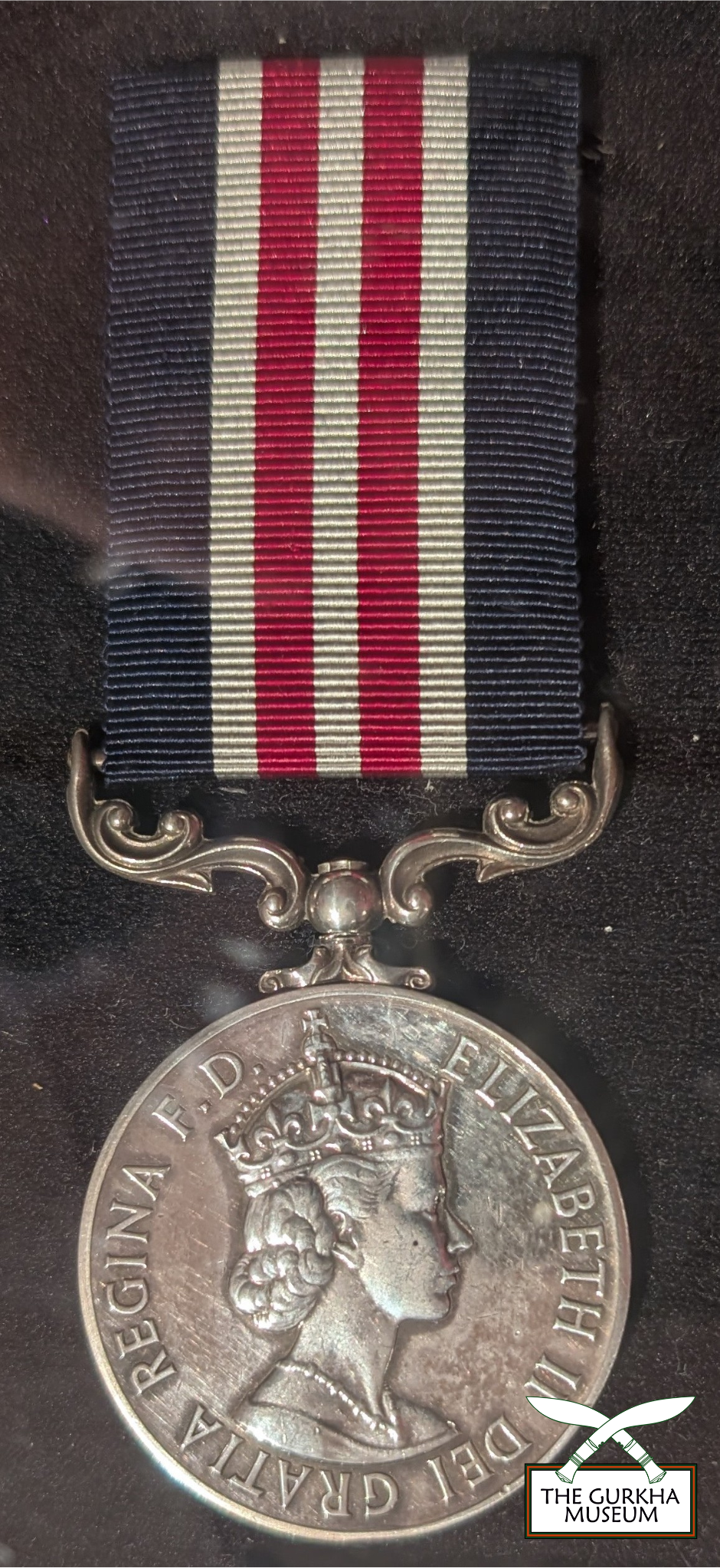
Corporal Dambarbahadur Gurung being presented with his Military Medal by Prince Philip, 1964. The medal was later donated to the Gurkha Museum, and is on display in our medal gallery.
LCpl Kindraman Rai was also recognised for his bravery, receiving a posthumous Mention in Dispatches.
Major Mayman would later also receive a Mention In Dispatches for his leadership throughout 2/10GR’s second Borneo tour. His citation gave mention of the Track 6 battle, stating: It was largely due to his personal example, leadership and complete disregard for danger that the attack was pressed home under almost impossible conditions’.
Despite the action being successful, Mayman felt that the chaotic fighting exposed weaknesses in British Army jungle warfare doctrine. Over the next few weeks, Mayman retrained his company in basic fire and movement, adapting it to the more intense jungle fighting which defined operations in Borneo. Further training also emphasised continual battlefield communication. Mayman’s training was so effective that the new techniques were quickly adopted by the rest of 2/10GR.
This adaptation was timely. Over the next two and a half years, 2/10GR would fight in many more operations against the Indonesians, with the intensity of the conflict feeling, at least to those within it, a full-scale war in all but name. For the men of 2/10GR, and indeed across all Gurkha units serving in Borneo, the Confrontation would extract many more losses before it was over
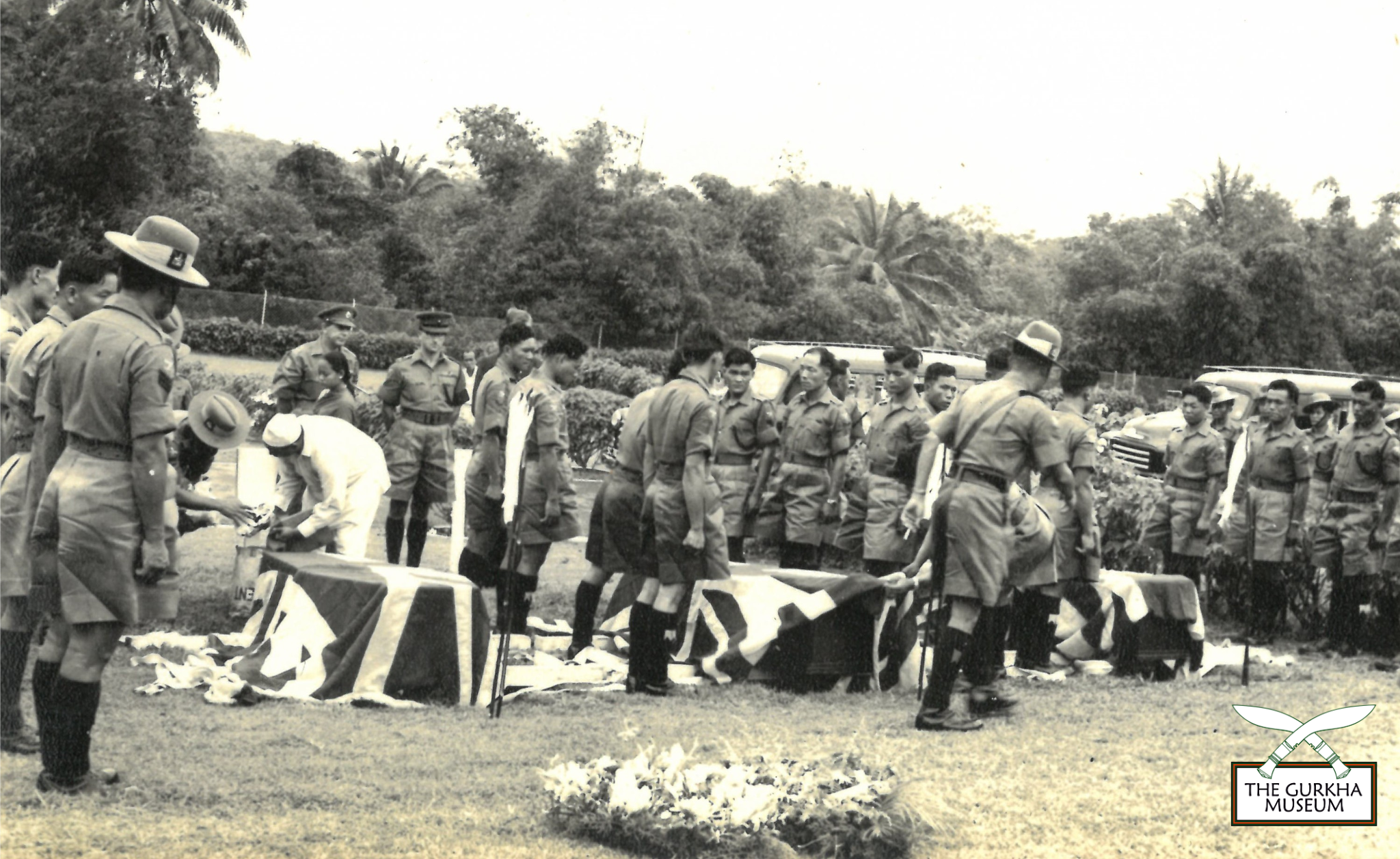
Birbahadur, Hangsabahadur and Kindraman being laid to rest at Ulu Pandan, Singapore.