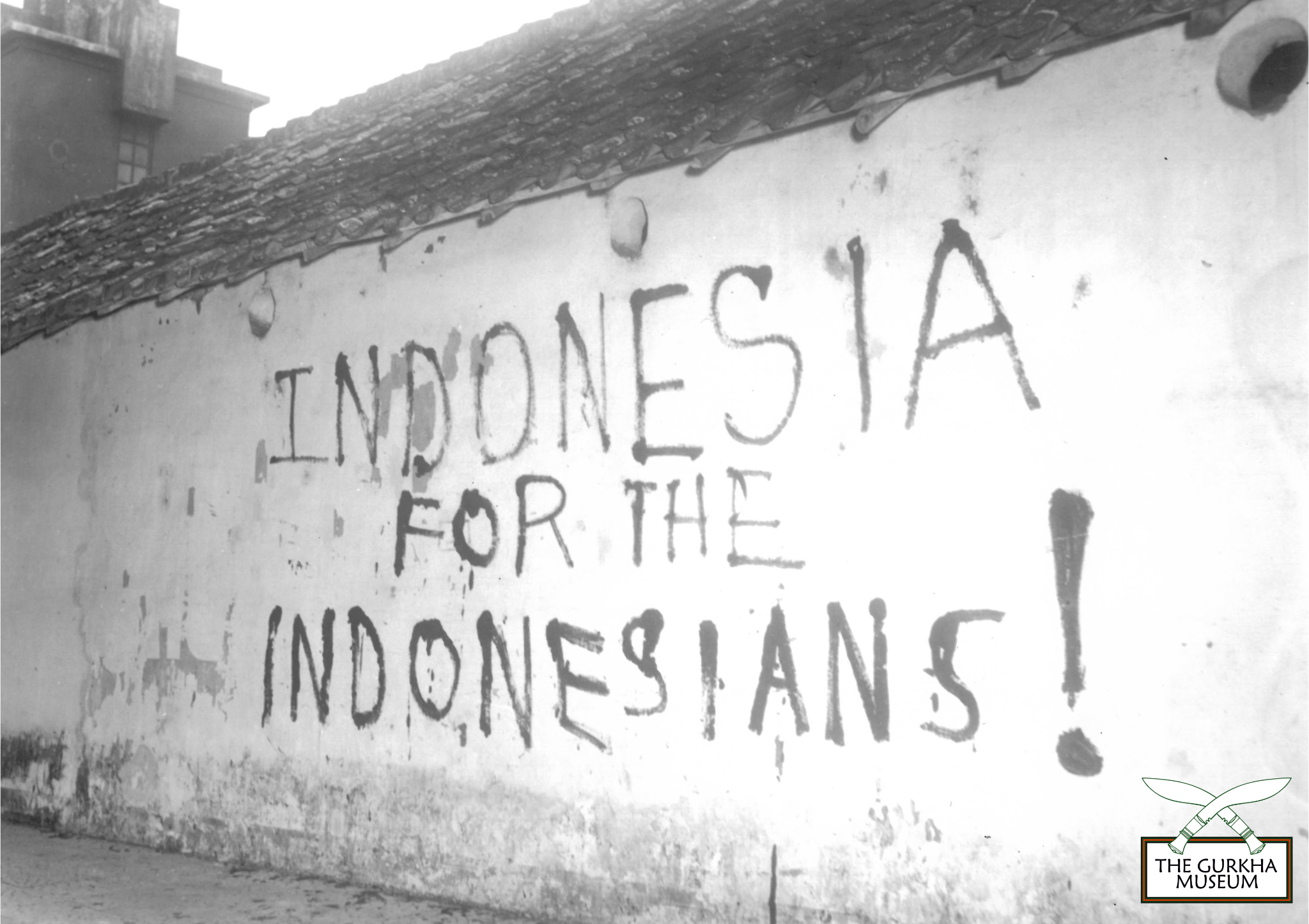
Uneasy Occupation, Unlikely Allies
The 3rd Battalion, 10th Gurkha Rifles (3/10GR) arrived in Java on 16 October 1945. Part of the 23rd Indian Division, 3/10GR’s main role was to help protect and repatriate Dutch internees.
The battalion landed unopposed and moved inland toward the towns of Semarang and Ambarawa. After moving through an eerie silence, sounds of gunfire were heard as the Gurkhas approached Semarang. A local man reported that the Japanese in the town were fighting the Indonesians. Moving cautiously through the streets, the Gurkhas came under fire, suffering two killed and six wounded.
Initially thinking that they were facing Indonesian fighters, it soon became apparent that they had been mistakenly fired upon by the Japanese, who were taking cover in the government buildings. After establishing contact with the Japanese commander, who apologised for the mistake, the battalion moved into the town without further incident.
After a briefing by the Japanese, it emerged that their battalion, the Kido Butai, had actually saved several hundred Dutch internees by taking control of Semarang. From this point forward, an uneasy cooperation would emerge between Gurkha troops and their former Japanese enemies, who were enlisted by Allied commanders to help secure the region. For the next two months, 3/10GR would fight alongside the Japanese in sporadic battles against the Indonesians, the most intense of which were around Ambarawa and Magelang.
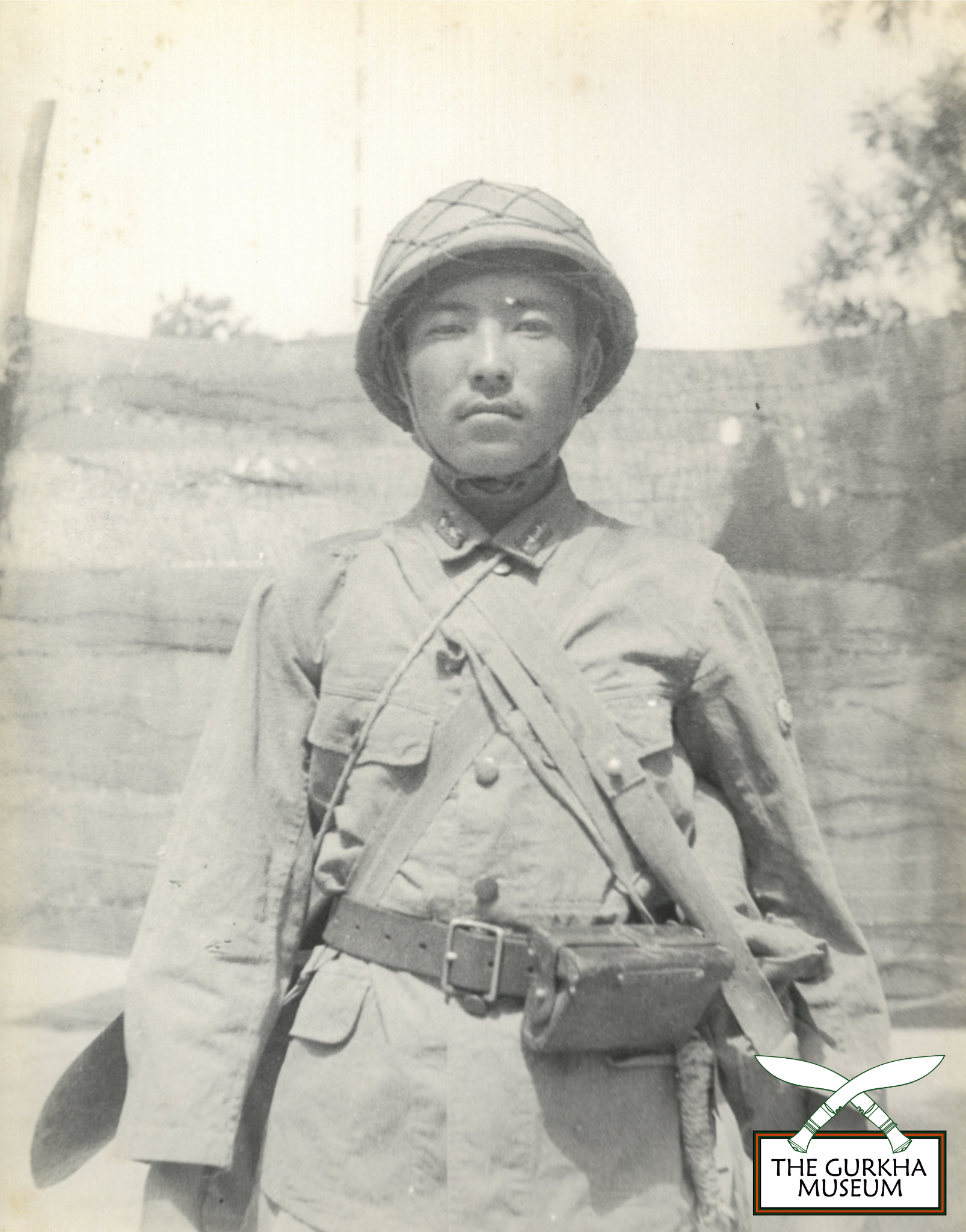
A Japanese soldier who fought alongside 3/10GR in Java.
In Magelang on 31 October, ‘A’ and ‘B’ companies of 3/10GR (numbering around 350 men) found themselves in a desperate confrontation against approximately 5,000 Indonesian fighters. Dispersed around the town, various elements of the battalion became cut off from one another and subjected to continuous rifle and machine gun fire. Surrounded, the Gurkhas fought through the night until they were almost out of ammunition.
Reinforcements eventually arrived when a company of Japanese soldiers, led by Captain Yamata, joined the battle. The Japanese quickly began to clear the houses of Indonesian fighters, capturing scores of prisoners. Alongside their unlikely allies, the Gurkhas slowly gained control of the battle, being further aided by air and artillery strikes.
On 3 November, after four days of fighting, a local ceasefire was declared between British forces and the Indonesians, ending the Battle of Magelang. The negotiations were jeopardised when a group of Indonesians disguised themselves as Japanese soldiers and approached 3/10GRs regimental aid post. When two stretcher bearers went out to meet them the Indonesians opened fire, injuring one Gurkha and mortally wounding the other.
Despite this, the ceasefire eventually held, and the fighting stopped. Although this battle was over, 3/10GR would face continued skirmishes with the Indonesians over the coming months. By the time it ceased operations in Java, the battalion had lost 21 officers and men killed, with a further 84 wounded.
The Battle of Surabaya
Fighting in urban areas, like 3/10GR experienced at Magelang, was frequent throughout British operations in Java. Perhaps the most infamous clash occurred at Surabaya. From 27 October to 2 December 1945, the 5th and 23rd Indian Divisions fought to regain control of the city from various Indonesian militias. Their chief motivation for this was to secure the release of roughly 12,000 European internees being held in the city.
The Allies had hoped to avoid an armed conflict in Surabaya, and had tried to negotiate with the Indonesian commanders for the release of the internees. On 25 October, the 49th Indian Brigade, under Brigadier Aubertin Mallaby, were permitted to enter the city to locate the internees. However, the situation deteriorated when Allied planes dropped leaflets on the city urging the Indonesians to lay down their arms, angering the local militias. Anger simmered over into hostility and attacks against 49th Brigade soldiers began. On 30 October, Brigadier Mallaby was shot and killed whilst driving to his headquarters, ending any hope of negotiation. For the next two months, Indian Army troops would fight a grinding battle through the city, suffering heavy casualties. Among these troops were the 3rd Battalion, 9th Gurkha Rifles (3/9GR).
3/9GR entered the Surabaya fighting on 10 November. Sweeping through the city in the face of sporadic sniper fire, the battalion met its first serious resistance at the Kali Sosok jail, which held 2,000 internees. Surrounded by 20-foot walls and bristling with sniper posts, the jail presented a formidable obstacle.
Naik (Corporal) Kulbahadur, of the battalion’s Pioneer Section, suggested that he might be able to blow through the wall. Using a pole charge, Kulbahadur blasted a 4ft opening and the Gurkhas stormed into the jail. At the main gate, a tank was brought up to smash through, allowing ‘A’ Company to move in at the same time. A clash with the Indonesians left 18 of their fighters dead, at the cost of seven Gurkha casualties.
Once able to enter the jail, the Gurkhas found that the Dutch internees were being held in terrible conditions, with men, women and children crammed into small cells. In many cases, the only sanitary provision given to them was a small bucket. Fortunately, the Gurkhas were able to evacuate them to safety.
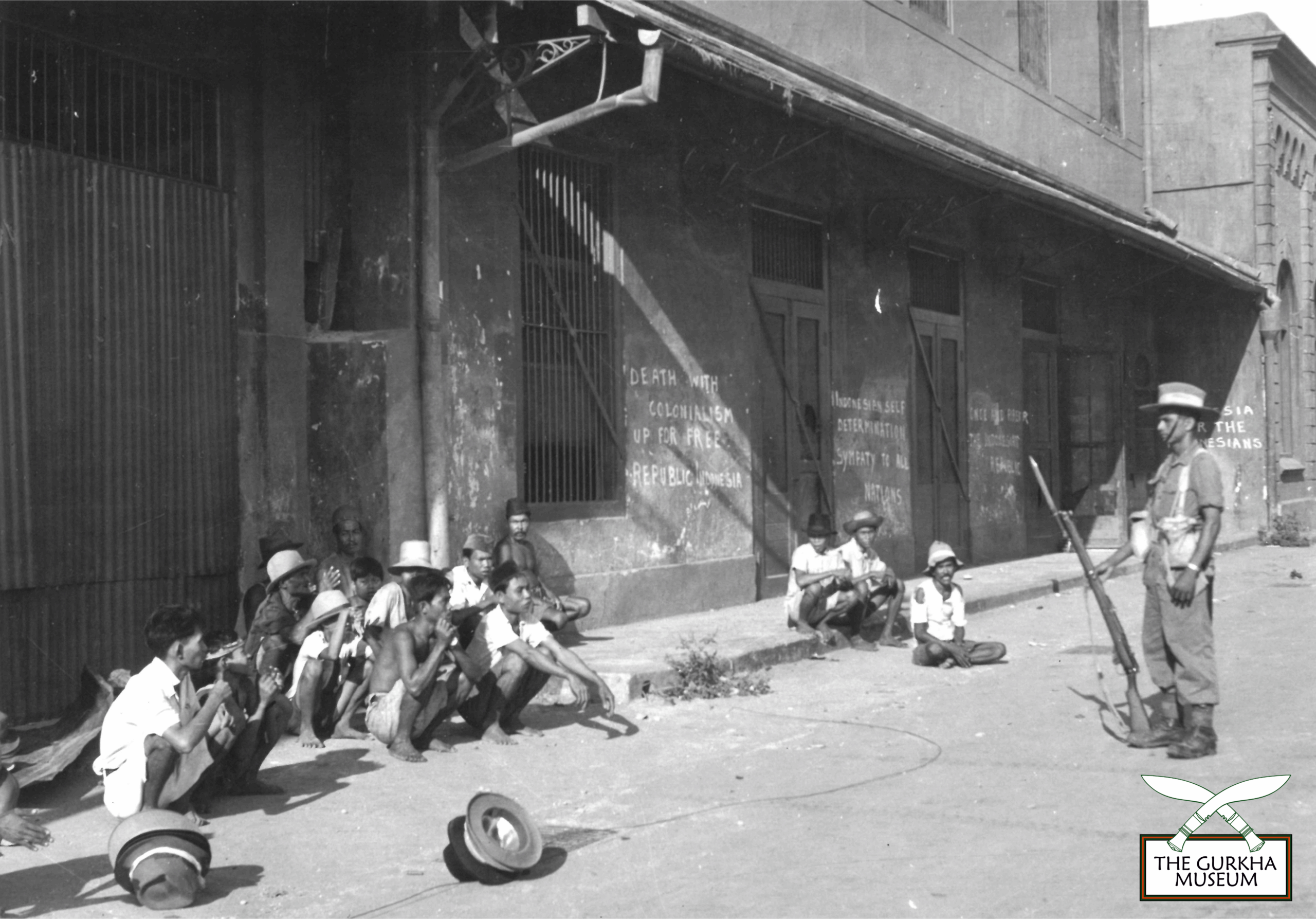
A Gurkha soldier in Java guards a group of looters caught behind British lines, 1945
On 11 November, ‘B’ and ‘D’ companies continued the advance. Gurkha snipers accurately suppressed hostile machine gun fire, and the men defeated two attacks by enemy armoured cars. A successful day was rounded out with the capture of a wine store, with each Gurkha earning himself an issue of port.
In total, 3/9GRs sweep through Surabaya lasted for 20 days. In the face of stiff opposition, the Gurkhas inflicted an estimated 300 casualties on the Indonesian fighters. For its part, the battalion suffered six killed and 35 wounded during the battle. Total British and Indian casualties in Surabaya may have been as high as 600 killed, wounded and missing.
Mopping Up
Fighting in Java continued into 1946. In March, the Gurkhas were involved in heavy fighting around Bandung. On 30 March, the 1st Battalion, 8th Gurkha Rifles fought a sharp action with a militia group called the ‘Black Buffaloes’. This fight quickly devolved into a hand-to-hand scrum. One of the Gurkhas involved, Rifleman Padme Pun, came out of the fight with seven deep sword wounds, two of which were to his head. However, he and Lance-Naik Bahadur Pun were both awarded the Military Medal for their actions during the fight, which resulted in 19 enemy casualties.
By spring 1946, internal security responsibilities in Java were increasingly handed over to the Dutch, whose armed forces were slowly arriving back into the region. From this point, British forces could focus on repatriating the Japanese.
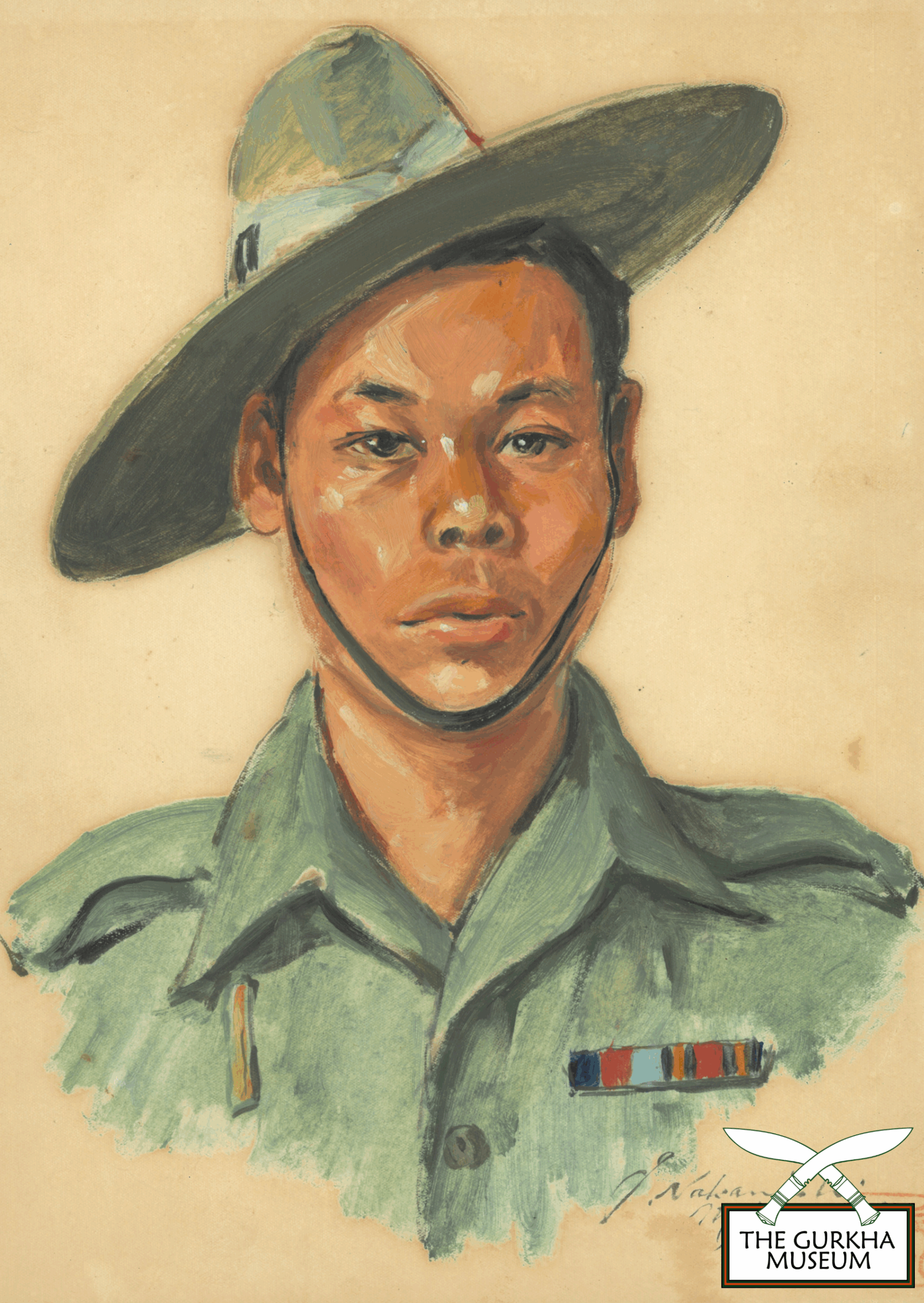
A portrait of Rifleman Bilbahadur Rai of the 3rd Battalion, 1st Gurkha Rifles. The portrait was painted in 1946 by a Japanese prisoner of war awaiting repatriation in Sulawesi, Indonesia
The resistance posed by the Indonesians had been intense and determined. This is perhaps surprising considering the youth and relative lack of equipment of some of their soldiers. Whilst fighting in Bandung, Captain Tim Carew of the 3rd Battalion, 3rd Gurkha Rifles came across the sad sight of three Indonesian soldiers killed by tank fire, all of whom appeared to be teenagers. A fourth teenager was captured, wearing a mixture of Dutch and Japanese uniform. Carew noted the hostile attitude of the young soldier: ‘he was silent, unrepentant and sullen’. Despite their youth, these 4 soldiers, armed with only a smattering of Japanese small arms, had held up Carew’s Gurkhas for an hour, inflicting 2 fatalities.
Similar determination would eventually break the Dutch colonial regime. After four years of fighting, the Dutch eventually withdrew from the Indonesian archipelago in 1949, leading to the establishment of the independent Republic of Indonesia.
The Gurkha presence in Indonesia had ended by late 1946. This ‘war of little skirmishes’, now mostly forgotten in British popular memory, had nevertheless been a costly one for the Gurkhas. To take 3/9GR and 3/10GR as examples, they lost a combined 39 men killed.
Less than 20 years later, Gurkhas would again find themselves fighting against Indonesian soldiers. During the Borneo Confrontation (1963 – 1966), Gurkhas would skirmish with Indonesian troops on the Malaysia-Indonesia border. Even as recently as 1999, soldiers of the Royal Gurkha Rifles clashed with Indonesian backed militias during peacekeeping operations in East Timor.